
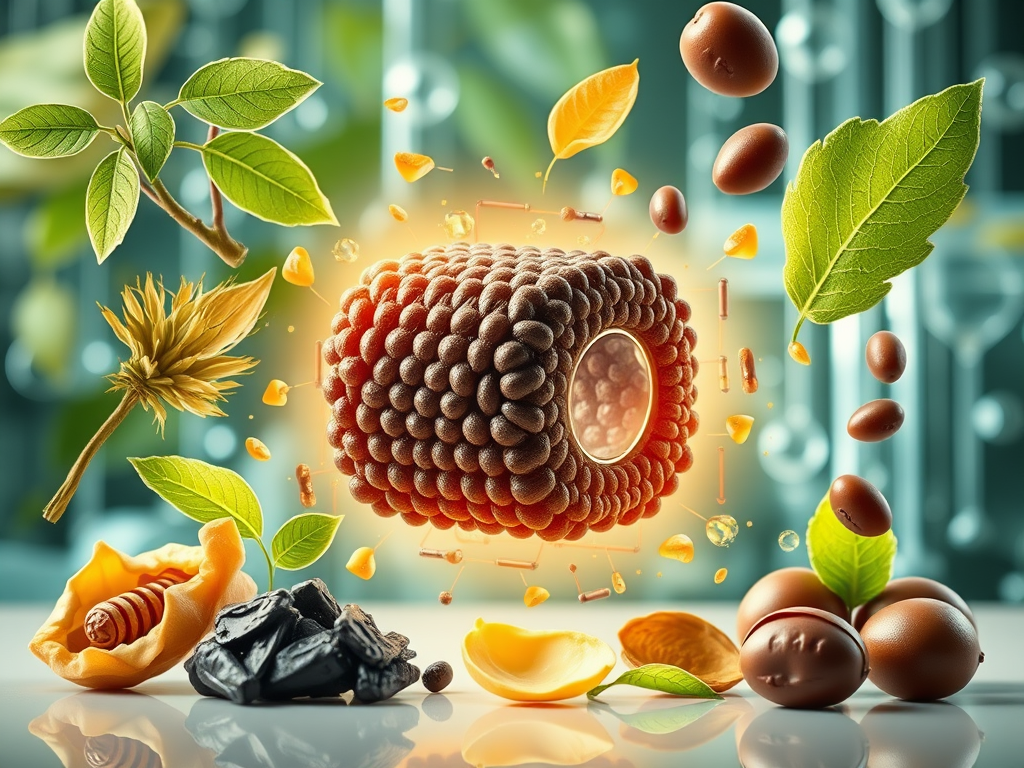
The global demand for energy continues to rise, driven by rapid population growth, necessitating a shift away from traditional fossil fuels towards sustainable alternatives. Lithium-ion batteries (LIBs), as key energy storage devices, are at the forefront of this transition. However, conventional LIB components often present limitations in terms of sustainability, safety, and performance. A comprehensive review by Kai Zhao in the Proceedings of the 5th International Conference on Materials Chemistry and Environmental Engineering highlights advanced progress in utilizing biomassBiomass is a complex biological organic or non-organic solid product derived from living or recently living organism and available naturally. Various types of wastes such as animal manure, waste paper, sludge and many industrial wastes are also treated as biomass because like natural biomass these More resources to overcome these challenges, demonstrating superior electrochemical properties, mechanical strength, and thermal stability in biomass-derived battery components.
Traditional LIB components, such as polyolefin diaphragms and graphite anodes, face significant drawbacks. Polyolefin membranes suffer from poor compatibility with polar organic solvents, leading to reduced electrolyte absorption capacity, and their low melting point poses serious safety hazards due to thermal contraction and potential short-circuiting. Graphite, while widely used as an anode, has a limited theoretical specific capacity of 372 mAh g−1 and poor rate capability, struggling to meet the escalating demands of electric and hybrid vehicles. Metal oxide anodes, despite high theoretical capacities, experience significant volume changes (over 300%) during charge/discharge cycles, leading to instability and performance degradation.
Biomass resources offer a green, cost-effective, and environmentally friendly alternative for manufacturing high-performance LIB components. BiocharBiochar is a carbon-rich material created from biomass decomposition in low-oxygen conditions. It has important applications in environmental remediation, soil improvement, agriculture, carbon sequestration, energy storage, and sustainable materials, promoting efficiency and reducing waste in various contexts while addressing climate change challenges. More, derived from biomass, is gaining attention for its high specific surface area, minimal expansion rate, and reduced dendrite formation, making it an ideal candidate for anodes. In terms of electrolytes, biopolymer hydrogels are emerging as semi-solid carriers for ionic conduction, boasting high electrical conductivity, thermal stability, mechanical robustness, and biodegradability, with the added benefit of synergistic effects with electrodes to enhance performance.
Significant advancements have been made in developing biomass-derived anodes. For instance, a silicon-doped anode material (EC-SiOC) synthesized from water hyacinth achieved a high reversible capacity of 749.9 mAh g−1 and an initial coulombic efficiency of 98.2%, reducing resource consumption by 80% compared to traditional methods. Another notable example includes a 3D N-doped anode from lychee peel, enriched with MnOx nanoparticles, which demonstrated a reversible capacity of 515.5 mAh g−1 after 1000 cycles at 2A g−1. This material also showed excellent fast-charging capabilities, providing 309.2 mAh g−1 at an ultra-high current density of 20A g−1 after 1000 cycles. Furthermore, nitrogen-doped hard carbon derived from date pits, modified with 3 wt% LiF, delivered capacities of 525 mAh g−1 at room temperature and 280 mAh g−1 at low temperatures (50 and 100 cycles respectively). Even at −20∘C, it provided 72 mAh g−1 capacity after 500 cycles at 2 C. A honeycomb and heteroatom-rich biochar negative electrode from water hyacinth exhibited a rate capacity of 229.7±0.9 mAh g−1 at 3000 mA g−1 and an initial reversible specific capacity of 697±4.3 mAh g−1 at 50 mA g−1, retaining 720±30.2 mAh g−1 after 200 cycles.
In diaphragms, cellulose, chitosan, and lignin are proving to be ideal biomass resources. Cellulose, with its inherent porous structure, excellent electrolyte compatibility, and high mechanical strength, is a prime candidate. Composite membranes like BC/ANF from bacterial cellulose and aramid nanofibers achieved a porosityPorosity of biochar is a key factor in its effectiveness as a soil amendment and its ability to retain water and nutrients. Biochar’s porosity is influenced by feedstock type and pyrolysis temperature, and it plays a crucial role in microbial activity and overall soil health. Biochar More of 83.9% and enhanced electrical conductivities of 12.54 mS cm−1 and 4.23 mS cm−1 (for 2% and 4% ANF respectively), significantly higher than the control BC membrane’s 2.25 mS cm−1. These membranes also showed a 93% discharge capacity retention after 100 cycles, outperforming BC diaphragms (86.5%). A chitosan-grafted bacterial cellulose diaphragm (OBCS) boasted 65.8% porosity, 358% electrolyte uptake, and maintained 90% capacity after 100 cycles, outperforming commercial polypropylene diaphragms. Moreover, its interfacial resistance was significantly lower (around 200 Ω for OBCS-100) compared to polypropylene (880 Ω). Even waste chicken feathers have been successfully converted into ZnS-doped carbon composites, retaining a reversible capacity of 788 mAh g−1 after 150 cycles.
While biomass resources offer substantial advantages in capacity, stability, and environmental sustainability, challenges remain. The diverse nature of living organisms leads to high variability in biomass content, complicating stable feedstockFeedstock refers to the raw organic material used to produce biochar. This can include a wide range of materials, such as wood chips, agricultural residues, and animal manure. More access. Furthermore, the complex structure of biomacromolecules and limited research on synergistic effects between components and the whole battery necessitate extensive future research to accelerate the widespread adoption of these green resources in new energy applications.
Source: Zhao, K. (2025). Advanced Progress in the Sustainable Use of Biomass Resources in Lithium-Ion Batteries. Proceedings of the 5th International Conference on Materials Chemistry and Environmental Engineering.




Leave a Reply