
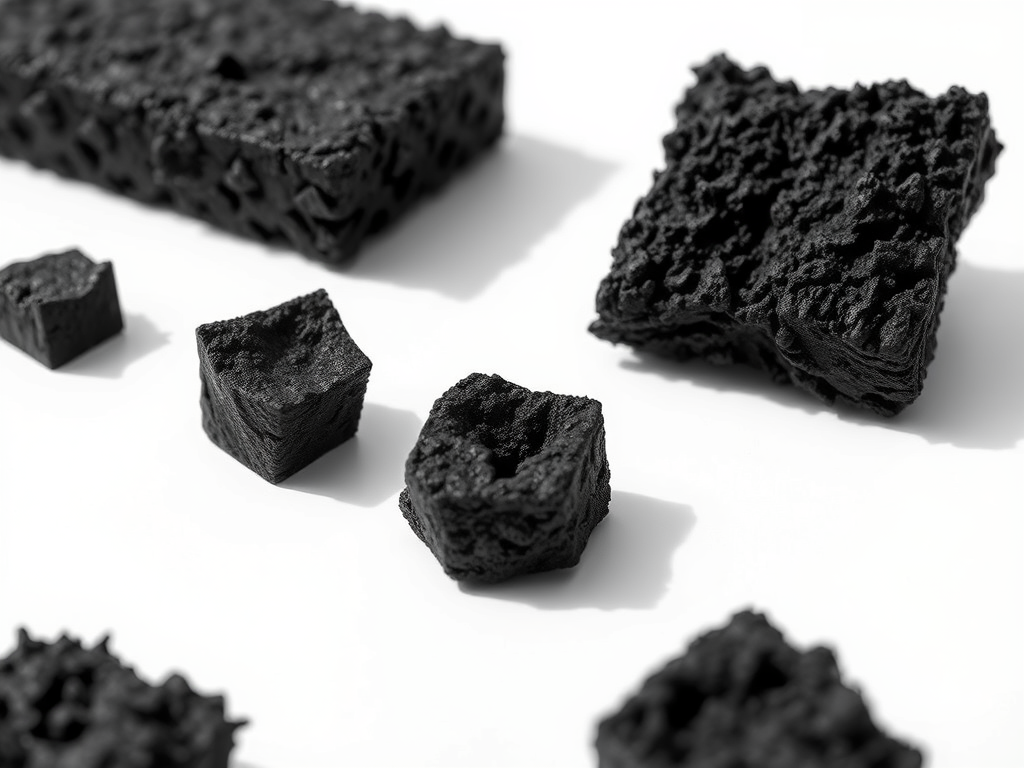
In a recent article published in Materials Advances, a research team led by Nectarios Vidakis and Markos Petousis has presented a revolutionary approach to creating environmentally friendly materials. The paper, titled “Biodegradable polyhydroxyalkanoate (PHA) composites with biocharBiochar is a carbon-rich material created from biomass decomposition in low-oxygen conditions. It has important applications in environmental remediation, soil improvement, agriculture, carbon sequestration, energy storage, and sustainable materials, promoting efficiency and reducing waste in various contexts while addressing climate change challenges. More ratios optimized for the additive manufacturing method of material extrusion: engineering, rheological, and morphological insights,” details the development of a completely biodegradable composite made from naturally derived poly(hydroxyalkanoate) (PHA) and biochar from agricultural residues. This innovation addresses the pressing environmental issues caused by the overuse of plastics and could offer a sustainable alternative for industrial applications like packaging, agriculture, and prototyping.
The composites were prepared with six different biochar concentrations: 0.0, 0.5, 1.0, 1.5, 2.0, and 2.5 weight percent (wt%). These mixtures were then extruded into filaments and used to manufacture 3D-printed composites via material extrusion (MEX) additive manufacturing (AM). The study aimed to assess the rheological, thermal, mechanical, and morphological properties of these new materials. The results highlight the potential of these bio-originated composites to replace harmful industrial polymers.
The findings indicate that composites with 0.5 wt% and 1.0 wt% biochar concentrations exhibited the best overall performance. The 0.5 wt% composite showed superior tensile toughness, which was a 17.7% increase compared to pure PHA. It also demonstrated improvements in bending toughness (3.1% increase), bending strength (15.3% increase), and Charpy impact strength (1.9% increase). The 1.0 wt% composite achieved the highest tensile strength, showing a 15.3% increase compared to pure PHA, and the highest Young’s modulus, with a 25.4% increase. Additionally, the 1.0 wt% composite had the lowest dimensional deviation and porosityPorosity of biochar is a key factor in its effectiveness as a soil amendment and its ability to retain water and nutrients. Biochar’s porosity is influenced by feedstock type and pyrolysis temperature, and it plays a crucial role in microbial activity and overall soil health. Biochar More, indicating a better 3D printing structure. Porosity was reduced by 23.3% compared to pure PHA. The study found a clear correlation between improved structural qualities, such as porosity and dimensional accuracy, and the enhanced mechanical properties of the 3D-printed parts.
Interestingly, the flexural modulus of elasticity decreased with the addition of biochar, which suggests the samples became less stiff under this specific type of load. However, this was not the case for tensile strength, where stiffness increased by a notable 25.4% for the 1.0 wt% composite. The microhardness of the composites also decreased as biochar content increased, indicating that the filler did not improve the compounds’ hardness. The study also found that at higher concentrations, specifically at 2.0 wt%, the composites showed signs of becoming more brittle, as observed in both the toughness test results and through scanning electron microscopy (SEM) images.
The researchers also evaluated the thermal and rheological properties. The thermal decomposition temperature remained stable across all samples, suggesting that adding biochar does not alter the polymer’s thermal response. However, the melt flow rate (MFR) decreased as the biochar content increased, which might indicate that higher filler amounts make the PHA more difficult to process. Despite this, the SEM images of the lateral surfaces showed no decrease in quality with the increase of biochar content, suggesting that the processing issues were not significant enough to affect the final product’s quality.
This pioneering study fills a gap in the literature, as no prior research had produced and characterized PHA/biochar filaments and 3D-printed specimens in this manner. While biochar has been used with conventional polymers, this research confirms its strong potential as an eco-friendly reinforcing agent for the PHA biopolymer. The findings pave the way for future research to further optimize these composites by adjusting 3D printing parameters or exploring different types of biochar to enhance their properties for real-world applications.
Source: Vidakis, N., Michailidis, N., Kalderis, D., Argyros, A., Gkagkanatsiou, K., Spyridaki, M., Valsamos, I., Papadakis, V., & Petousis, M. (2025). Biodegradable polyhydroxyalkanoate (PHA) composites with biochar ratios optimized for the additive manufacturing method of material extrusion: engineering, rheological, and morphological insights. Materials Advances.





Leave a Reply