

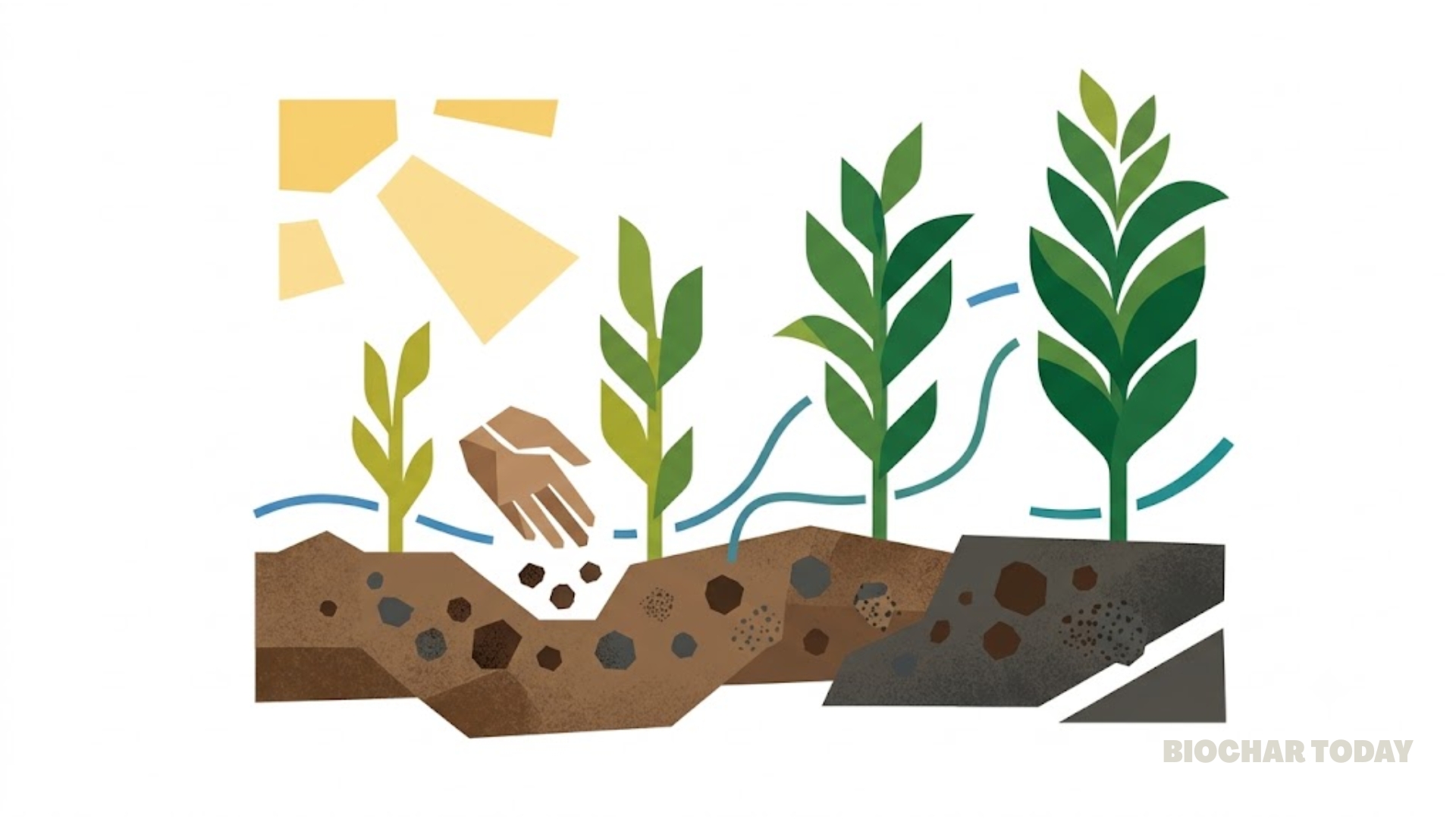
In a study published in BiocharBiochar is a carbon-rich material created from biomass decomposition in low-oxygen conditions. It has important applications in environmental remediation, soil improvement, agriculture, carbon sequestration, energy storage, and sustainable materials, promoting efficiency and reducing waste in various contexts while addressing climate change challenges. More, Zhang et al. explored how biochar amendments affect soil health in saline-alkali soils, focusing on the intricate relationship between microbial activity, nutrient availability, and carbon use. The research reveals that different types of biochar—acid-modified and alkaline—have distinct impacts on soil enzyme activity and nutrient balance, which in turn influences how microbes use carbon.
Saline-alkali soils, widespread in arid regions, pose significant challenges to agriculture due to their high salt content and pHpH is a measure of how acidic or alkaline a substance is. A pH of 7 is neutral, while lower pH values indicate acidity and higher values indicate alkalinity. Biochars are normally alkaline and can influence soil pH, often increasing it, which can be beneficial More. These conditions disrupt nutrient availability and hinder plant growth. Biochar, a carbon-rich material from burnt biomassBiomass is a complex biological organic or non-organic solid product derived from living or recently living organism and available naturally. Various types of wastes such as animal manure, waste paper, sludge and many industrial wastes are also treated as biomass because like natural biomass these More, has shown promise in improving these soils. However, its effects on soil microbes, crucial for nutrient cycling, are complex.
The study compared acid-modified and alkaline biochar applied to saline-alkali soils planted with alfalfa. The alkaline biochar increased the ratio of enzymes involved in carbon breakdown to those involved in nitrogen acquisition, especially at higher application rates. Conversely, acid-modified biochar decreased this ratio at lower application rates. Both biochar types reduced the ratios of carbon-to-phosphorus and nitrogen-to-phosphorus enzymes.
A key finding was that alkaline biochar shifted the microbial metabolism from nitrogen limitation towards phosphorus limitation, while acid-modified biochar alleviated nitrogen limitation, particularly at 2% and 5% application rates. Moreover, alkaline biochar at 2% and 5% reduced carbon limitation for microbes and improved how efficiently they use carbon. Acid-modified biochar did not show this benefit.
The study highlights that biochar’s impact is highly dependent on its properties, such as pH and the presence of specific compounds. These properties influence soil chemistry, microbial communities, and ultimately, plant growth. The research offers valuable insights for optimizing biochar use to enhance soil fertility and carbon storage in saline-alkali soils.
SOURCE: Zhang, G., Zhang, L., Shi, Z., Yang, Y., & Liu, J. (2025). Microbial nutrient limitation and carbon use efficiency in saline-alkali soil amended with biochar: insights from ecoenzymatic C:N:P stoichiometry. Biochar, 7, 68.




Leave a Reply