
Key Takeaways
- Forever chemicals are toxic man-made pollutants that do not break down in nature and can build up in humans and animals.
- BiocharBiochar is a carbon-rich material created from biomass decomposition in low-oxygen conditions. It has important applications in environmental remediation, soil improvement, agriculture, carbon sequestration, energy storage, and sustainable materials, promoting efficiency and reducing waste in various contexts while addressing climate change challenges. More is a charcoal-like material made from organic waste that can trap these harmful chemicals before they reach our food.
- Using biochar for environmental cleanup is much cheaper than using common industrial filters while providing similar protection.
- Chemical modifications can increase the ability of biochar to soak up pollutants by more than double in some cases.
- This technology helps prevent toxic substances from moving from the soil into crops like rice and vegetables.
In a review published in the journal Biochar, authors Haiyan Wang, Haiyan Zhang, Lizhi He, Jie Wang, Shuo Wang, Xiaoyu Shi, Xiaokai Zhang, Hailong Wang, and Feng He explore the critical role of carbon-rich materials in managing a class of persistent organic pollutants known as forever chemicals. These substances have become a global concern because they are used in everything from non-stick pans to firefighting foams and do not easily degrade in the environment. Because these chemicals are now found in drinking water, soil, and even infant formula, finding affordable ways to remove them is a top priority for scientists. Biochar has emerged as a primary candidate for this task because it is made from recycled agricultural or forestry waste and is much less expensive than industrial alternatives.
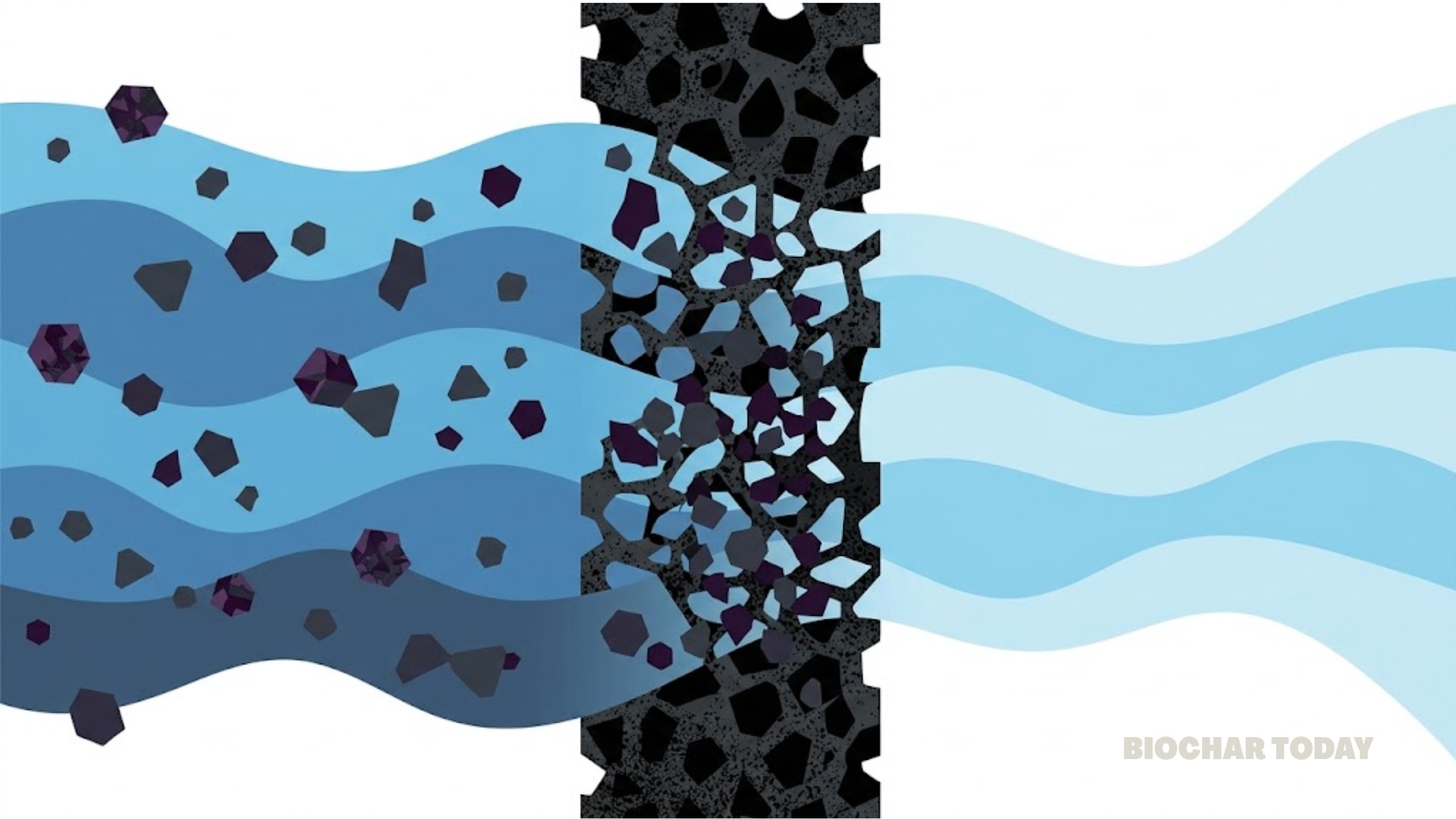
The research highlights how biochar acts like a microscopic sponge to capture these pollutants through various physical and chemical processes. The two most important ways it works are through hydrophobic and electrostatic interactions, where the chemical structure of the biochar naturally attracts and holds onto the pollutant molecules. Scientists have found that the effectiveness of this material depends on its internal structure, specifically the size of its tiny pores. For example, pores between 7.5 and 11 nanometers in size are ideal for trapping certain types of common forever chemicals, protecting them from being washed away by water movement or rain.
One of the most significant findings is that while plain biochar is helpful, modified versions of the material perform even better. By treating the biochar with acids or adding iron-based minerals, researchers were able to significantly boost its cleaning power. In one study mentioned in the review, adding iron chloride to biochar made from oak leaves nearly doubled its ability to soak up specific toxins, increasing the capacity from 23.4 to 42.2 milligrams per gram. Another modified version made from sawdust and red mud reached an impressive capacity of 194.6 milligrams per gram. These high performance levels are essential for cleaning up heavily contaminated industrial sites.
Beyond just removing chemicals from water, the study emphasizes how biochar protects the food supply. When these pollutants are in the soil, they are often sucked up by the roots of crops and eventually end up in the parts of the plant that humans eat. Short-chain chemicals are particularly prone to moving through a plant’s system and accumulating in the leaves or fruit. By mixing biochar into the soil, these toxins become stuck to the carbon particles, making it much harder for plant roots to absorb them. This effectively breaks the link between environmental pollution and human diet, reducing the risk of health issues like liver damage or immune system suppression.
The economic advantage of using this technology is a major factor in its potential for widespread use. Industrial grade activated carbonActivated carbon is a form of carbon that has been processed to create a vast network of tiny pores, increasing its surface area significantly. This extensive surface area makes activated carbon exceptionally effective at trapping and holding impurities, like a molecular sponge. It is commonly More, which is the current standard for water filtration, can cost around 1500 dollars per ton. In contrast, biochar can be produced for approximately 246 dollars per ton, making it nearly six times more affordable. This lower price point allows for larger-scale applications in developing regions or for treating vast areas of contaminated farmland where expensive filters would be impossible to fund. The use of biochar also supports carbon neutrality goals by sequestering carbon in the soil that would otherwise be released into the atmosphere as greenhouse gases.
While the benefits are clear, the researchers also note that the technology must be used carefully. Because biochar is a very light and dusty material, it can be blown into the air if not managed correctly during application. Additionally, it is important to ensure that the original organic waste used to make the biochar is not already contaminated with the very chemicals scientists are trying to remove. Despite these challenges, the study concludes that biochar represents a powerful and green tool for environmental protection. Future work will likely focus on tailoring biochar to target a wider variety of chemical structures and improving its long-term stability in different types of climates and soil conditions.
Source: Wang, H., Zhang, H., He, L., Wang, J., Wang, S., Shi, X., Zhang, X., Wang, H., & He, F. (2025). Environmental behavior of per- and polyfluoroalkyl substances (PFASs) and the potential role of biochar for its remediation: a review. Biochar, 7(14).



Leave a Reply