
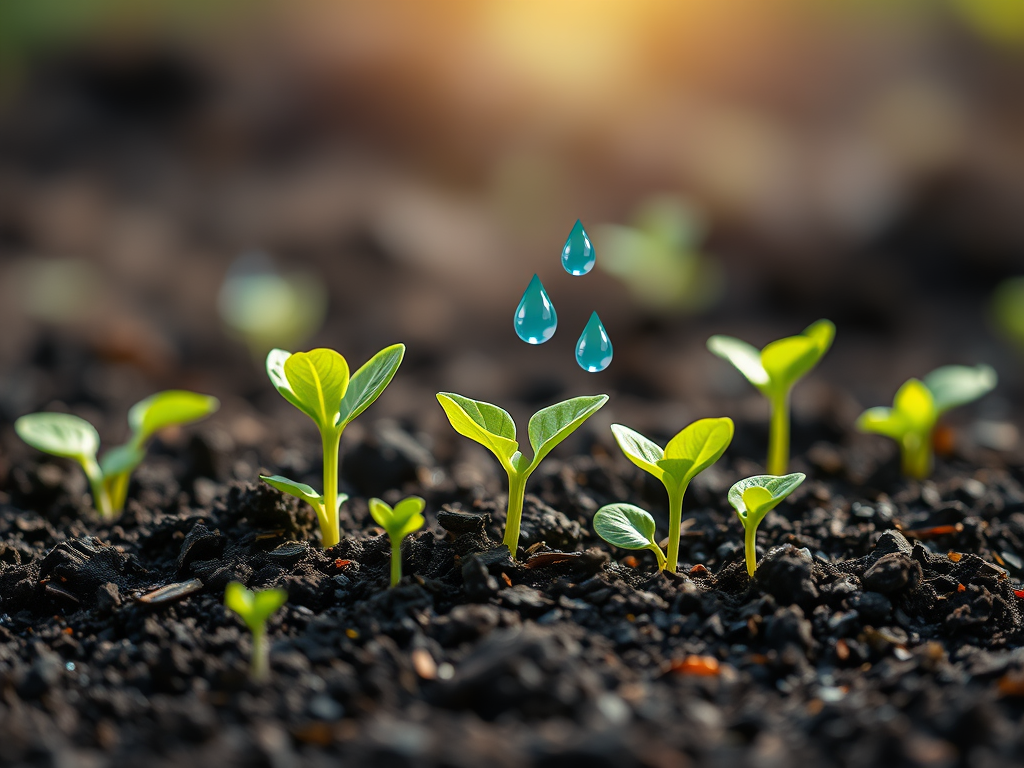
In a recent study published in Scientific Reports, authors Muhammad Imran Rafique et al. introduced a novel approach to sustainable agriculture by developing biochar-based slow-release fertilizers (SRFs). The research details the synthesis of these SRFs using biocharBiochar is a carbon-rich material created from biomass decomposition in low-oxygen conditions. It has important applications in environmental remediation, soil improvement, agriculture, carbon sequestration, energy storage, and sustainable materials, promoting efficiency and reducing waste in various contexts while addressing climate change challenges. More, mica, and a semi-interpenetrating chitosan polymer network, and examines their effects on soil moisture and nutrient availability.
The study reveals significant improvements in soil water-holding capacity with the application of biochar-based SRFs. Specifically, the fertilizers enhanced soil water-holding capacity by 40.61% and 47.80%, and water retention capacity by 32.55% and 35.52% after 30 days. This enhanced water retention is crucial for maintaining soil health, especially in arid and semi-arid regions where water scarcity challenges agricultural productivity.
Moreover, the newly developed SRFs demonstrated effective slow-release properties. While conventional fertilizers and mica showed a nutrient release ratio of 85-100%, the biochar-incorporated SRFs released nutrients at a more controlled pace: 75.53% of ammonium nitrogen, 65.66% of phosphorus, and 71.83% of potassium over 30 days. This slow and steady release of nutrients is vital for reducing nutrient loss and increasing fertilizer use efficiency, addressing a major environmental concern associated with traditional fertilizers.
The development of these biochar-based SRFs offers a promising solution to mitigate the environmental impact of chemical fertilizers, such as water pollution and soil degradation. By improving water retention and ensuring a more controlled release of nutrients, these SRFs can help in maintaining healthier soil, reducing water usage, and promoting sustainable agricultural practices. The study’s findings pave the way for innovative and eco-friendly approaches to fertilizer technology, marking a significant step towards enhancing agricultural sustainability.
SOURCE: Rafique, M. I., Al-Wabel, M. I., Al-Farraj, A. S. F., Ahmad, M., Aouak, T., Al-Swadi, H. A., & Mousa, M. A. (2025). Incorporation of biochar and semi-interpenetrating biopolymer to synthesize new slow release fertilizers and their impact on soil moisture and nutrients availability. Scientific Reports, 15(9563). Sources and related content



Leave a Reply