
Key Takeaways
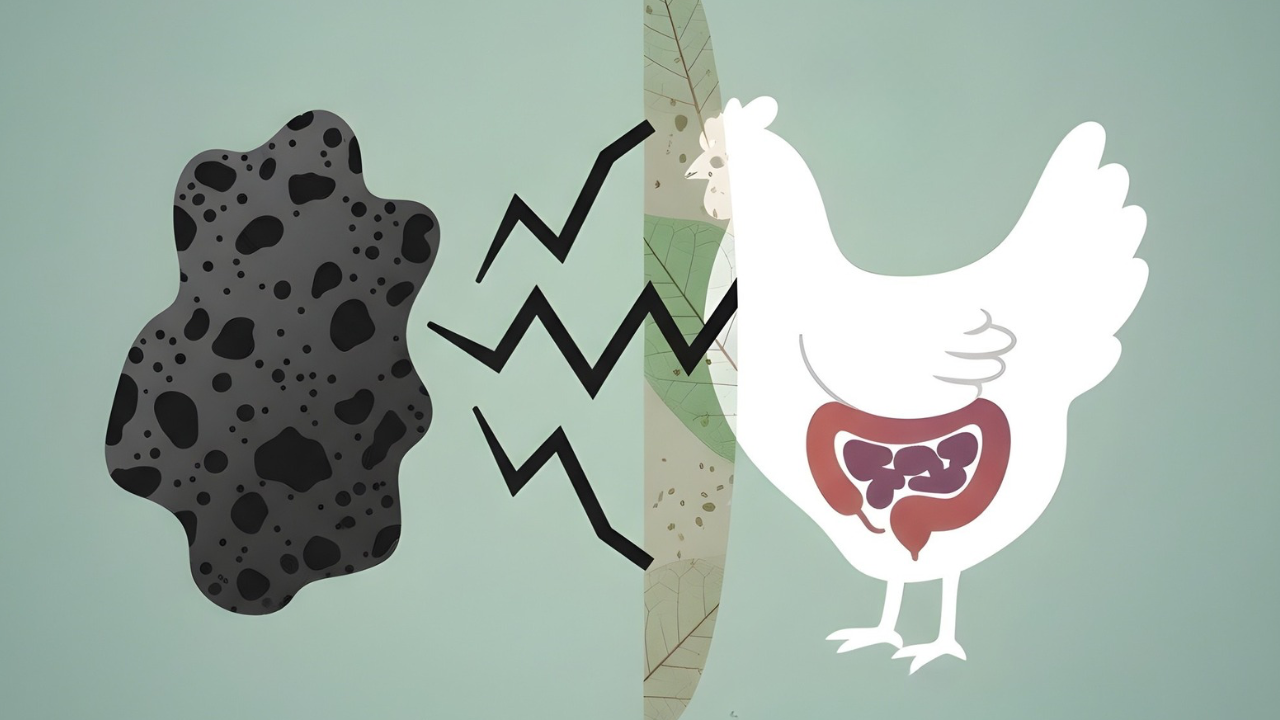
- Toxicity Reduced Significantly: BiocharBiochar is a carbon-rich material created from biomass decomposition in low-oxygen conditions. It has important applications in environmental remediation, soil improvement, agriculture, carbon sequestration, energy storage, and sustainable materials, promoting efficiency and reducing waste in various contexts while addressing climate change challenges. More applied to contaminated soil cut the dangerous accumulation of lead (Pb) in chicken tissues by an average of 72−81% and cadmium (Cd) by up to 93%.
- Healthier Meat: The reduction in Pb and Cd concentrations in edible organs like the pectoral muscle (meat), liver, and kidney brings the meat closer to international safety standards, making it safer for consumption.
- Nutrients Were Untouched: The amendments selectively blocked the toxic heavy metals without interfering with the chickens’ uptake of essential minerals like zinc and copper, ensuring the poultry meat remained nutritious.
- Practical Solution for Mining Towns: The successful use of biochar—an accessible and cost-effective material—in a field-realistic setting provides a practical way for communities in mining-affected areas like Kabwe, Zambia, to continue safely raising their own food.
In a study published in the Journal of Hazardous Materials Advances, researchers Madalitso Tembo, Andrew Kataba, Nyein Chan Soe, Rio Doya, Richard Musonda, Golden Zyambo, Yoshinori Ikenaka, John Yabe, Kaampwe Muzandu, Mayumi Ishizuka, and Shouta MM. Nakayama unveiled a highly effective, practical approach to combating heavy metal contamination in the food chain. The work directly addresses the critical issue of lead (Pb) and cadmium (Cd) accumulation in poultry raised on contaminated soils, a serious public health concern, particularly in regions like Kabwe, Zambia, which faces a legacy of mining pollution. The study evaluated the efficacy of four soil amendments—biochar (BC), triple superphosphate (TSP), phosphoric acid (PA), and calcined dolomite (CD)—at a 10% application rate in reducing the transfer of these toxic metals from contaminated soil into the tissues of both free-range and broiler chickens.
The findings clearly establish biochar as the single most effective amendment, consistently outperforming TSP, PA, and CD in reducing metal accumulation in chicken tissues. The average remediation achieved by BC in Pb contamination was approximately 81.5% in free-range chickens and 72.4% in broilers when measured by the Median Remediation Index (MRI). Organ-specific reductions highlight the dramatic impact. In free-range chickens, BC reduced Pb concentrations in the bone by 92.6% and the heart by 87.9%. In broilers, BC notably reduced blood Pb by 89.2% and Pb in the pectoral muscle (edible meat) by 88%. Across all organs, the reduction in Pb due to BC application ranged from 73.6% to 90.3% in free-range chickens and 63.2% to 89.8% in broilers compared to the untreated positive control group. This high efficacy is primarily attributed to BC’s porous structure and high surface area, which facilitate the adsorption and complexation of Pb ions, effectively immobilizing the metal in the soil.
The results for Cd were similarly promising, with BC and TSP demonstrating the best remediation performance. BC achieved a Cd reduction of up to 93.1% in the gizzard content and 89.7% in the gizzard muscle of free-range chickens. In broiler chickens, BC lowered Cd in the gizzard content by 90.5% and blood by 87.5%. These reductions are critical because chickens in the untreated control group accumulated Cd and Pb in their edible organs at levels that surpassed international safety thresholds, posing a direct threat to humans who consume them. The efficacy of these amendments in the gizzard and its contents suggests the gastrointestinal tract is a major site where Cd is intercepted and bound by the amendment before it can be absorbed into the chicken’s body.
An important finding for food quality is that the application of soil amendments did not significantly disrupt the concentrations of essential trace elements like copper (Cu) and zinc (Zn) in the chickens’ organs. The levels of Cu and Zn—minerals vital for poultry’s enzymatic and immune functions—remained stable and within expected physiological ranges across all treatment groups. This indicates that the amendments selectively target the toxic heavy metals without compromising the nutritional integrity of the poultry meat, which is vital for communities relying on poultry as a primary protein source
The untreated, contaminated soil used in the study contained extremely high metal concentrations, with Pb at 15,006.93 mg/kg and Cd at 112.90 mg/kg. The success of BC and TSP in significantly reducing metal bioaccumulation in both free-range and broiler chickens, which have different physiological profiles, presents a feasible, scalable, and cost-effective solution for food safety and public health in contaminated regions. This simple soil amendmentA soil amendment is any material added to the soil to enhance its physical or chemical properties, improving its suitability for plant growth. Biochar is considered a soil amendment as it can improve soil structure, water retention, nutrient availability, and microbial activity. More technique can be integrated into agricultural risk management and community-level public health strategies to reduce dietary metal consumption from animal products.
Source: Tembo, M., Kataba, A., Soe, N. C., Doya, R., Musonda, R., Zyambo, G., Ikenaka, Y., Yabe, J., Muzandu, K., Ishizuka, M., & Nakayama, S. M. M. (2025). Significant reduction of blood and tissue lead and cadmium concentrations in free-range and broiler chickens through soil remediation with biochar, phosphates, and calcined dolomite: Implications for public health and food safety. Journal of Hazardous Materials Advances, 20, 100907



Leave a Reply