
Key Takeaways
- The Problem: Soil salinity is a massive global threat to farming. High salt levels (specifically sodium and chloride) create “osmotic stress,” which dehydrates plants by making it impossible for them to absorb water, even if the soil is wet.
- The Solution: BiocharBiochar is a carbon-rich material created from biomass decomposition in low-oxygen conditions. It has important applications in environmental remediation, soil improvement, agriculture, carbon sequestration, energy storage, and sustainable materials, promoting efficiency and reducing waste in various contexts while addressing climate change challenges. More, a stable, charcoal-like substance made from heating agricultural waste (like manure or wood chips) in a low-oxygen environment, can remediate these soils.
- The “How” (Part 1): Biochar acts like a chemical magnet. It has a high Cation Exchange Capacity (CEC), or a negative charge, which allows it to grab and hold onto toxic, positively charged sodium (Na+) ions, preventing plants from absorbing them.
- The “How” (Part 2): It also has an Anion Exchange Capacity (AEC), or a positive charge. This less-common property allows it to trap the other half of the salt problem: toxic, negatively charged chloride (Cl−) and sulfate (SO42−) ions.
- The Results: This process works. In lab and field studies, biochar application increased millet yield by 47% in saline soil and extended the lifespan of salt-stressed rice by 80 days.
Salt is a silent, creeping crisis for global agriculture. It’s not just a problem for coastal farms; unsustainable irrigation and climate change are increasing soil salinity in arid and semi-arid regions worldwide, threatening food security. Saline soil is defined as having an electrical conductivity (EC) of 4 deciSiemens per meter (dS/m) or more. This salty environment is toxic to most crops. It creates osmotic stress, which essentially dehydrates plants because the high salt concentration in the soil prevents their roots from absorbing water. Furthermore, the high levels of sodium (Na+) ions disrupt plant cells and block the uptake of essential nutrients like potassium. This problem is vast, affecting an estimated 80 million hectares in Africa and over 194 million in Asia. A new review in the journal Discover Sustainability by Abdulrahman Maina Zubairu and colleagues explores a powerful and sustainable solution: biochar.
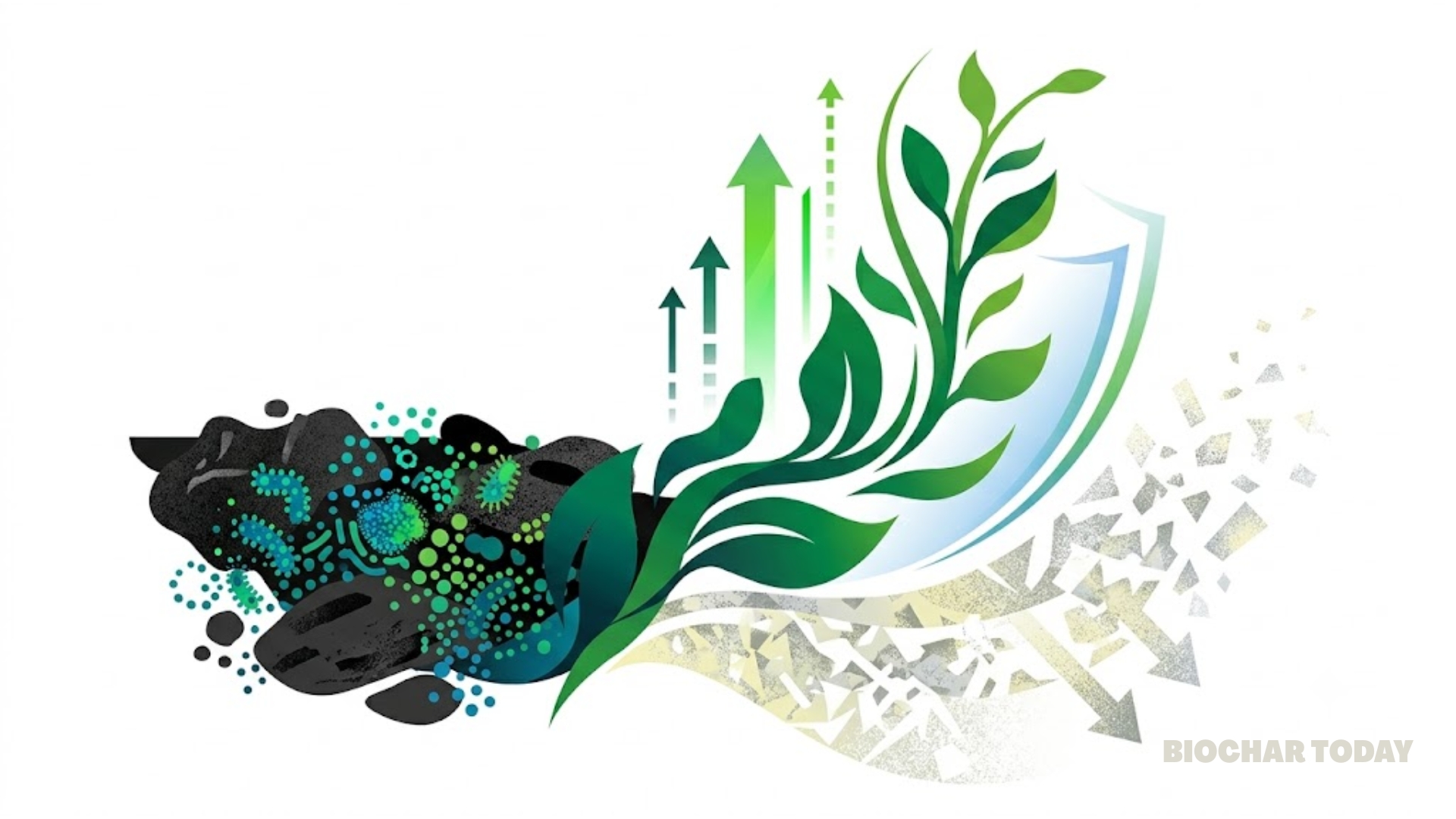
Biochar production process converts waste into a stable soil amendmentA soil amendment is any material added to the soil to enhance its physical or chemical properties, improving its suitability for plant growth. Biochar is considered a soil amendment as it can improve soil structure, water retention, nutrient availability, and microbial activity. More that works in two major ways. First, it physically improves the soil. Biochar’s porous structure enhances soil aggregation, porosityPorosity of biochar is a key factor in its effectiveness as a soil amendment and its ability to retain water and nutrients. Biochar’s porosity is influenced by feedstock type and pyrolysis temperature, and it plays a crucial role in microbial activity and overall soil health. Biochar More, and water retention. This is critical because it also improves the soil’s hydraulic conductivity, allowing water to drain through it more effectively. This improved drainage helps leach, or flush, the harmful soluble salts out of the root zone, directly lowering the soil’s EC.
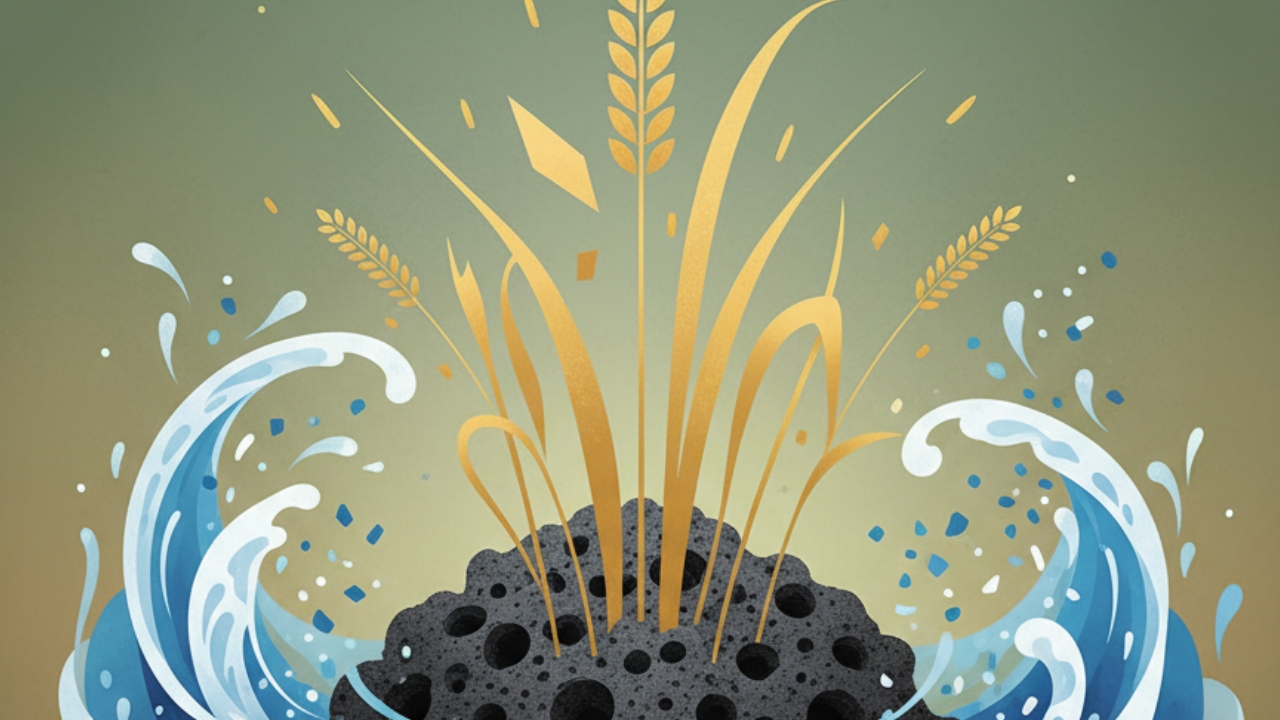
The real magic, as the review highlights, is chemical. Biochar’s surface is highly reactive and acts like a molecular magnet. Its primary feature is a high Cation Exchange Capacity (CEC), which means it has a strong negative surface charge. In saline soils, the main chemical villain is the positively charged sodium ion (Na+). The biochar’s negative charge attracts and adsorbs these Na+ ions, locking them onto its surface and preventing them from being absorbed by plant roots. As it traps the harmful sodium, it can simultaneously release beneficial cations it holds, such as calcium (Ca2+) and magnesium (Mg2+), which are essential for plant health and improving soil structure.
This review, however, places special emphasis on a less-discussed but equally important mechanism: Anion Exchange Capacity (AEC). If salt is sodium chloride (NaCl), the CEC (negative charge) grabs the Na+ (positive ion). But biochar can also possess a positive charge, or AEC. This positive charge is believed to come from specific nitrogen and oxygen functional groups (like pyridinium and oxonium groups) embedded in the biochar’s structure during pyrolysisPyrolysis is a thermochemical process that converts waste biomass into bio-char, bio-oil, and pyro-gas. It offers significant advantages in waste valorization, turning low-value materials into economically valuable resources. Its versatility allows for tailored products based on operational conditions, presenting itself as a cost-effective and efficient More. This AEC allows the biochar to adsorb the other half of the salt problem: the negatively charged anions, primarily chloride (Cl−) and sulfate (SO42−). By effectively trapping both the positive and negative ions that form salt, biochar deactivates the threat.
This chemical and physical remediation translates directly to crop survival. The review summarizes several studies with striking results. One field study using sunflower stalk biochar on saline soil increased millet yield by 47%. The biochar worked by reducing the soil’s EC, increasing nutrient availability, and enhancing soil moisture retention. In another experiment, biochar application extended the lifespan of rice plants under high salt stress by 80 days. Other studies on tomatoes and maize showed similar benefits, with biochar-treated plants demonstrating enhanced water absorption and transpiration, allowing them to thrive in conditions that would normally stunt or kill them.
The future of this technology may lie in “nano-biochar”. By shrinking the biochar particles to the nanoscale, their relative surface area and porosity increase, making them even more reactive and efficient at adsorbing contaminants. However, this technology is still in its early stages, with higher costs and unknown environmental risks. The authors also make a critical point: while soil salinity is a severe and growing problem in Africa, the vast majority of biochar research has been conducted on other continents. They call for urgent, localized studies to develop biochar solutions tailored for the specific soils and farming practices of African nations.
Source: Zubairu, A. M., Ocansey, C. M., Gangwar, R. K., Szegi, T. A., Boros, N., Sebők, A., Dálnoki, B. A., Takács, A., & Gulyás, M. (2025). Overview of biochar role in remediating soil salinity stress in crops. Discover Sustainability, 6(1), 1185.



Leave a Reply