
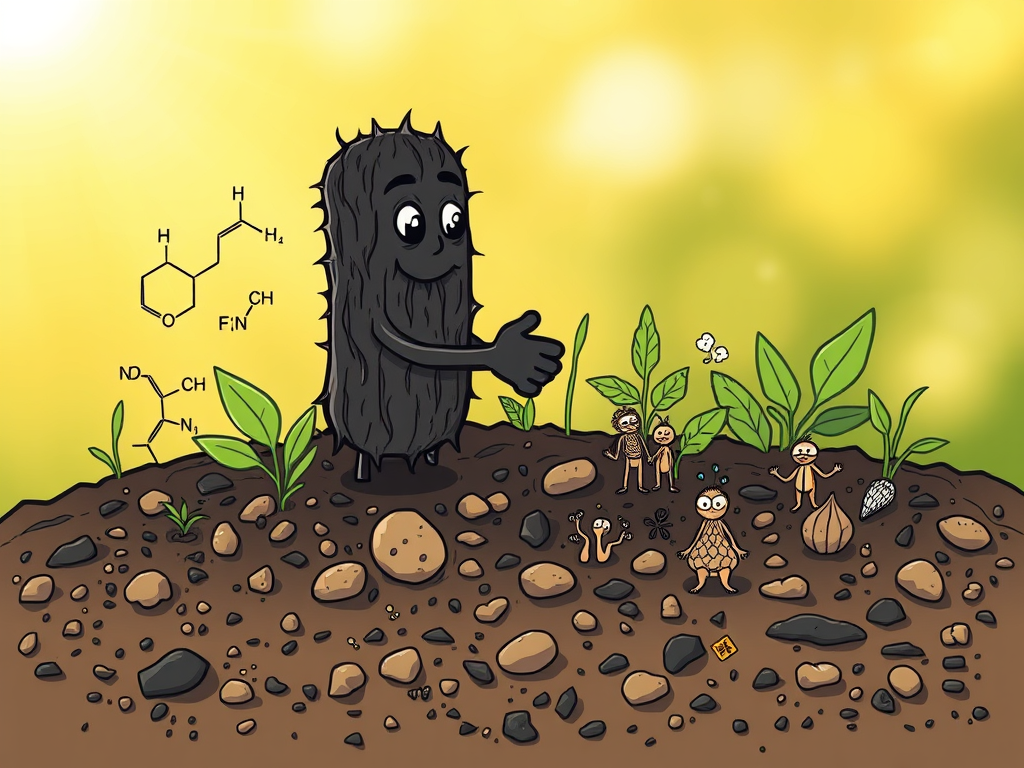
The widespread use and persistence of the herbicide fluridone have raised concerns due to its adverse effects on non-target plants and aquatic organisms. A recent study published in BiocharBiochar is a carbon-rich material created from biomass decomposition in low-oxygen conditions. It has important applications in environmental remediation, soil improvement, agriculture, carbon sequestration, energy storage, and sustainable materials, promoting efficiency and reducing waste in various contexts while addressing climate change challenges. More by Chi Wu, Yuzhu Wang, Jihong Liu Clarke, Hang Su, Liang Wang, Olga A. Glazunova, Konstantin V. Moiseenko, Lan Zhang, Liangang Mao, Lizhen Zhu, and Xingang Liu, investigated the potential of rice hull biochar (BCR) as a remediation agent in four different soil types. Their findings demonstrate that biochar significantly enhances the sorption and biodegradation of fluridone and its primary metabolite, fluridone acid, while positively influencing the soil’s microbial communities.
The researchers produced rice hull biochar (BCR) at varying temperatures, from 300 to 700°C. They observed that increasing the pyrolysisPyrolysis is a thermochemical process that converts waste biomass into bio-char, bio-oil, and pyro-gas. It offers significant advantages in waste valorization, turning low-value materials into economically valuable resources. Its versatility allows for tailored products based on operational conditions, presenting itself as a cost-effective and efficient More temperature from 300 to 700°C led to changes in biochar properties, including an increase in specific surface area from 38.21 to 126.12 m²/g. The sorption affinity (Kf) of BCR for fluridone ranged from 409 to 1352 (µg/g)/(mg/L)n, and for its metabolite fluridone acid, it ranged from 1301 to 6666 (µg/g)/(mg/L)n.
A key finding was that amending soil with 2% BCR500 (biochar produced at 500°C) significantly improved the adsorption of both fluridone and fluridone acid. The Kf values in amended soils were 1.30 to 3.73 times higher than in pure soil. This indicates that biochar effectively immobilizes the herbicides, reducing their exposure in the environment.
The study also focused on the degradation of fluridone and fluridone acid. Fluridone acid showed significantly longer persistence in soil, with half-lives ranging from 179 to 306 days, compared to fluridone’s 39 to 179 days. However, with the addition of 2% BCR500, both fluridone and fluridone acid degraded faster. The half-life of fluridone in biochar-amended soil decreased by 29% to 45%, while fluridone acid’s half-life decreased by 21.79% to 46.88%. Experiments under sterilized conditions confirmed that biodegradation was the dominant process, accounting for 61.59%-64.70% of degradation in unamended soil and a higher 67.71%-77.67% in amended soil.
Bioinformatic analysis revealed that while fluridone initially reduced the diversity of the soil microbial community, the addition of BCR increased the abundance of microorganisms with degradation capabilities, making them dominant species. Notably, degrading bacteria such as Lysobacter, Pseudonocardia, and Sphingomonas showed increased numbers after biochar amendment. This suggests that biochar not only provides a favorable environment for these microorganisms by altering soil properties and providing nutrients but also strengthens bacterial connections, alleviating fluridone-induced stress.
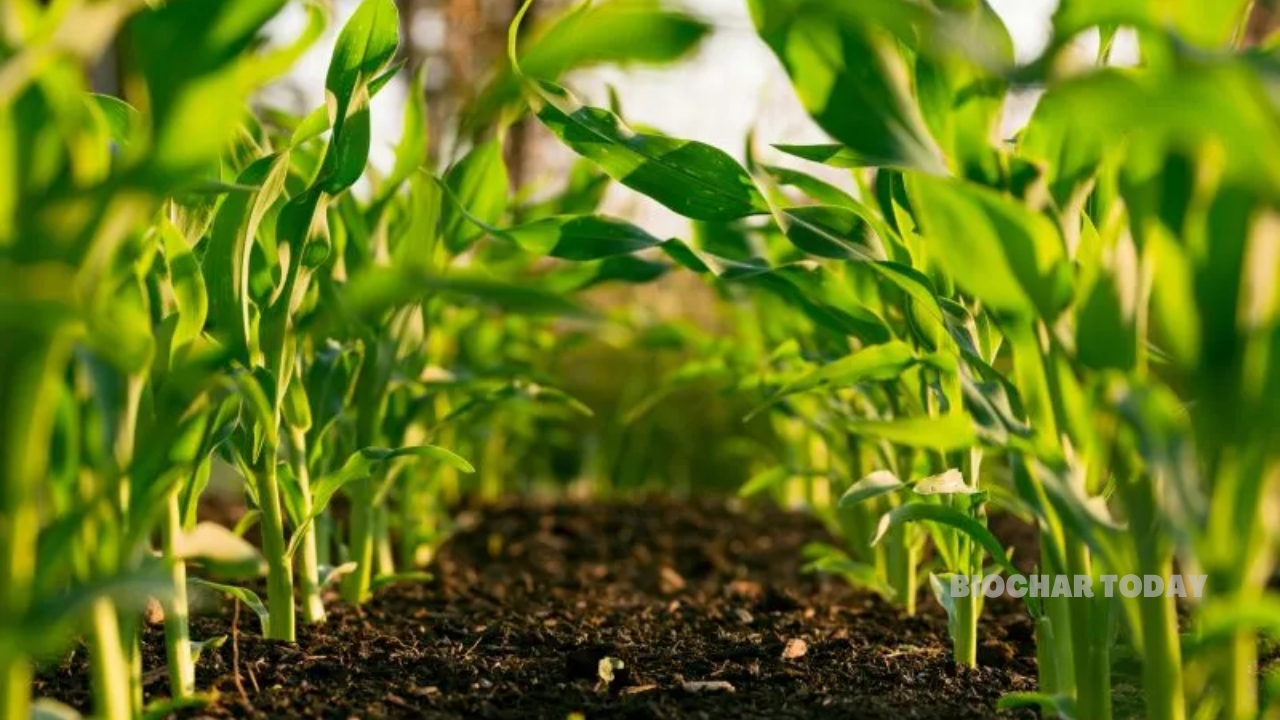
Furthermore, the study observed that biochar amendment could effectively protect plant leaf structures from damage caused by fluridone. In maize plants grown in fluridone-contaminated soil, the addition of 2% BCR500 significantly mitigated stress, leading to a 146%-153% increase in plant height, a 154%-215% increase in root length, and a 142%-167% increase in fresh weight. This improvement is primarily due to the adsorption and isolation of fluridone by biochar, reducing its uptake by plant roots.
This research highlights biochar’s potential as a sustainable remediation strategy for pesticide-contaminated agricultural soils, offering a dual function of adsorbing pesticides and stimulating microbial degradation. While more research is needed for field-scale validation and long-term effects, integrating biochar amendments with other agronomic practices could lead to more resilient and environmentally sustainable pesticide management.
Source: Wu, C., Wang, Y., Clarke, J. L., Su, H., Wang, L., Glazunova, O. A., Moiseenko, K. V., Zhang, L., Mao, L., Zhu, L., & Liu, X. (2025). Biochar enhances the sorption and degradation of fluridone and its main metabolite in soil: insights into biodegradation potential and remediation of microbial communities. Biochar, 7(81).



Leave a Reply