
Key Takeaways
- BiocharBiochar is a carbon-rich material created from biomass decomposition in low-oxygen conditions. It has important applications in environmental remediation, soil improvement, agriculture, carbon sequestration, energy storage, and sustainable materials, promoting efficiency and reducing waste in various contexts while addressing climate change challenges. More from rice husks and sulfur can significantly reduce the harmful effects of scandium, a toxic metal, on wheat.
- The sulfur-modified charcoalCharcoal is a black, brittle, and porous material produced by heating wood or other organic substances in a low-oxygen environment. It is primarily used as a fuel source for cooking and heating. More is much better than regular charcoal at preventing scandium from building up in the wheat roots and leaves.
- This treatment enhances wheat’s natural defenses, helping it fight off the stress and damage caused by the toxic metal.
- The improved wheat plants show healthier growth, better root development, and more efficient food production (photosynthesis).
- This new method offers an environmentally friendly way to protect an important food crop from metal pollution in the soil.
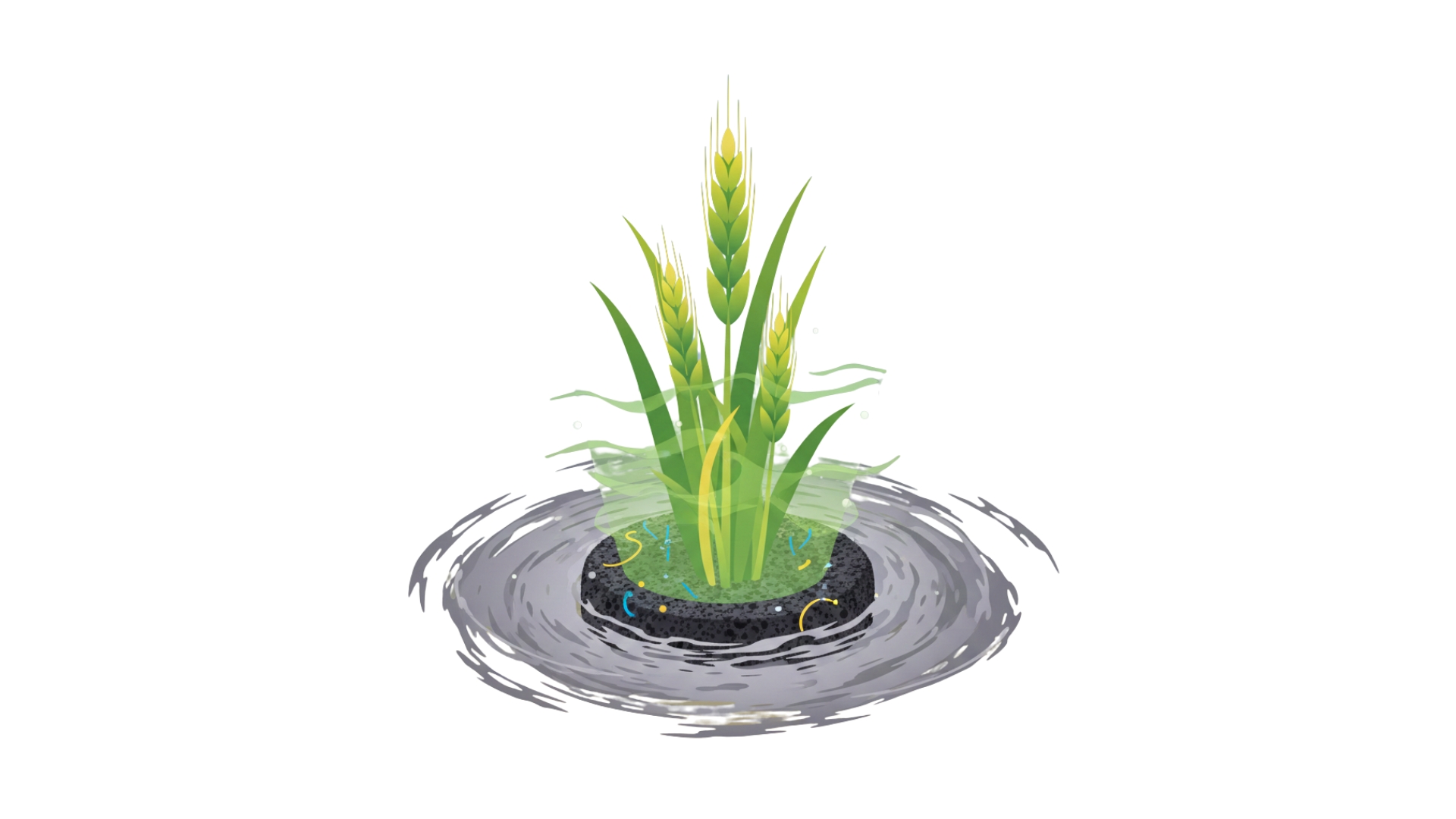
In a recent article published in Industrial Crops & Products, researchers Ghulam Murtaza and his colleagues investigated a promising new method to safeguard one of the world’s most vital crops from metal contamination. The study focused on using a specially engineered biochar made from rice husks, to counteract the negative effects of scandium (Sc) toxicity in wheat. Scandium, a heavy metal, is known to inhibit crop growth, disrupt physiological functions, and trigger harmful oxidative stress in plants. The team set out to compare the efficacy of beta-Sulfur-engineered biochar (BS-MBC) against pristine biochar (PBC) in wheat seedlings exposed to a toxic level of scandium, finding that the sulfur-modified version offered significantly superior protective effects.
The findings from the research showed that scandium exposure severely inhibited wheat growth, leading to notable decreases in various growth metrics, photosynthetic pigments, and root characteristics. For example, fresh shoot weight dropped by over $44\%$ in scandium-stressed plants compared to control plants. However, the application of the $\beta$-Sulfur-engineered biochar largely mitigated these detrimental effects. The BS-MBC treatment proved more effective than pristine biochar in promoting growth, resulting in increments in shoot fresh weight and root length of. Furthermore, the treatment dramatically improved photosynthetic activity, with Chlorophyll a and Chlorophyll b concentrations increasing respectively, compared to the scandium-stressed plants. Gas exchange characteristics, crucial for plant productivity, were also enhanced.
A key mechanism of BS-MBC’s success lies in its ability to limit the plant’s uptake of the toxic metal. Compared to the scandium-stressed group, the sulfur-modified biochar reduced scandium deposition in the leaves and in the roots . This superior performance is linked to the beta-sulfur modification process, which introduces new functional groups like polysulfide connections that have a strong chemical affinity for binding and immobilizing scandium ions, thereby reducing the metal’s bioavailability to the plant. This structural enhancement leads to the formation of more robust, stable complexes with scandium compared to other biochar modifications. The sulfur treatment also improved the biochar’s surface area and structural order, which are essential factors for pollutant adsorptionBiochar has a remarkable ability to attract and hold onto pollutants, like heavy metals and organic chemicals. This makes it a valuable tool for cleaning up contaminated soil and water. More.
Beyond restricting metal uptake, BS-MBC also bolstered the wheat plant’s internal defense system. Scandium toxicity triggers a dramatic rise in reactive oxygen species (ROS), which cause severe cellular damage indicated by increased levels of hydrogen peroxide and malondialdehyde (MDA), as well as significant electrolyte leakage (EL). The BS-MBC treatment significantly reduced these oxidative stress markers. Concurrently, the treatment greatly enhanced the activity of essential antioxidant enzymes, such as catalase (CAT), glutathione reductase (Gr), and superoxide dismutase (SOD), in both the roots and leaves. This enhancement of the antioxidant system, coupled with the activation of metal-resistant genes, effectively maintained the dynamic balance necessary for cell survival and promoted healthier growth. The study’s results suggest that beta-Sulfur-engineered biochar is a highly viable and promising approach for mitigating heavy metal stress and promoting sustainable agricultural practices in metal-contaminated environments. While further field studies and detailed adsorption tests are needed to fully characterize the long-term benefits and underlying mechanisms, this research presents an innovative and effective remedy for scandium-induced toxicity in a staple crop.
Source: Murtaza, G., Usman, M., Hyder, S., El-Beltagi, H. S., Alwutayd, K. M., Ahmed, Z., Iqbal, J., Ullah, S., & Iqbal, R. (2026). Beta-sulfur-engineered biochar mitigates scandium toxicity in wheat: Impacts on growth characteristics, photosynthetic activity, and redox regulation. Industrial Crops & Products, 239, 122390.




Leave a Reply