
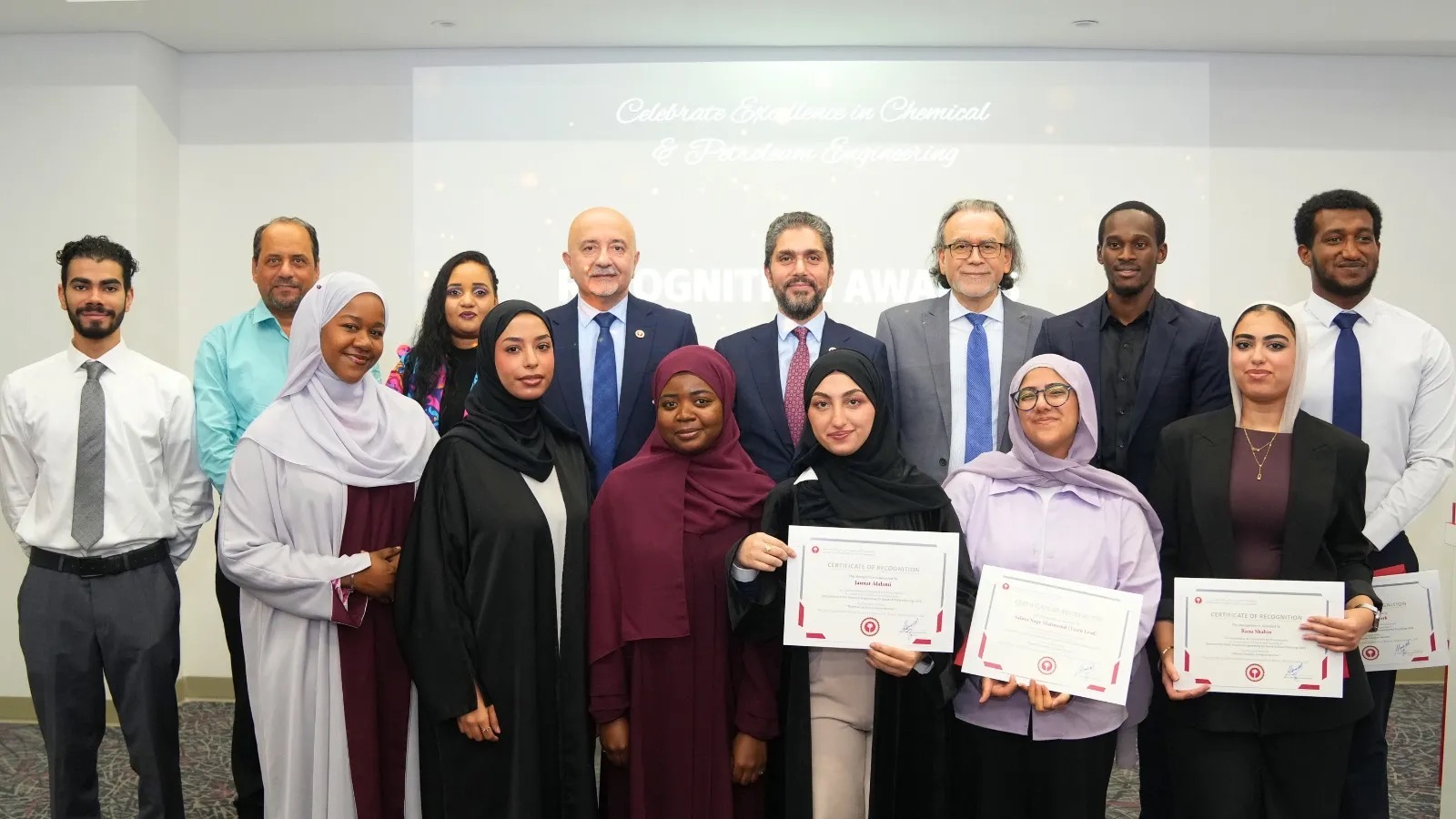
Two student teams from the American University of Ras Al Khaimah (AURAK) in the United Arab Emirates recently achieved international recognition at the 2025 AIChE Chemical Engineering for Good (ACE4G) Challenge. The global competition, hosted by the American Institute of Chemical Engineers, challenged students to apply engineering principles to improve the quality of life for communities in the developing world. The AURAK teams secured both a First Place win and an Honorable Mention for projects that innovatively utilized biocharBiochar is a carbon-rich material created from biomass decomposition in low-oxygen conditions. It has important applications in environmental remediation, soil improvement, agriculture, carbon sequestration, energy storage, and sustainable materials, promoting efficiency and reducing waste in various contexts while addressing climate change challenges. More technologies to address critical infrastructure needs, demonstrating the material’s versatility in solving complex environmental problems.
The projects targeted two distinct but pressing challenges facing developing regions: the scarcity of potable water due to chemical contamination and the inefficiency of traditional waste management systems. Specifically, one team focused on the pervasive issue of fluoride-contaminated groundwater in Ziway, Ethiopia, a health hazard that affects local populations. The second team addressed the limitations of conventional composting, which is often a slow process characterized by significant greenhouse gas emissions, thereby hampering sustainable agricultural practices.
To tackle the water crisis, the Honorable Mention-winning team developed a filtration system using iron-impregnated bagasse biochar. This gravity-fed design was engineered to specifically target and remove fluoride ions from groundwater. Meanwhile, the First Place team engineered a “Thermo-Catalytic Compost Reactor” that employed a novel biochar–effective microorganism (EM) catalyst. By integrating this biochar catalyst with passive solar heating and a rotating drum mechanism, the team sought to optimize the breakdown of organic matter while simultaneously sequestering carbon and reducing the release of harmful gases.
The outcomes of these engineering interventions were statistically significant. The filtration project demonstrated a fluoride removal efficiency of up to 98%, capable of producing 20 liters of safe drinking water daily for affected households. The composting reactor reduced the standard decomposition time from 100 days to a range of 40–60 days and lowered key greenhouse gas emissions by up to 68%. For the biochar industry, these successes underscore a vital lesson: low-tech, high-impact biochar applications are not merely theoretical but are winning solutions that can be engineered to deliver measurable public health and environmental benefits on a global scale.



Leave a Reply