
Key Takeaways
- Low-temperature poultry litter biocharBiochar is a carbon-rich material created from biomass decomposition in low-oxygen conditions. It has important applications in environmental remediation, soil improvement, agriculture, carbon sequestration, energy storage, and sustainable materials, promoting efficiency and reducing waste in various contexts while addressing climate change challenges. More significantly improves plant shoot and root development.
- Biochar application rates at two percent maximize plant growth without causing salt stress.
- Higher application rates of five percent increase soil salinity and reduce plant biomassBiomass is a complex biological organic or non-organic solid product derived from living or recently living organism and available naturally. Various types of wastes such as animal manure, waste paper, sludge and many industrial wastes are also treated as biomass because like natural biomass these More.
- Adding plant-based bedding materials lowers sodium levels and improves potassium balance.
- Poultry litter biochar does not cause acute seed toxicity across evaluated conditions.
A recent publication in the journal Biochar X by researchers Yulai Yang, Md Nashir Uddin, Xuejun Qian, Samuel O. Alamu, Seong W. Lee, and Dong Hee Kang investigates how altering pyrolysisPyrolysis is a thermochemical process that converts waste biomass into bio-char, bio-oil, and pyro-gas. It offers significant advantages in waste valorization, turning low-value materials into economically valuable resources. Its versatility allows for tailored products based on operational conditions, presenting itself as a cost-effective and efficient More production conditions and soil application rates of poultry litter biochar affects soil chemical properties and plant growth outcomes. Intensive poultry production generates millions of tons of waste annually, creating severe nutrient management challenges, particularly on the Delmarva Peninsula. Transforming this waste into biochar offers a promising circular solution for soil amendmentA soil amendment is any material added to the soil to enhance its physical or chemical properties, improving its suitability for plant growth. Biochar is considered a soil amendment as it can improve soil structure, water retention, nutrient availability, and microbial activity. More, provided agronomic parameters are precisely tuned to prevent soil degradation.
The primary objective of the study was to evaluate the physiological responses of radishes grown in sandy loam soil amended with poultry litter biochar created under various pyrolysis temperatures, bedding compositions, and application concentrations. Researchers synthesized biochars at three hundred and five hundred degrees Celsius, incorporating ten percent pine shavings or rice hulls as bedding materials, and applied them to soil at two percent and five percent rates by weight. Across all experimental setups, seed germination rates remained uniformly high, ranging between ninety-three and one hundred percent, proving that the processed biochars induced no acute phytotoxic barriers during initial plant emergence.
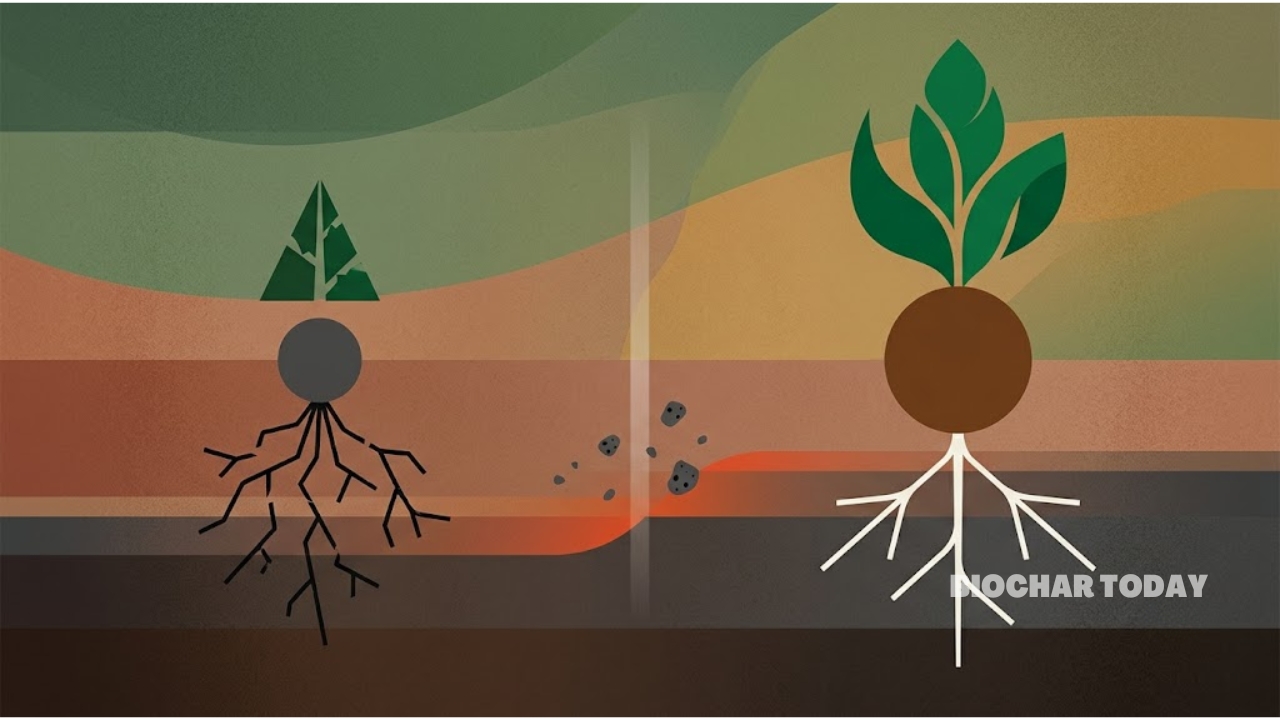
A fundamental finding of the study centers on the critical role of application rate in determining plant success. Amending soil with a two percent concentration of low-temperature biochar generated at three hundred degrees Celsius yielded optimal vegetative growth, significantly boosting leaf area, leaf biomass, and dark green color index values compared to unamended controls. Belowground development responded similarly, displaying superior total root length, increased root tip counts, and higher root weight. Low-temperature pyrolysis preserved labile nutrients and functional groups that enhanced cation exchange capacity and water holding capacityWater holding capacity is the amount of water that soil can retain. Biochar can significantly increase the water holding capacity of soil, improving its ability to withstand drought conditions and support plant growth. More without overloading the soil matrix.
Conversely, increasing the application rate to five percent produced detrimental agronomic effects. High application rates triggered a sharp rise in soil electrical conductivity, shifting the soil environment into a slightly saline range. This salt concentration generated osmotic stress that restricted root water absorption and created a severe nutrient imbalance. Excessive potassium and phosphorus levels caused cation competition, inhibiting the uptake of critical micronutrientsThese are essential nutrients that plants need in small amounts, kind of like vitamins for humans. They include things like iron, zinc, and copper. Biochar can help hold onto these micronutrients in the soil, making them more available to plants. More like calcium and magnesium, which ultimately resulted in stunted root systems and lower overall plant biomass.
The study also highlighted the significant benefits of incorporating plant-based bedding materials like pine shavings or rice hulls into poultry litter prior to pyrolysis. Bedding additives effectively lowered total sodium concentrations in the final biochar while improving the overall potassium-to-sodium ratio. This structural adjustment reduced sodium-induced toxicity, improved nutrient adsorption for controlled slow-release fertilization, and protected developing plant tissues from abrupt osmotic spikes.
Overall, the findings demonstrate that poultry litter biochar processed at three hundred degrees Celsius with wood or hull bedding serves as a safe and highly effective soil amendment when applied at or below two percent by weight. By adhering to these operational parameters, agricultural systems can recycle animal waste sustainably, protect regional watershed health, and improve crop productivity.
Source: Yang, Y., Uddin, M. N., Qian, X., Alamu, S. O., Lee, S. W., & Kang, D. H. (2026). The effect of poultry litter biochar generated at different pyrolysis conditionsThe conditions under which pyrolysis takes place, such as temperature, heating rate, and residence time, can significantly affect the properties of the biochar produced. More on radish germination and growth. Biochar X, 2, Article 0009.



Leave a Reply