
Key Takeaways
- Antibiotic pollution in water systems poses a major threat to ecosystems and human health.
- BiocharBiochar is a carbon-rich material created from biomass decomposition in low-oxygen conditions. It has important applications in environmental remediation, soil improvement, agriculture, carbon sequestration, energy storage, and sustainable materials, promoting efficiency and reducing waste in various contexts while addressing climate change challenges. More made from agricultural and forestry waste serves as an inexpensive and highly efficient filter material.
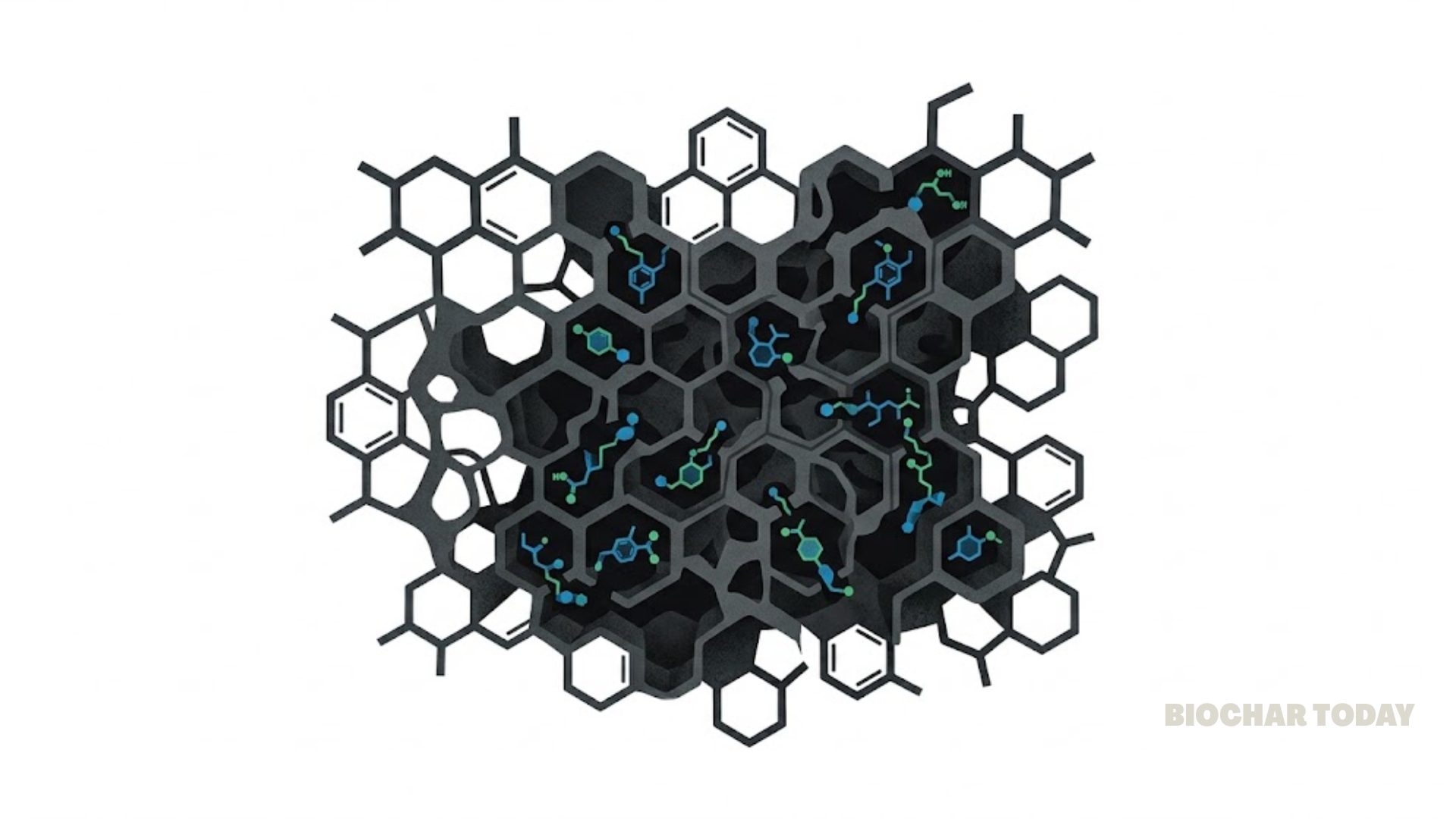
- The structure of this material typically features high carbon levels and porous networks that attract pollutants.
- Multiple natural forces work together simultaneously to pull different kinds of antibiotics out of the water.
- Altering the filter materials using specific chemical treatments can further improve their overall cleaning capacity.
The widespread presence of antibiotic drugs in aquatic environments has raised significant ecological and public health concerns, driving the search for sustainable, low-cost removal technologies. In a recent publication in E3S Web of Conferences, researchers Zhanpeng Zhang, Fang Shen, Jiannan Zhou, and Ye Li explored how biochar derived from agricultural and forestry waste provides a viable solution for water purification. These plant-derived waste materials, such as corn stalks, coffee grounds, and wood scraps, are naturally rich in cellulose and lignin. When heated to high temperatures in the absence of oxygen, a process known as pyrolysisPyrolysis is a thermochemical process that converts waste biomass into bio-char, bio-oil, and pyro-gas. It offers significant advantages in waste valorization, turning low-value materials into economically valuable resources. Its versatility allows for tailored products based on operational conditions, presenting itself as a cost-effective and efficient More, these raw materials transform into highly stable, carbon-rich structures. The resulting material retains the intricate physical networks of the original plant tissue, yielding an absorbent charcoalCharcoal is a black, brittle, and porous material produced by heating wood or other organic substances in a low-oxygen environment. It is primarily used as a fuel source for cooking and heating. More that features an extensively developed internal pore framework and a massive overall surface area.
The findings indicate that the ability of this agricultural charcoal to clean wastewater relies heavily on its unique elemental makeup and surface features. The structural analysis shows that carbon is the primary component across all evaluated plant wastes. For instance, corn stalks and coffee grounds yield materials containing over eighty percent carbon, while cedar wood reaches nearly ninety-one percent carbon content. High processing temperatures drive off volatile compounds, causing the oxygen and hydrogen contents to fall while the carbon content increases. This process enhances the aromaticity of the material, meaning it forms highly stable, conjugated carbon rings. These ring structures are vital because they create powerful electronic attractions that pull in corresponding ring structures found within common antibiotic drugs. Additionally, the material retains crucial oxygen and nitrogen groups on its surface, which serve as active docking sites for waterborne pollutants.
The review highlights that the extraction of antibiotics from water is not driven by a single force, but rather by the combined action of five distinct mechanisms. First, electronic donor-acceptor interactions happen when electron-rich areas on the carbon surface bind with electron-deficient parts of antibiotic molecules like tetracycline, ciprofloxacin, or sulfamethoxazole. Second, hydrogen bonding occurs between polar surface groups and the molecular groups of the drugs. Third, electrostatic forces create physical attraction or repulsion depending on the acidity of the water and the electrical charge of both the charcoal surface and the medicine molecules. Fourth, the material exhibits strong hydrophobic traits, meaning it naturally repels water and selectively attracts highly water-repellent pollutants. Finally, physical pore filling allows small antibiotic molecules to enter and become trapped within the tiny micropores of the charcoal framework. Because these distinct forces are deeply intertwined, the actual purification process cannot be controlled by altering just one factor.
To boost this natural cleaning capacity, scientists employ various modification strategies to optimize the pore pathways and add extra active surface groups. Treating the charcoal with acids or bases dissolves remaining mineral impurities and etches out the pores, which dramatically expands the available surface area and alters the surface acidity to favor hydrophobic or polar bonding. Introducing oxidizing or reducing agents changes the number of oxygen groups to fine-tune how the filter interacts with different types of chemicals. Another highly effective approach involves doping the material with metals like iron or manganese. This metal blending increases the active surface sites and creates magnetic properties that allow the powder to be easily collected and separated from water using magnets after the cleaning cycle is complete. Creating composite structures by combining the charcoal with materials like chitosan or clay minerals further expands its versatility and mechanical strength.
Ultimately, the study concludes that agricultural and forestry waste biochar holds exceptional promise for environmental cleanup due to its abundant supply and multi-faceted performance. However, its behavior remains highly dependent on the specific chemical setup of the water body and the exact shape of the targeted drug molecule. Because various modification methods can sometimes damage the underlying carbon skeleton or cause metals to leak back into the environment, future research must establish precise mathematical relationships to balance these trade-offs. Practical engineering applications will require matching the specific raw material and modification strategy to the exact water quality conditions found in real-world environments.
Source: Zhang, Z., Shen, F., Zhou, J., & Li, Y. (2026). Structural analysis of agricultural and forestry waste biochar and research progress on antibiotic adsorption. E3S Web of Conferences, 717, 02019.



Leave a Reply