
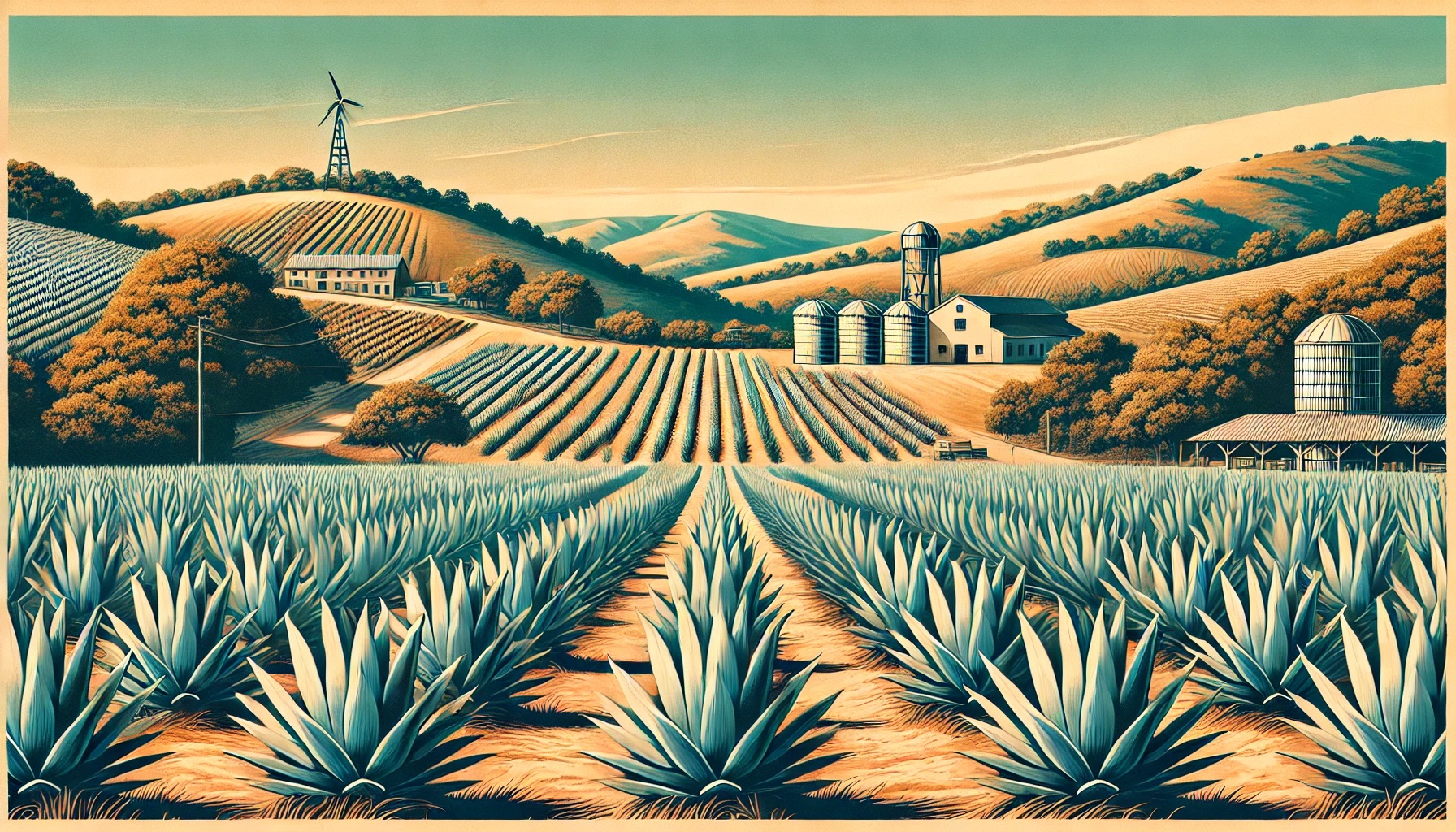
Sonoma County’s HIVE project near Petaluma is pioneering sustainable farming by integrating agave cultivation with innovative agricultural practices, including biocharBiochar is a carbon-rich material created from biomass decomposition in low-oxygen conditions. It has important applications in environmental remediation, soil improvement, agriculture, carbon sequestration, energy storage, and sustainable materials, promoting efficiency and reducing waste in various contexts while addressing climate change challenges. More production. Agave, known for its use in tequila, has diverse applications in biofuel, sweeteners, and medicine. Its resilience to drought and minimal water needs—just 1/15 the water required by almonds—make it a sustainable crop for California’s dry conditions.
The 528-acre HIVE hub, developed by Carlo Berg, supports ventures focused on sustainability. In addition to agave, the site hosts biochar production led by Takachar, a company using specialized reactors to create biochar from organic waste. Biochar improves soil health, enhances carbon sequestration, and reduces greenhouse gas emissions, aligning with the hub’s mission of sustainable farming. This regenerative tool complements agave farming by enriching soil microbiomes and improving water retention—critical in arid climates.
Agave farming is expanding in California, growing from 50 to over 200 acres. Craig Reynolds, President of the California Agave Council, highlights agave’s potential as a climate-resilient crop for Sonoma County’s “banana belt.” With a harvest cycle of five years, agave offers a sustainable alternative to water-intensive crops like tomatoes and pistachios.
Supported by a $500,000 UC Davis grant, researchers are studying agave’s viability and environmental benefits. Meanwhile, the HIVE’s collaborative approach, which includes biochar, no-till farming, and other green practices, showcases how innovation can transform agriculture into a more sustainable industry.
#SustainableFarming #Biochar #Agave #ClimateAdaptation #CaliforniaAgriculture
READ MORE: Agave growing with other crops, ventures at new North Bay ag hub





Leave a Reply