
Key Takeaways
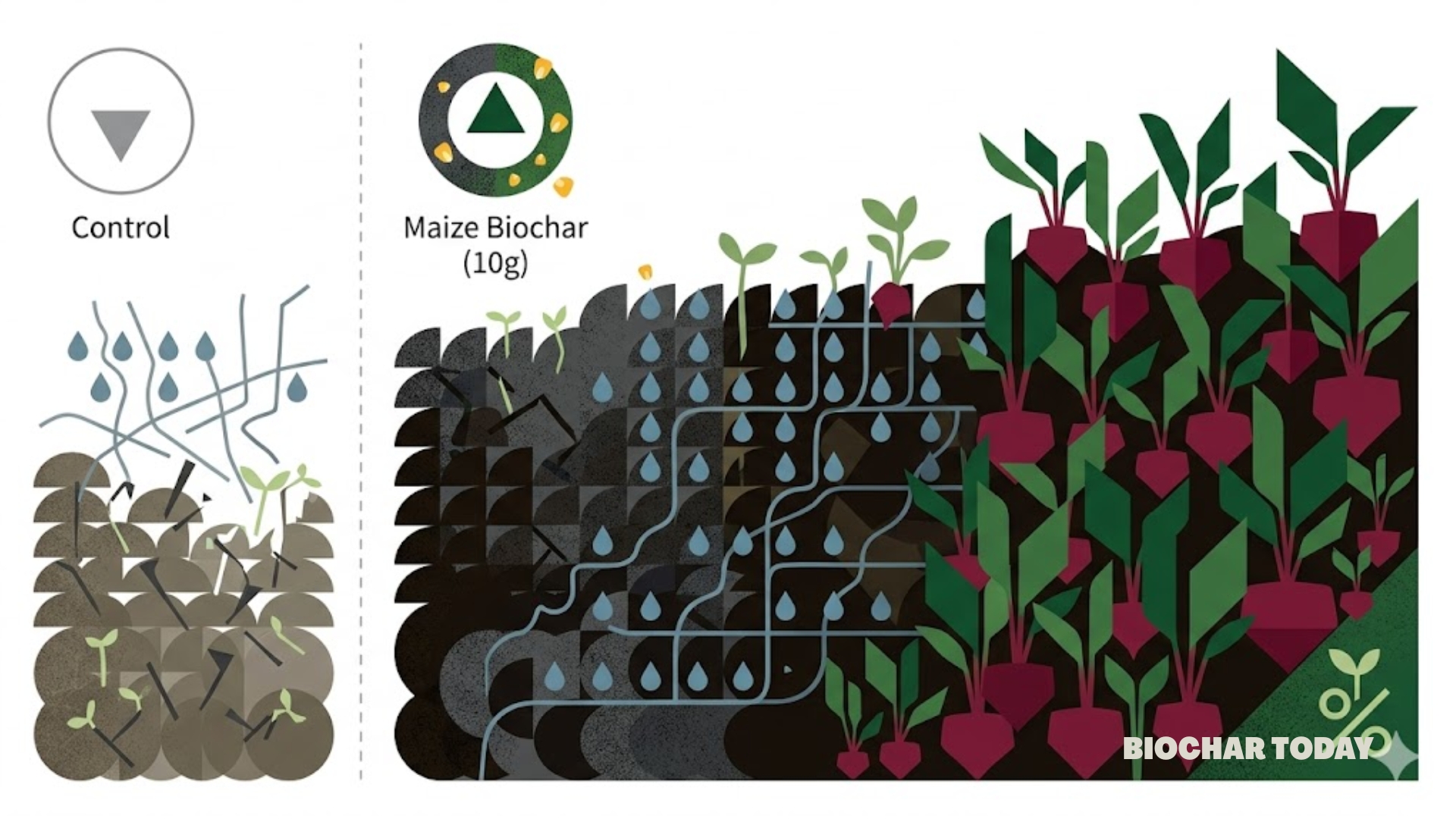
- Adding a small amount of biocharBiochar is a carbon-rich material created from biomass decomposition in low-oxygen conditions. It has important applications in environmental remediation, soil improvement, agriculture, carbon sequestration, energy storage, and sustainable materials, promoting efficiency and reducing waste in various contexts while addressing climate change challenges. More made from corn waste to soil increases the percentage of seeds that successfully sprout.
- Vegetable crops watered with treated municipal wastewater grow significantly longer leaves when the soil is enriched with corn charcoalCharcoal is a black, brittle, and porous material produced by heating wood or other organic substances in a low-oxygen environment. It is primarily used as a fuel source for cooking and heating. More.
- Using corn charcoal in cultivation soils produces significantly heavier beetroot bulbs with larger overall circumferences.
- Doubling the amount of biochar added to the soil does not lead to any extra improvements in vegetable size or weight.
- Combining agricultural waste recycling with recycled water irrigation offers a highly sustainable way to grow healthy food crops.
Global farming faces a dual crisis of worsening freshwater shortages and severe environmental pollution stemming from the widespread overproduction and high cost of artificial fertilizers. To address these interconnected challenges, scientists and agricultural specialists are exploring circular economy practices that recycle farm waste and reuse wastewater. Converting leftover crop residues like corn stalks into biochar, which is a nutrient-rich and highly porous charcoal material, represents a highly promising and low-cost alternative to chemical fertilizers. Leftover agricultural biomassBiomass is a complex biological organic or non-organic solid product derived from living or recently living organism and available naturally. Various types of wastes such as animal manure, waste paper, sludge and many industrial wastes are also treated as biomass because like natural biomass these More is heavily available, and transforming it into soil amendments prevents it from being burned, which directly reduces greenhouse gas emissions while simultaneously improving soil fertility. When combined with the practice of irrigating crops with treated municipal wastewater, this circular approach can help dry and water-scarce regions maximize food production sustainably.
The study evaluated how maize biochar impacts beetroot growth, leaf height, and bulb yield when plants are drip-irrigated daily with city wastewater. The findings revealed that adding maize biochar to the soil dramatically improved seed germination. After fourteen days, the untreated soil had a germination rate of seventy-six percent, whereas soil treated with ten grams of maize biochar achieved a ninety-two and a half percent germination rate. This improvement is linked to the highly porous structure of the biochar, which acts like a sponge to trap moisture and slowly release vital mineral nutrients to the emerging seedlings. Chemical analysis confirmed that the maize biochar contains high amounts of carbon and essential plant nutrients, including potassium, phosphorus, magnesium, iron, manganese, copper, and zinc. Because the municipal wastewater had extremely low levels of these minerals, the recycled corn charcoal served as the primary, highly effective source of crop nourishment.
In addition to starting off stronger, the biochar-treated beetroots grew much faster and produced superior yields compared to the untreated control group. At the time of harvest, which was three months after planting, the average mass of the beetroot bulbs grown in untreated soil was roughly one hundred and sixty-four grams. In comparison, soil fertilized with ten grams of maize biochar yielded beetroots with an average mass of nearly two hundred and thirty-two grams, marking a significant increase in overall food biomass. The physical size of the crops also improved, with the average bulb circumference expanding from twenty-five and a half centimeters in the untreated control group to over twenty-eight and a half centimeters in the biochar-treated groups. The treated plants also developed significantly taller, healthier leaves, which is vital for photosynthesis.
An important practical finding for farmers is that doubling the biochar fertilization dose from ten grams to twenty grams per hole did not yield any statistically significant differences in leaf height, bulb mass, or bulb circumference. In fact, the twenty-gram dosage slightly slowed down the initial seed germination rate compared to the ten-gram application. This suggests that a lower, more economical application of biochar is fully sufficient to achieve maximum crop yields. Ultimately, this research demonstrates that integrating locally produced maize biochar with treated municipal wastewater irrigation provides farmers with a cheap, resilient, and highly sustainable circular agricultural system that secures food production in arid environments without the ecological damage associated with synthetic fertilizers.
Source: Mathapa, B. G., Gaba, T., & Mmolawa, K. (2026). Improvement in beetroot’s (Beta vulgaris) growth and yield parameters in soils fertilized with maize (Zea mays) biochar under drip irrigation with treated wastewater. Preprints.org.



Leave a Reply