
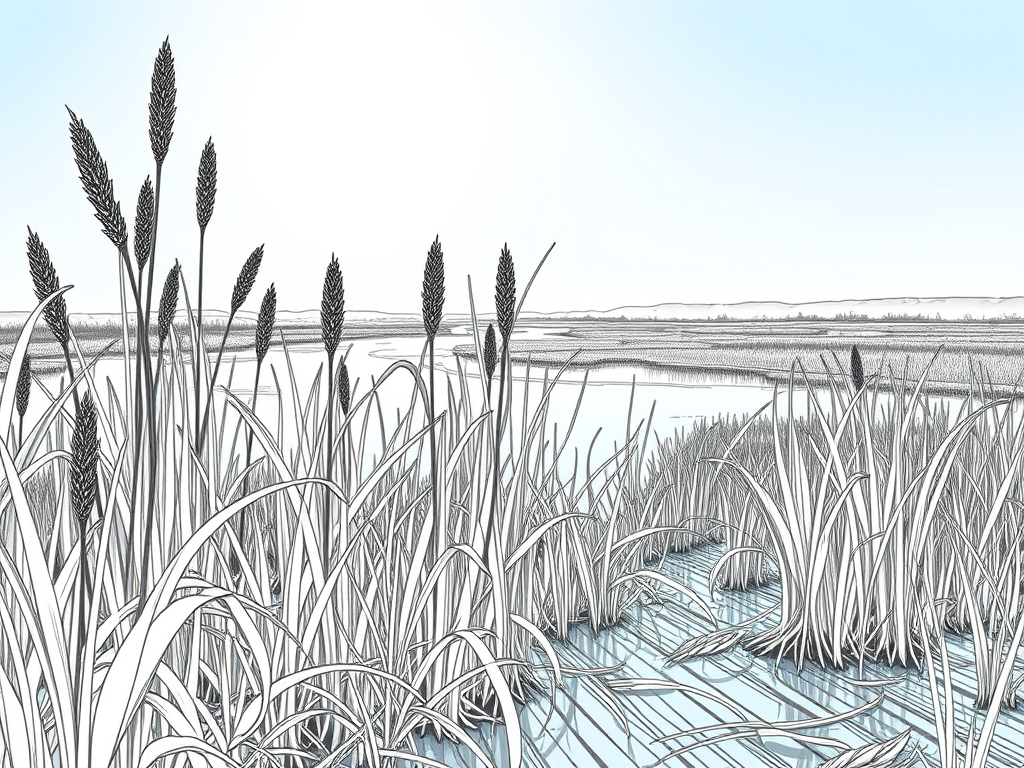
Coastal wetlands are vital ecosystems, providing critical services like biodiversity conservation and climate regulation. However, they face significant threats, particularly from invasive species such as Spartina alterniflora. Large-scale removal efforts of this invasive grass can disrupt soil carbon pools and fragment habitats. A recent study published in Diversity by Tang et al. investigates a sustainable solution: converting Spartina alterniflora biomassBiomass is a complex biological organic or non-organic solid product derived from living or recently living organism and available naturally. Various types of wastes such as animal manure, waste paper, sludge and many industrial wastes are also treated as biomass because like natural biomass these More into biocharBiochar is a carbon-rich material created from biomass decomposition in low-oxygen conditions. It has important applications in environmental remediation, soil improvement, agriculture, carbon sequestration, energy storage, and sustainable materials, promoting efficiency and reducing waste in various contexts while addressing climate change challenges. More to aid wetland restoration. Their findings demonstrate that a moderate application of this biochar significantly enhances the growth and root development of the native Scirpus mariqueter, a keystone species in these ecosystems.
The research specifically evaluated how different concentrations of Spartina alterniflora-derived biochar (0%, 0.5%, 1%, and 3%) influenced the growth performance, clonal reproduction, root morphology, and rhizosphere properties of Scirpus mariqueter. The results showed a compelling dose-dependent response. Moderate biochar addition, particularly at a 1% concentration, emerged as the most effective treatment. This level significantly boosted the total biomass of Scirpus mariqueter by 64.5% compared to control groups. Breaking this down, aboveground biomass increased by 36.7% and, even more remarkably, belowground biomass saw a 115.0% increase. Root length, crucial for nutrient uptake and anchorage, also dramatically increased by 135.8% with the 1% biochar application.
These improvements in plant performance were linked to enhanced soil conditions. The biochar improved soil moisture and nutrient availability, including nitrate nitrogen (NO3−-N), ammonium nitrogen (NH4+-N), and available phosphorus (AP). It also stimulated nitrification, a key process in nitrogen cycling, and promoted clonal propagation of the native plant. Soil moisture content progressively increased with higher biochar concentrations, reaching a 12.54% increase over the control at the 3% treatment. Total carbon in the soil also rose significantly, with the 1% treatment showing a 14.24% increase and the 3% treatment a 42.18% increase compared to the control.
However, the study also revealed potential risks associated with high biochar concentrations. A high dose of biochar (3%) led to suppressed plant growth and reproductive allocation. This negative effect was attributed to elevated soil salinity and electrical conductivity (EC), which were 28.04% greater than the control at the 3% application rate. High salinity can induce osmotic stress and inhibit root elongation. Root morphological responses further supported this: while 1% biochar improved root length, surface area, and volume, the 3% treatment caused root thickening (increased average diameter by 23.68%) but reduced overall absorptive capacity.
The researchers emphasize that the conversion of invasive Spartina alterniflora biomass into biochar offers a dual-benefit approach: controlling an invasive species while simultaneously supporting ecological restoration and carbon sequestration. The findings provide valuable insights into ecologically recycling invasive biomass and support biochar as a viable tool for sustainable wetland restoration. This approach can potentially improve carbon sequestration in restored coastal wetlands, contributing to “blue carbon” initiatives. However, the study strongly recommends careful consideration of application rates and site-specific conditions to maximize ecological benefits and minimize unintended consequences. Future research should also incorporate long-term field trials and soil microbial community analyses to further elucidate the complex mechanisms at play.
Source: Tang, Y., Gao, J., Jiang, P., Li, J., Wu, M., Jiao, S., Zhang, L., Li, N., & Shao, X. (2025). Spartina alterniflora-Derived Biochar Alters Biomass Allocation and Root Traits of Native Scirpus mariqueter. Diversity, 17(5), 357.



Leave a Reply