
Today, the world comes together to celebrate World Environment Day, the United Nations’ largest platform for environmental awareness and action. The 2026 theme, ‘Inspired by Nature. For Climate. For Our Future.’, is both a reminder and a challenge. It calls upon governments, industries, communities, researchers, and individuals to look toward nature not merely as something to protect, but as a source of solutions for some of humanity’s greatest environmental challenges. At a time when climate change, land degradation, biodiversity loss, pollution, and resource scarcity are becoming increasingly interconnected, the search for practical, scalable, and nature-based solutions has never been more urgent. Among the many emerging tools available today, biocharBiochar is a carbon-rich material created from biomass decomposition in low-oxygen conditions. It has important applications in environmental remediation, soil improvement, agriculture, carbon sequestration, energy storage, and sustainable materials, promoting efficiency and reducing waste in various contexts while addressing climate change challenges. More stands out as one of the most versatile and scientifically supported approaches for building a climate-resilient future.
Biochar is more than a carbonaceous material. It represents a philosophy of turning waste into value, restoring ecosystems, and creating long-term environmental benefits from locally available resources while supporting livelihoods. In many ways, biochar embodies the spirit of the World Environment Day 2026 theme itself: learning from nature to secure our collective future.
Biochar: A Nature-Based Solution for Our Future
Nature has always been Earth’s most effective carbon manager. Forests, wetlands, grasslands, and healthy soils continuously capture and store atmospheric carbon. Yet human activities have disrupted these natural cycles, accelerating greenhouse gas emissions and degrading ecosystems. Biochar offers a unique opportunity to strengthen nature’s capacity to heal itself.

Biochar transforms agricultural residues, forestry wastes, organic by-products, and other biomassBiomass is a complex biological organic or non-organic solid product derived from living or recently living organism and available naturally. Various types of wastes such as animal manure, waste paper, sludge and many industrial wastes are also treated as biomass because like natural biomass these More resources into a stable form of carbon that can remain in soils for decades to centuries. Research increasingly recognizes biochar as a promising nature-based carbon management strategy that can simultaneously address climate mitigation, soil restoration, waste management, and sustainable agriculture. Studies indicate that biochar can significantly contribute to long-term carbon sequestration while generating multiple environmental co-benefits.
Unlike many climate solutions that focus on a single challenge, biochar operates across multiple environmental dimensions. It captures carbon, improves soil health, supports sustainable food production, enhances water retention, helps manage organic waste, contributes to circular bioeconomy models and importantly, it does all of these simultaneously.
Inspired by Nature: Restoring Soil, the Foundation of Life
The World Environment Day theme reminds us that healthy ecosystems are the foundation of sustainable societies.
Few ecosystems are more important—or more overlooked—than soil. Soils store enormous amounts of carbon, regulate water cycles, support biodiversity, and sustain agricultural production. Yet globally, soil degradation continues to threaten food security and environmental stability.
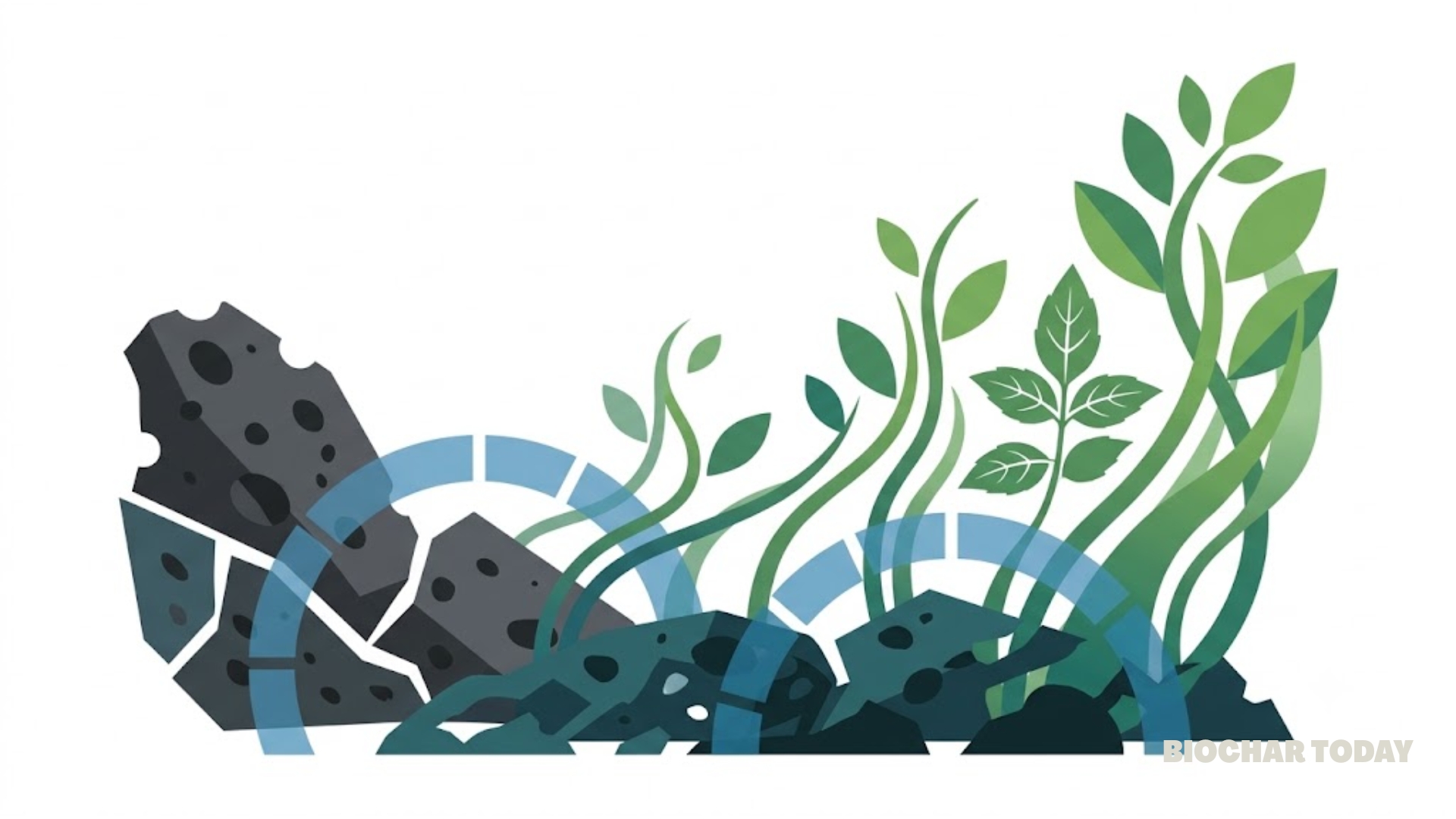
Biochar offers a powerful pathway for restoring soil functions. Its porous structure improves soil physical properties, enhances nutrient retention, supports beneficial microbial communities, and increases water-holding capacity. Numerous studies have demonstrated that biochar application can improve soil fertility, nutrient availability, and crop productivity while reducing nutrient losses and environmental pollution. For farmers facing increasingly unpredictable weather patterns, droughts, and declining soil quality, biochar provides a practical tool for enhancing resilience. Healthy soils are climate solutions and biochar helps rebuild healthy soils.

For Climate: A Nature-Based Carbon Management Strategy
Climate change remains one of the defining environmental challenges of our time. The scientific community increasingly emphasizes the importance of both reducing emissions and removing carbon dioxide already present in the atmosphere. Biochar is uniquely positioned at the intersection of these two objectives. By converting biomass into stable carbon rather than allowing it to decompose or burn openly, biochar prevents greenhouse gas emissions while simultaneously creating a long-term carbon sink. Estimates suggest that biochar systems can contribute substantial global carbon dioxide removal while supporting broader climate mitigation efforts. Biochar-based regenerative systems are increasingly being recognized as among the most promising nature-based carbon management strategies due to their durability, scalability, and environmental co-benefits. Importantly, biochar demonstrates that climate action does not always require complex technological infrastructure.
Sometimes the most effective solutions are those inspired by ecological principles and implemented at local scales.
- A farmer applying biochar to degraded soil.
- A community converting agricultural waste into valuable resources.
- A company integrating biochar into carbon management strategies.
- Each represents climate action grounded in practical reality.
For Our Future: Building Circular and Regenerative Economies
The future envisioned by World Environment Day 2026 is not merely low-carbon; it is regenerative. Biochar aligns naturally with circular economy principles. Agricultural residues that might otherwise be burned become valuable feedstocks, organic waste streams become resources, nutrients are retained rather than lost, carbon is stored rather than emitted, and economic opportunities emerge alongside environmental benefits.
Research increasingly highlights biochar’s role in supporting circular bioeconomies by transforming waste management challenges into opportunities for sustainable development, job creation, resource efficiency, and environmental protection. This is particularly significant for rural communities, developing economies, and agricultural regions where sustainable waste management and climate adaptation are urgent priorities. Biochar demonstrates that environmental stewardship and economic development need not be opposing goals. They can be mutually reinforcing.
Beyond Agriculture: Expanding Frontiers of Biochar Innovation
While biochar is widely recognized for its benefits in agriculture, its potential extends far beyond the farm. Researchers and practitioners are increasingly exploring its applications in water treatment, pollution control, ecosystem restoration, mine site rehabilitation, stormwater management, carbon removal initiatives, green infrastructure, construction materials, and industrial carbon management systems. Emerging evidence demonstrates biochar’s ability to adsorb pollutants, improve degraded environments, support ecological recovery, and contribute to a wide range of sustainability goals. Such versatility reinforces biochar’s relevance within the broader environmental agenda represented by World Environment Day.
The question is no longer whether biochar has potential. The question is how effectively we can scale its responsible adoption.
Celebrating the People Behind the Biochar Movement
On this World Environment Day, Biochar Today extends sincere appreciation to the individuals and organizations whose dedication continues to advance the biochar sector worldwide. We recognizes the researchers exploring new scientific frontiers, the scientists generating evidence that strengthens confidence in biochar solutions, and the practitioners who transform innovative ideas into meaningful action.
Biochar Today acknowledge the entrepreneurs building sustainable businesses, the engineers developing better technologies, and the farmers testing biochar under real-world conditions, and also praise the companies investing in sustainable carbon management, policymakers creating supportive frameworks, and students and young professionals bringing fresh perspectives and energy to the field.
Above all, we celebrate every individual who believes that environmental challenges can be transformed into opportunities for positive change. Your collective efforts are helping shape a more resilient and sustainable future. The global biochar community continues to grow in both diversity and impact, drawing its strength not only from scientific innovation but also from collaboration, shared learning, and a common commitment to environmental stewardship. We also extend our sincere appreciation to our sponsors and industry partners who support initiatives that advance biochar research, innovation, education, and implementation. Through their commitment to sustainable technologies, responsible business practices, and environmental solutions, they contribute meaningfully to the broader goal of creating positive outcomes for climate, ecosystems, and communities. At Biochar Today, we are privileged to witness these contributions and share many inspiring stories with readers around the world..
Your Story Matters
The theme of World Environment Day 2026 highlights the importance of nature-based solutions in addressing environmental challenges. Biochar is one such solution, with growing applications in carbon management, soil restoration, sustainable agriculture, waste valorization, and ecosystem recovery. Behind these advances are researchers, practitioners, farmers, entrepreneurs, companies, and organizations whose efforts continue to expand the understanding and adoption of biochar worldwide.

As we mark World Environment Day 2026, Biochar Today invites members of the global biochar community to share their experiences, innovations, and perspectives. Through interviews, guest columns, expert discussions, podcasts, and special features, we aim to highlight the diverse contributions that are helping shape the future of biochar.
On this World Environment Day, we extend our best wishes to our readers, contributors, sponsers and the wider biochar community. Through Biochar Today’s growing global network of researchers, practitioners, industry leaders, and innovators, let us continue to connect, share knowledge, and foster informed discussions that advance nature-based solutions for our climate and our future.


Leave a Reply