
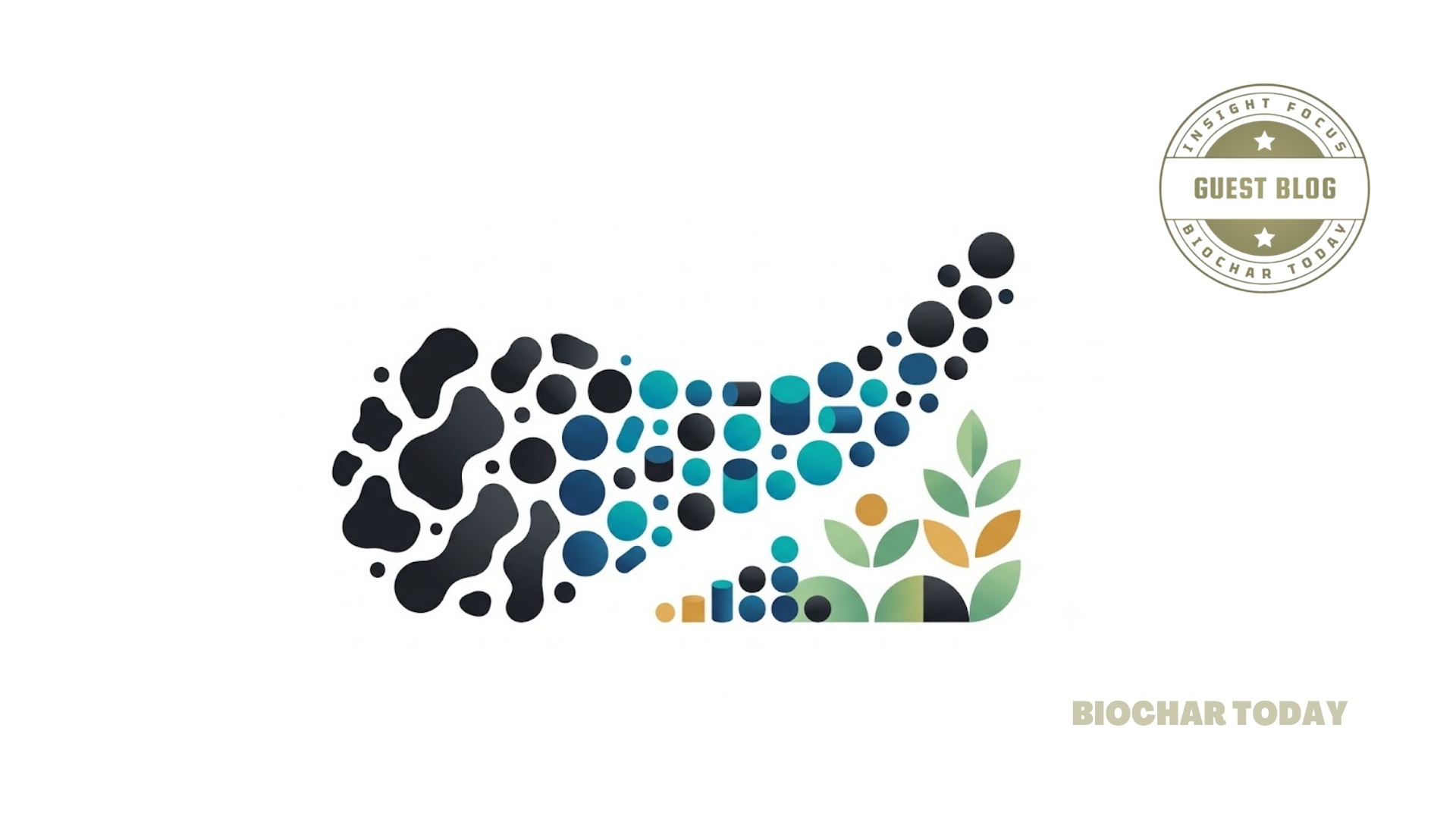
The case for going small is BIG.
There’s a subtle transformation happening in biocharBiochar is a carbon-rich material created from biomass decomposition in low-oxygen conditions. It has important applications in environmental remediation, soil improvement, agriculture, carbon sequestration, energy storage, and sustainable materials, promoting efficiency and reducing waste in various contexts while addressing climate change challenges. More, and it has nothing to do with feedstocks, pyrolysisPyrolysis is a thermochemical process that converts waste biomass into bio-char, bio-oil, and pyro-gas. It offers significant advantages in waste valorization, turning low-value materials into economically valuable resources. Its versatility allows for tailored products based on operational conditions, presenting itself as a cost-effective and efficient More temperatures, or carbon sequestration metrics. It’s about size and shape. Specifically, it’s about why the producers who are scaling successfully, commanding premium prices, and locking in repeat customers have largely moved away from chunky, irregular biochar pieces toward uniform, engineered pellets and granules.
The Problem with Chunky Char
Large biochar pieces look substantial – they feel like value – but they create operational problems for farmers, compost producers, soil blenders, and landscape contractors. Irregular chunks don’t distribute evenly. They create hot spots and dead zones in soil applications. They clog spreader equipment. They resist blending with other inputs. They are nearly impossible to apply at consistent, reproducible rates, meaning any performance claims made are immediately undermined by the unpredictability of how it actually ends up in the ground. As the biochar market rapidly evolves, application unpredictability is a liability.
Pellets Solve the Distribution Problem
Uniform pellets and granules move through material-handling systems more predictably because their size, shape, and flow characteristics can be controlled. Broadcast spreaders, seeders, blenders, and soil mixing machinery are all built around consistent particle geometry. When products conform to that geometry, customers’ operations run smoothly. When they do not, customers call with complaints – or, worse, they switch suppliers. Standardized pellet sizing also enables something that large-format biochar simply cannot deliver: precise, reproducible application rates. When a farmer specifies a specific quantity of biochar, that number has to be consistent from one bag, one season, to the next. Pellets and granules make that possible, irregular chunks do not. This is not just a minor operational “nice-to-have”. For commercial agriculture, municipal contracts, and other applications requiring documented input rates, this standardization can be a prerequisite for adoption. Pelletization does not simply make biochar easier to spread. It opens markets that inconsistent bulk materials cannot reliably serve.

Pelletization Create a Platform for Customization
The greatest advantage of pelletization may not be the pellet itself, but what can be engineered into it. When biochar is pelletized using an organic plant-based binder, producers gain the ability to engineer a product rather than simply sell a raw material. Biochar can be combined with minerals, nutrients, clays, compost-derived materials, and other functional ingredients for specific applications.
A producer could develop:
- A biochar-and-zeolite formulation for livestock bedding or manure management.
- A biochar-and-mineral blend designed for specific soil conditions.
- A nutrient-enhanced granule for agriculture, horticulture, or turf.
- A custom carbon carrier for an industrial process.
The opportunity is clear: pelletization allows producers to control ingredient ratios and distribute them uniformly throughout the finished product. A large piece of biochar is a raw material. A pellet or granule is a delivery system – providing a defined formulation in a sturdy, measurable, and most importantly, scalable, way. That is the difference between selling a commodity and selling a solution. Commodity markets compete on price. Solution markets compete on results – and results command premium margins!
The Logistics Argument Is Impossible to Ignore
Irregular, loose, and large-format biochar is a logistical nightmare. Its low bulk density limits how much product fits in a truck or storage container. Differences in particle size and settling complicate inventory management and freight planning. Fine material also generates dust during loading, transportation, and application.
Properly formulated pellets and granules can:
- Increase bulk density
- Use shipping volume more efficiently and predictably
- Reduce loose dust and product loss
- Improve flow through conveyors, hoppers, and packaging systems
- Provide more predictable storage and handling
- Arrive in a more consistent condition
Consistency also supports automation. A customer that can meter, blend, convey, and apply biochar using existing equipment is more likely to make it part of routine operations – making the product harder to replace, and more deeply embedded in their workflow.
The Business Case in Plain Terms
Every dollar invested in pelletizing biochar produces returns across multiple lines simultaneously: higher product value, broader market access, lower logistics cost, reduced handling complaints, and the ability to address more markets for biochar products that competitors selling raw pieces or powder simply cannot.
The producers treating biochar as a finished, engineered product – rather than a bulk raw material – are better positioned to build brands, win contracts, and develop products around customer needs. As more producers enter the market, those selling minimally processed biochar may find themselves competing primarily on price in a race toward the bottom.
Pelletization offers another path: competing on usability, consistency, formulation, and performance. It is not merely a processing upgrade. It is a business-model upgrade – the step that transforms biochar from something a producer makes into something a customer can reliably build into an operation. The small size is the big idea.
The question isn’t whether to pelletize — it’s how quickly can biochar producers turn pelletization into a competitive advantage.




Leave a Reply