
Key Takeaways
- Adding oil palm mesocarp fiber biocharBiochar is a carbon-rich material created from biomass decomposition in low-oxygen conditions. It has important applications in environmental remediation, soil improvement, agriculture, carbon sequestration, energy storage, and sustainable materials, promoting efficiency and reducing waste in various contexts while addressing climate change challenges. More at 5 to 15 percent by weight increases asphalt moisture damage resistance from 75.6 to 83.7 percent.
- Acacia-derived metal-rich biochar deployed in a 0.5 millimeter layer cuts dangerous volatile organic compound emissions by 16.9 percent.
- China leads global research output in biochar-modified asphalt binders with 190 total published scientific articles.
- A systematically analyzed global dataset of 104 peer-reviewed studies published between 2015 and 2025 demonstrates a strong annual research growth rate of 34.24 percent.
- Biochar modification yields an average international co-authorship collaboration rate of 29.81 percent across 65 key publishing journals.
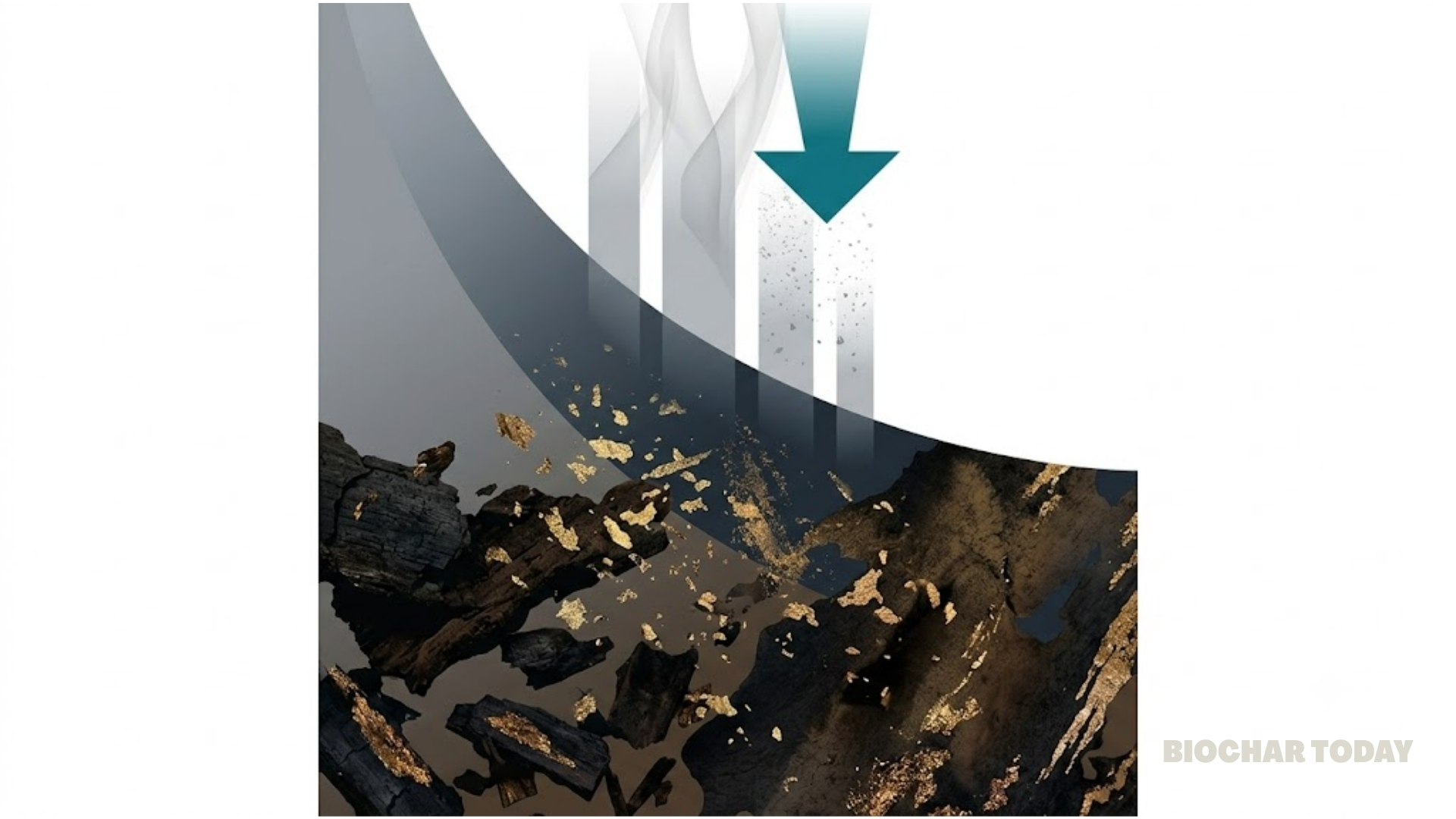
Agricultural and agro-industrial waste accumulation presents an urgent environmental challenge within global circular economy initiatives. PyrolysisPyrolysis is a thermochemical process that converts waste biomass into bio-char, bio-oil, and pyro-gas. It offers significant advantages in waste valorization, turning low-value materials into economically valuable resources. Its versatility allows for tailored products based on operational conditions, presenting itself as a cost-effective and efficient More transforms underutilized biomassBiomass is a complex biological organic or non-organic solid product derived from living or recently living organism and available naturally. Various types of wastes such as animal manure, waste paper, sludge and many industrial wastes are also treated as biomass because like natural biomass these More into biochar, a carbon-dense byproduct that offers superior performance as a functional modifier for asphalt binders. Modern asphalt pavements face ongoing structural degradation—including severe rutting, fatigue cracking, and moisture damage—driven by heavy freight transportation and extreme climate variability. Incorporating biochar strengthens asphalt mastics, delays oxidative stiffening, and reduces high-temperature deformation far more sustainably than costly traditional polymer additives.
Experimental data across diverse biomass feedstocks highlight clear engineering advantages when biochar is introduced into asphalt binders. Adding oil palm mesocarp fiber biochar at dosages between 5 and 15 percent by weight markedly stiffens binders, lowers permanent rutting deformation, and improves moisture damage resistance from 75.6 to 83.7 percent. Chemical functionalization and native metal sites, such as iron and calcium in acacia biochar, further enhance asphalt performance by stabilizing colloidal structures, improving ultraviolet aging resistance, and actively trapping harmful volatile organic compound emissions during high-temperature mixing.
A bibliometric analysis of 104 peer-reviewed publications spanning 2015 to 2025 outlines a rapidly expanding interdisciplinary field with a 34.24 percent annual output growth rate. Research activity accelerated dramatically after 2020, driven by global carbon-neutral mandates and sustainable infrastructure agendas. China dominates global scientific output with 190 articles, followed by the United States with 68 publications. Leading academic journals including Construction and Building Materials, Science of the Total Environment, and the Journal of Cleaner Production frequently publish these multi-institution studies, which maintain a high international co-authorship rate of 29.81 percent.
Despite substantial laboratory success, wide-scale adoption of biochar-modified asphalt requires overcoming key scientific and technical hurdles. Biochar performance remains highly sensitive to feedstockFeedstock refers to the raw organic material used to produce biochar. This can include a wide range of materials, such as wood chips, agricultural residues, and animal manure. More origin, pyrolysis temperature, particle size, and blending dosage. High addition rates exceeding 10 to 15 percent can excessively raise binder viscosity, compromising cold-temperature cracking resistance and workability. Moving forward, researchers must establish standardized testing protocols within ASTM and AASHTO frameworks, execute long-term field pavement trials, and perform comprehensive life-cycle assessments to fully validate biochar’s economic and environmental benefits.
Source: Bintari, L. N., & Setiawan, D. M. (2026). Research on biochar as a sustainable asphalt binder modifier: A systematic and bibliometric review. Journal of Applied Engineering Science, 24(3), 473-495.



Leave a Reply