
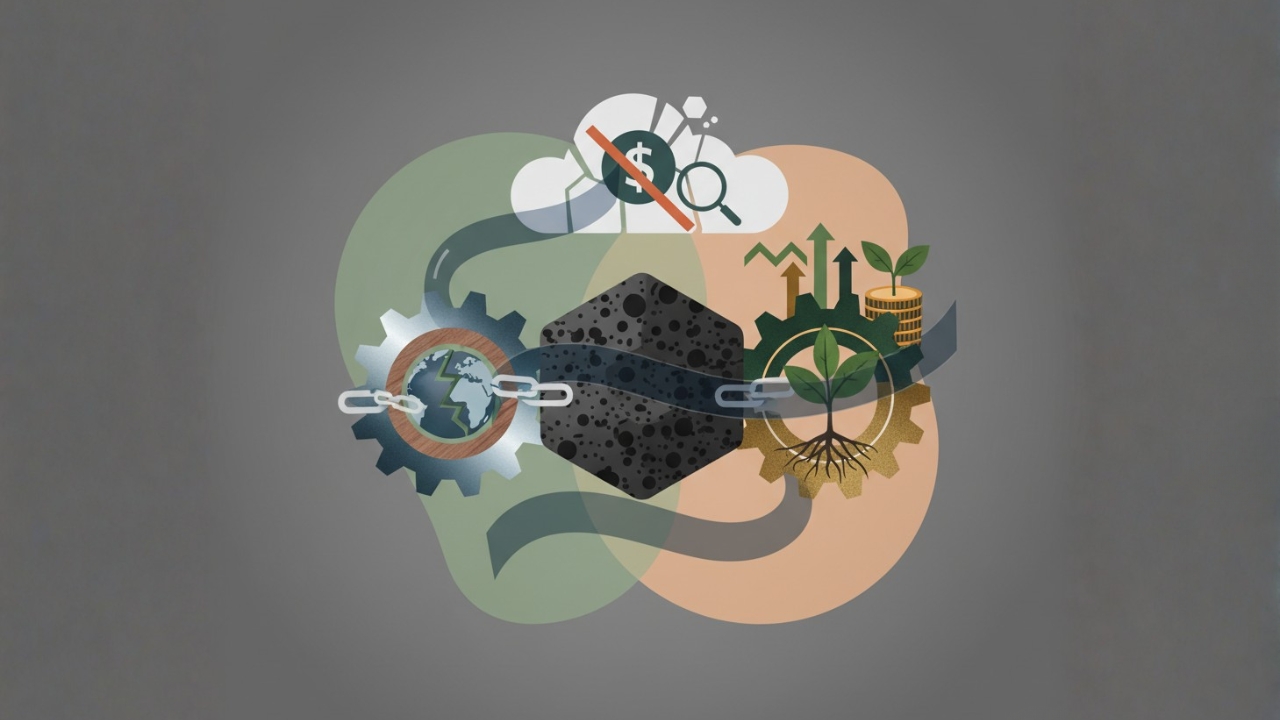
Recent geopolitical developments in October 2025—specifically the U.S. refusal to endorse the World Bank’s climate statement and the threat of sanctions over the IMO’s shipping emissions proposal—demand a sober, objective analysis from the biocharBiochar is a carbon-rich material created from biomass decomposition in low-oxygen conditions. It has important applications in environmental remediation, soil improvement, agriculture, carbon sequestration, energy storage, and sustainable materials, promoting efficiency and reducing waste in various contexts while addressing climate change challenges. More industry. These actions highlight a shift away from reliable multilateral climate governance, forcing the carbon removal sector to recalibrate its growth strategies toward private, verifiable markets.
The World Bank Stance: Realignment of Climate Finance
The U.S. decision to decline signing the World Bank executive directors’ joint statement affirming commitment to climate action and the Paris Agreement goals signals a significant weakening of the multilateral public finance pipeline. The context suggests a preference by the U.S., the Bank’s largest shareholder, to refocus MDBs on core development mandates, potentially diverting attention and capital away from expansive climate-specific initiatives.
The implication for biochar is clear: projects scaled in developing nations, which often require MDB support to mitigate risk and secure early-stage capital, will likely find less readily available public finance. This vacuum increases the pressure on the Voluntary Carbon Market (VCM) to serve as the primary financial driver for large-scale carbon removal (CDR). Biochar companies cannot rely on large institutional contracts being de-risked by public funding and must instead directly prove high-quality, permanent carbon removal to private corporate buyers. This situation amplifies the necessity for robust Measurement, Reporting, and Verification (MRV) protocols within the biochar industry to attract investment in the absence of government underwriting.
The IMO Conflict: Carbon Price Volatility and Regulatory Risk
The aggressive U.S. opposition and threat of punitive actions against countries supporting the IMO’s Net-Zero Framework—a proposal that includes an economic measure, or a “carbon tax,” on shipping emissions—is a direct challenge to mandatory global carbon pricing mechanisms. The U.S. view frames this as an undue cost burden and a regulatory overreach.
The IMO framework represented one of the most promising near-term opportunities for a sector-specific compliance carbon market. The U.S. opposition injects high political and regulatory risk into the future of any global, mandated carbon price, thus reducing the likelihood of a massive, guaranteed revenue stream for durable CDR solutions like biochar. With the compliance market outlook clouded, biochar firms must pivot away from speculation on future mandatory carbon pricing. Instead, they should emphasize the unique and verifiable durability of their carbon sequestration (lasting centuries) and its agricultural co-benefits (soil health, water retention) to command a premium in the VCM, independent of political market enforcement. Finally, the threat of sanctions and tariffs highlights the risk that climate policy can become weaponized as a trade barrier. Biochar project developers must remain cognizant of this geopolitical friction and focus on regional supply chains that are less susceptible to sudden shifts in international shipping or trade levies.
Strategic Takeaway for the Biochar Industry
These events collectively demonstrate that the global climate finance landscape is fragmenting and becoming less predictable. The biochar industry’s path to scale now relies less on the promise of government mandates and more on the indisputable value proposition of its product: high-permanence carbon removal paired with immediate, verifiable co-benefits for agriculture and waste management. Scaling requires demonstrating economic viability and environmental integrity sufficient to attract corporate capital, even when the world’s largest economy is actively resisting the multilateral enforcement of carbon pricing.





Leave a Reply