

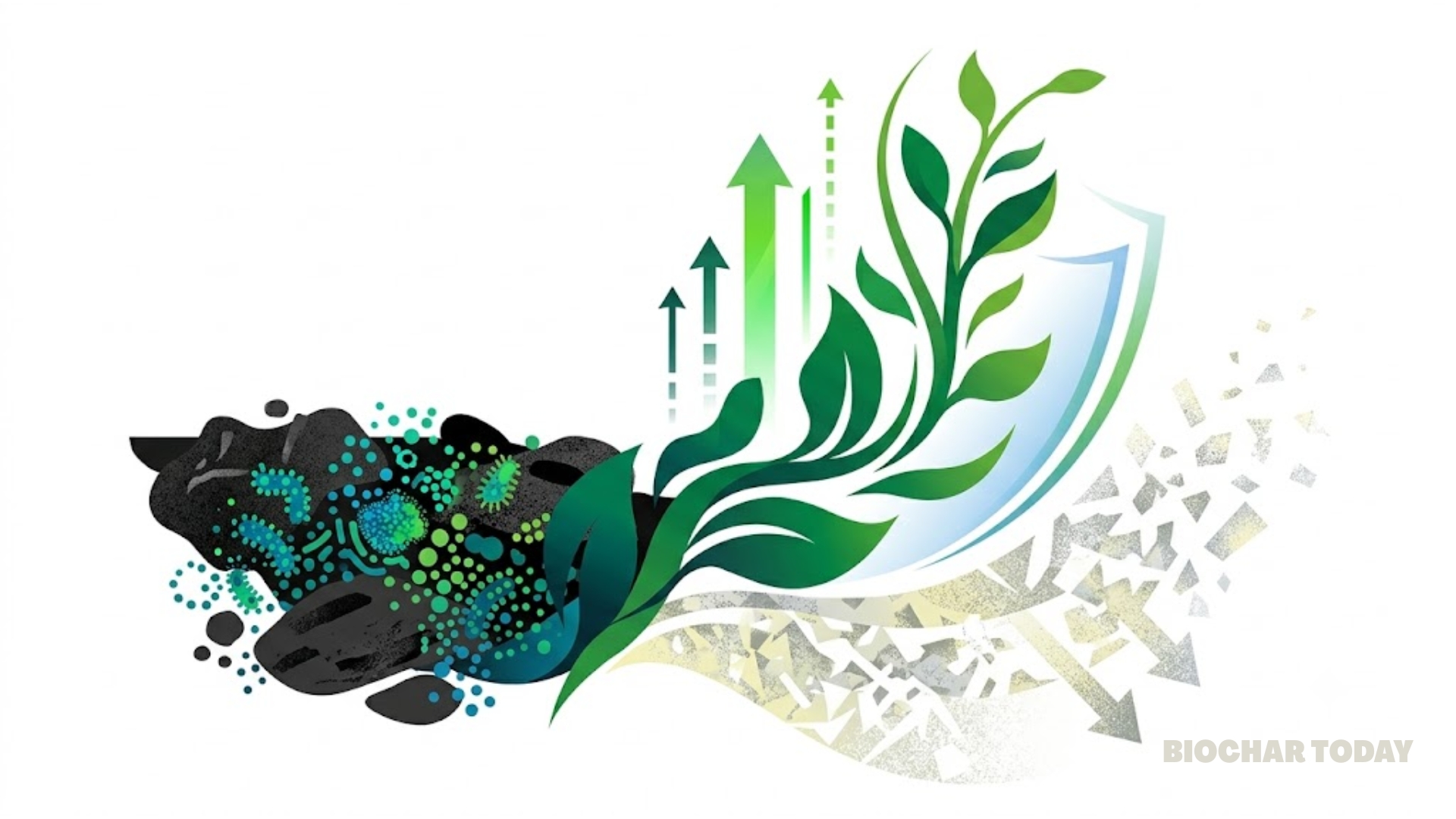
BiocharBiochar is a carbon-rich material created from biomass decomposition in low-oxygen conditions. It has important applications in environmental remediation, soil improvement, agriculture, carbon sequestration, energy storage, and sustainable materials, promoting efficiency and reducing waste in various contexts while addressing climate change challenges. More offers a dual promise of profitability and sustainability. This stable carbon form significantly improves soil by enhancing water retention, fostering nutrient absorption, and promoting beneficial microbial activity, allowing it to hold water up to six times its weight and aid in adsorption processes. Beyond soil enhancement, biochar acts as a stable carbon sink, contributing to long-term carbon sequestration and mitigating climate change impacts. PyrolysisPyrolysis is a thermochemical process that converts waste biomass into bio-char, bio-oil, and pyro-gas. It offers significant advantages in waste valorization, turning low-value materials into economically valuable resources. Its versatility allows for tailored products based on operational conditions, presenting itself as a cost-effective and efficient More yields biochar, non-condensable gases (syngasSyngas, or synthesis gas, is a fuel gas mixture consisting primarily of hydrogen and carbon monoxide. It is produced during gasification and can be used as a fuel source or as a feedstock for producing other chemicals and fuels. More), and liquid oil (bio-oil or tars), with specific characteristics and proportions influenced by several. Slow pyrolysis, with lower heating rates and longer residence times, maximizes biochar yield, producing roughly equal mass proportions of biochar, liquids, and gases. This capacity for long-term carbon sequestration, often persisting in soil for centuries, positions biochar as a powerful tool for achieving a “negative carbon footprint”. Its versatility translates into diverse applications across agriculture, industry, and waste management, creating multiple revenue streams and aligning with circular economy principles by transforming organic waste into a valuable product.
The Green Future: Biochar’s Environmental Imperative
Biochar offers a multi-faceted approach to environmental sustainability. Its core function is carbon sequestration, effectively locking carbon from biomassBiomass is a complex biological organic or non-organic solid product derived from living or recently living organism and available naturally. Various types of wastes such as animal manure, waste paper, sludge and many industrial wastes are also treated as biomass because like natural biomass these More into a stable form for centuries, preventing the release of CO2 and methane into the atmosphere. This aligns with global climate goals and is recognized as a vital Carbon Dioxide Removal (CDR) method by the IPCC. Beyond direct carbon storage, biochar also reduces nitrous oxide and methane emissions from agricultural soils and can decrease enteric methane from livestock (Gul et al., 2024;Thengane et al., 2021).
In agriculture, biochar significantly enhances soil health by improving its physical structure (reducing compaction, increasing porosityPorosity of biochar is a key factor in its effectiveness as a soil amendment and its ability to retain water and nutrients. Biochar’s porosity is influenced by feedstock type and pyrolysis temperature, and it plays a crucial role in microbial activity and overall soil health. Biochar More), chemical properties (raising pHpH is a measure of how acidic or alkaline a substance is. A pH of 7 is neutral, while lower pH values indicate acidity and higher values indicate alkalinity. Biochars are normally alkaline and can influence soil pH, often increasing it, which can be beneficial More, increasing nutrient retention via cation exchange capacity), and biological activity (providing habitat for beneficial microorganisms). These improvements lead to increased crop yields (often 10-25%), reduced need for synthetic fertilizers, and enhanced drought resilience. However, the effectiveness of biochar varies depending on soil type, climate, and existing agricultural practices, with degraded soils showing the most pronounced benefits. Tailored application strategies are crucial for optimal results(Bo et al., 2023). Biochar also plays a crucial role in waste management and the circular economy. By converting diverse organic waste streams—such as agricultural residues, wood, sewage, and food waste—into a valuable product, it reduces landfill burdens and air pollution from open burning. This process fosters a closed-loop system, recycling nutrients back into the soil and promoting resource efficiency (Singh et al., 2022). Beyond soil applications, biochar offers broader environmental benefits, including water filtration and purification due to its adsorptive properties, effective in removing heavy metals and pollutants. It also shows promise in environmental remediation by immobilizing contaminants in degraded soils. In non-soil contexts, biochar can be a feed supplement for animals to reduce methane emissions, an insulating and humidity-regulating material in construction, a shield against electromagnetic radiation, and a tool for food preservation by absorbing odors and ethylene. Its versatility highlights its potential to address a wide range of environmental challenges(Trivedi et al., 2025).
Making it Profitable: Market Dynamics and Value Creation
The global biochar market is undergoing significant expansion, reflecting its growing recognition as a valuable commodity in the green economy. In 2024, the market size was valued between USD 763.48 million and USD 877.15 million. Projections indicate a substantial growth trajectory, with the market anticipated to reach between USD 2.1 billion and USD 3.1 billion by 2032-2034, exhibiting a Compound Annual Growth Rate (CAGR) ranging from 13.5% to 24.5% during the forecast period Regionally, Asia Pacific has historically held the dominant market share, accounting for 71% to 82.47% in 2023-2024(Biochar Market Size, Share & Analysis | Growth Report ,2032, n.d.).This dominance is primarily attributed to the region’s large and expanding agricultural sector, particularly in countries like India and China, where there is a rapid increase in agricultural activity and a growing demand for sustainable farming practices (Biochar Market Growth, Size, Share, Trends, Forecast 2033).
Conversely, North America is projected to be the fastest-growing market by volume, with a CAGR exceeding 24.5% during the 2025-2030 period. This growth in the U.S. is notably driven by federal and state renewable energy mandates and a concerted push toward combating greenhouse gas emissions. The observed discrepancy in reported market dominance—Asia Pacific leading in market share/value while North America leads in volume and growth rate—suggests differing market structures and value propositions across these regions. This indicates that while Asia Pacific may command a higher overall market value, potentially due to specific high-value applications or pricing structures (e.g., strong demand for organic agricultureThis is a way of farming that focuses on using natural methods and avoiding synthetic fertilizers and pesticides. Biochar fits perfectly into organic agriculture because it’s a natural soil amendment that improves soil health and promotes sustainable farming practices. More), North America is likely producing and consuming larger quantities of biochar, possibly at a lower per-unit cost or for different, more volume-intensive applications. This divergence implies that successful market penetration and profitability strategies must be regionally tailored, focusing on value-added applications and premium pricing in Asia Pacific, while prioritizing scaling volume and production efficiency in North America.
Diverse Applications Driving Demand
Biochar’s versatile applications across multiple sectors are driving its demand, with agriculture being the most significant. As a soil amendmentA soil amendment is any material added to the soil to enhance its physical or chemical properties, improving its suitability for plant growth. Biochar is considered a soil amendment as it can improve soil structure, water retention, nutrient availability, and microbial activity. More, biochar enhances soil structure, improves water retention, increases nutrient availability, and boosts microbial activity, leading to higher crop yields and reduced reliance on chemical fertilizers and irrigation. In 2025, studies indicated crop yield increases from biochar use, particularly in degraded or nutrient-stressed soils(Fakhar et al., 2025). Beyond agriculture, biochar is gaining traction in livestock feed for improved digestion and reduced methane emissions from ruminants. Its porous structure and high adsorption capacity make it effective for water treatment and environmental remediation by immobilizing heavy metals, pesticides, and toxins, and for restoring degraded lands. Industrially, biochar is an additive in construction materials to improve durability and insulation. In energy and electronics, it’s used in batteries and as a catalyst due to its high surface area and electrical conductivity, and for food conservation due to its ability to absorb odors and ethylene(Kumar et al., 2023).

Key Revenue Streams: Biochar Sales, Carbon Credits, and Co-products
The profitability of biochar production is increasingly driven by a diversified portfolio of revenue streams, moving beyond the direct sale of the material itself. Biochar producers generate income from four main sources as follows.
- Direct Biochar Sales: This remains a primary revenue stream, with biochar sold for its various applications, particularly in the agricultural sector where demand for soil amendments is robust.20
- Carbon Credits: A rapidly growing and highly significant revenue source, biochar carbon credits represent verified permanent carbon sequestration. One carbon credit is equivalent to one metric ton of carbon dioxide removed from the atmosphere(Ayaz et al., 2021). These “removal” credits typically command higher prices than “reduction” or “avoidance” credits, with prices ranging from USD 100 to USD 200 per tonne of CO2 equivalent (Cloverly, 2024). Major corporations, including Microsoft and JPMorgan Chase, are actively investing in biochar carbon credits as part of their net-zero commitments, signaling strong buyer confidence and contributing to market growth. The revenue generated from carbon credits is critical for producers to scale up their facilities and expand the biochar market(Thengane et al., 2021).
- Co-products (Energy, Bio-oil, Syngas): The pyrolysis process is inherently multi-functional, yielding not only biochar but also valuable co-products. Non-condensable gases (syngas) and liquid oil (bio-oil/tars) are produced, which can be captured and used for energy generation (e.g., to provide process heat for the pyrolysis unit, generate electricity, or produce biofuels) or sold as industrial chemicals. Assessing the value of biochar as part of a pyrolysis system that simultaneously produces biochar and biofuel is crucial for a comprehensive economic evaluation.
- Waste Management Fees: For businesses and municipalities, processing organic waste typically incurs disposal costs. Biochar producers can generate revenue by charging fees for accepting and converting these waste streams into valuable biochar, transforming a disposal problem into a profitable solution.

Diversifying revenue streams beyond direct biochar sales, particularly through carbon credits and co-product monetization, is essential for achieving and sustaining profitability, especially given the high production costs and market volatility. This approach mitigates risks associated with reliance on a single product market and leverages the inherent multi-functional nature of the pyrolysis process. By optimizing the entire value chain to capture value from waste disposal fees, energy co-generation, and various biochar applications, businesses can establish a more robust and resilient economic foundation.
Understanding Production Costs and Economic Viability
The economic viability of biochar production is influenced by several critical cost components and market dynamics. Key operating costs include components like feedstockFeedstock refers to the raw organic material used to produce biochar. This can include a wide range of materials, such as wood chips, agricultural residues, and animal manure. More, energy, labor, and transportation, which can be substantial. While equipment costs vary greatly by scale, utilizing waste biomass can lower feedstock expenses. Currently, relying solely on biochar market prices and carbon prices makes profitability challenging, especially for farmers due to high upfront application costs. External financial mechanisms, such as carbon pricing and subsidies, are crucial for widespread adoption. Historically volatile, biochar prices are projected to stabilize around $1400/metric ton. This stability, combined with high carbon credit prices ($131-$200/metric ton in 2023), signals a maturing market, making biochar projects more appealing to investors despite potential short-term price compression(Trapero et al., 2025).
Overcoming Barriers to Widespread Adoption and Sustainability
While biochar holds immense market promise for climate mitigation, soil enhancement, and waste valorization, several critical barriers continue to hinder its large-scale adoption and long-term sustainability. These include production inefficiencies, logistical challenges, regulatory gaps, limited market awareness, and ethical concerns around feedstock sourcing. Addressing these issues through integrated strategies is essential to unlock biochar’s full potential as a scalable climate solution.
1. Production Challenges: Cost, Quality, and Scalability
The biochar industry faces high production costs, especially for large-scale pyrolysis infrastructure. Inconsistent quality due to variable feedstocks and pyrolysis conditionsThe conditions under which pyrolysis takes place, such as temperature, heating rate, and residence time, can significantly affect the properties of the biochar produced. More undermines performance reliability and market trust. Scalability is limited by fluctuating biomass availability and the lack of efficient, mobile, low-emission production technologies. Robust quality control, standardized methods (e.g., EBC, IBI, World Biochar Certificate), and consistent production parameters are critical to building investor confidence and unlocking market potential(Siddiqui, 2025)(Jahromi et al., 2021).
2. Logistical Hurdles and Supply Chain Optimization
Transporting lightweight yet bulky biochar is costly, often making up 50% of production expenses and offsetting its environmental benefits. Securing a steady biomass supply competes with other industries like biofuels. Decentralized, on-site production and integrated waste-to-value systems—such as modular carbonizers or field-based biochar robots—can cut logistics costs, ensure local feedstock access, and improve profitability and sustainability.
3. Regulatory Frameworks and Standardization Gaps
A fragmented regulatory environment—marked by inconsistent permitting, unclear “end-of-waste” rules, and divergent air and waste regulations—creates uncertainty and investment risk. Inadequate MRV (Measurement, Reporting, and Verification) standards hinder credible carbon credit generation and undervalue biochar’s true carbon storage potential. Harmonized global frameworks are essential for market confidence and scalability.
4. Market Awareness and Acceptance
Limited knowledge among stakeholders, especially farmers, hampers adoption. Skepticism around benefits and lack of clear economic incentives reduce uptake. Effective solutions include localized education, community workshops, and field demonstrations showing cost savings, soil improvements, and income from biomass sales. Practical success stories and decision support tools are more persuasive than academic data alone.
5. Ethical Feedstock Sourcing and Environmental Impact
Sustainable biochar relies on waste biomass, avoiding land-use conflicts or competition with food systems. Ethical protocols demand fair farmer compensation, worker safety, and ecosystem protection. A full Life Cycle Assessment (LCA) is essential to quantify environmental impacts, from energy use and emissions to toxicant risks in poorly managed feedstocks. Only through rigorous, verified sustainability practices can biochar earn broad consumer and investor trust.
Strategic Pathways to a Green and Profitable Biochar Future
The path to a green and profitable biochar future hinges on five strategic pillars: robust policy and incentive mechanisms like government funding and carbon credits; continuous technological innovations for efficiency and on-site production; integrated waste-to-value systems that maximize co-product utilization; fostering partnerships and community engagement for local benefits and supply chain resilience; and attractive investment opportunities driven by maturing carbon markets and long-term offtake agreements. The detials are as follows:
1. Policy and Incentive Mechanisms:
- Government Support: Programs like USDA NRCS EQIP/RCPP offer financial aid to farmers for biochar application. U.S. Section 301 aims to fund biochar development (facilities, R&D).
- Carbon Pricing & Subsidies: Carbon credits are vital. The EU’s CRCF Regulation (Dec 2024) certifies carbon removals, including biochar, establishing quality criteria and MRV processes. U.S. Section 45Q tax credit offers $12/metric ton for biochar carbon sequestration (up to $60/ton with multipliers).
- Regional Policies: California, Canada, Australia, and New Zealand are developing specific policies, tax credits, and carbon farming schemes to advance biochar as a CDR solution.
- Impact: Policies are shifting from general support to specific, verifiable mechanisms, de-risking investment and accelerating adoption by bridging the economic gap.
2. Technological Innovations:
- Advanced Pyrolysis: Continuous reactors, heated augers, and gasifiers offer higher efficiency, automation, and consistent quality compared to batch kilns.
- On-site & Energy Self-Sufficient Systems: Innovations like tractor-pulled biochar robots (e.g., Applied Carbon) reduce logistical costs (up to 50%) by processing waste on-farm and using syngas for fuel.
- Enhanced Efficiency: Research into catalyst-assisted and salt-assisted pyrolysis aims to increase biochar yield, tune properties, and improve CO2 capture.
- Impact: These innovations reduce operational costs, address logistical challenges, and expand the viable market by making production more efficient and energy-independent.
3. Integrated Waste-to-Value Systems and Co-production Models:
- Multi-Product Process: Pyrolysis yields not just biochar but also heat, syngas, and bio-oil, creating diversified revenue streams. It can also provide waste treatment services.
- Case Studies: WasteX in Indonesia processes palm oil and poultry farm waste into biochar, improving operations and animal health. Urban pruning waste conversion reduces landfill dependency and offers municipal savings.
- Impact: Profitability isn’t just from biochar sales but from optimizing the entire value chain through waste disposal fees, energy co-generation, and various biochar applications, creating a resilient business ecosystem.
4. Fostering Partnerships and Community Engagement:
- Collaboration: Essential among researchers, policymakers, industry, and farmers to address barriers.
- Local Partnerships: Sourcing biomass from local farmers reduces transport costs, builds community support, and can empower smallholders with new revenue streams and job creation (e.g., carbon-sink credits).
- Social Impact: Demonstrating tangible financial incentives (e.g., selling biomass vs. burning it) drives participation, promotes environmental education, and strengthens social cohesion.
- Impact: Gaining social license, securing reliable local feedstock, and building an equitable value chain are crucial for long-term sustainability and widespread adoption.
5. Investment Opportunities and Financial Models:
- Market Attractiveness: Maturing carbon credit markets and multi-year offtake agreements create a stable environment for significant investment. The sector attracts ESG investors.
- Multi-Revenue Financial Models: Businesses need to account for biochar sales, energy co-generation, carbon credits, and waste management fees. Pre-selling carbon credits can provide early funding.
- Offtake Agreements: Multi-year contracts (e.g., 62% of 2025 high-quality biochar capacity already locked in) provide financial certainty for producers, supply security for buyers, and reduce financial risk, enabling scaling.
- Impact: These developments reduce investment risk, allow for reliable financial modeling, and position companies to meet climate targets by supporting growth of carbon removal infrastructure.

Key Takeaways for a Sustainable and Profitable Biochar Market
Biochar represents a multi-functional material offering profound environmental benefits, including durable carbon sequestration, significant soil health improvements, and effective waste management solutions. These benefits are increasingly recognized and valued by global markets and evolving policy frameworks. Profitability within the biochar industry is intrinsically linked to the diversification of revenue streams, with carbon credits emerging as a particularly critical driver. This is complemented by the monetization of co-products, such as energy (heat, syngas, bio-oil), and the generation of income from waste management fees. Despite its rapid growth trajectory, the biochar market faces notable barriers. These include the high initial capital expenditure and operational costs associated with production, challenges in maintaining consistent product quality due to feedstock and process variability, and significant logistical hurdles related to the bulky nature of biochar and feedstock supply. Furthermore, a fragmented and inconsistent regulatory landscape, coupled with a general lack of market awareness, impedes widespread adoption and investment. Overcoming these challenges and unlocking biochar’s full potential necessitates a concerted, multi-faceted strategy. This involves continuous technological innovation to enhance production efficiency and scalability, particularly through energy self-sufficient and decentralized systems. The adoption of integrated waste-to-value business models, which maximize resource utilization and diversify income, is also crucial. Concurrently, strong policy support and the establishment of robust, harmonized carbon pricing mechanisms are essential to bridge economic gaps and de-risk investments. Finally, fostering social impact and engaging local communities are not merely ethical considerations but vital components for building resilient supply chains, ensuring local acceptance, and ultimately, achieving a truly green and profitable biochar future.
Actionable Recommendations for Stakeholders
The burgeoning biochar market presents a unique opportunity to address climate change and foster sustainable development. To fully unlock its potential for both environmental benefit and economic profitability, a collaborative and strategic approach is vital. This section outlines actionable recommendations, categorized by key stakeholders – Producers & Businesses, Policymakers & Regulators, and Investors – emphasizing the specific roles each must play in overcoming existing challenges and accelerating biochar’s adoption.
To realize the full potential of the biochar market for both profitability and a green future, targeted actions are required from key stakeholders:
For Producers & Businesses: Diversify revenue by actively pursuing carbon credit certification/sales and leveraging co-products (energy, bio-oil) and waste management fees. Invest in advanced, energy-self-sufficient, and modular pyrolysis technologies. Prioritize stringent quality control and standardization (e.g., IBI, EBC). Form strategic partnerships with biomass generators and technology providers.
For Policymakers & Regulators: Harmonize and streamline regulatory frameworks for biochar production and application. Strengthen carbon markets and incentives (subsidies) to ensure economic viability. Increase R&D funding for long-term performance, optimized applications, and improved MRV. Promote public education and outreach to raise awareness and accelerate adoption.
For Investors: Prioritize integrated business models with diversified revenue streams (biochar sales, carbon credits, co-products, waste fees). Critically evaluate projects based on their ability to generate high-quality, verifiable carbon credits. Support scalable technological innovations that improve efficiency and reduce costs. Recognize and value projects that integrate social impact and community engagement.
Reference
Ayaz, M., Feizienė, D., Tilvikienė, V., Akhtar, K., Stulpinaitė, U., & Iqbal, R. (2021). Biochar role in the sustainability of agriculture and environment. Sustainability (Switzerland), 13(3), 1–22. https://doi.org/10.3390/su13031330
Biochar Market Size, Share & Analysis | Growth Report [2032]. (n.d.). https://www.fortunebusinessinsights.com/industry-reports/biochar-market-100750
Bo, X., Zhang, Z., Wang, J., Guo, S., Li, Z., Lin, H., Huang, Y., Han, Z., Kuzyakov, Y., & Zou, J. (2023). Benefits and limitations of biochar for climate-smart agriculture: a review and case study from China. Biochar, 5(1). https://doi.org/10.1007/s42773-023-00279-x
Cloverly. (2024). The Ultimate Business Guide to Biochar: Everything You Need to Know. Cloverly. https://cloverly.com/blog/the-ultimate-business-guide-to-biochar-everything-you-need-to-know#:~:text=Biochar price: The average biochar,all CDR approaches per CDR.
Fakhar, A., Canatoy, R. C., Galgo, S. J. C., Rafique, M., & Sarfraz, R. (2025). Advancements in modified biochar production techniques and soil application: a critical review. Fuel, 400(April), 135745. https://doi.org/10.1016/j.fuel.2025.135745
Gul, S., Wahid, M. A., Hashem, A., Fathi, E., Allah, A., & Ibrar, D. (2024). Biochar Production and Characteristics, Its Impacts on Soil Health, Crop Production, and Yield Enhancement: A Review. Plants, 1–18.
Jahromi, N. B., Fulcher, A., & Walker, F. (2021). What Is Biochar and How Different Biochars Can Improve Your Crops. Natural Resources and Environmental Quality, September, 1–6. ttps://extension.tennessee.edu/publications/Documents/W829.pdf
Kumar, A., Bhattacharya, T., Shaikh, W. A., Roy, A., Chakraborty, S., Vithanage, M., & Biswas, J. K. (2023). Multifaceted applications of biochar in environmental management: a bibliometric profile. In Biochar (Vol. 5, Issue 1). Springer Nature Singapore. https://doi.org/10.1007/s42773-023-00207-z
Siddiqui, S. (2025). Unlocking the environmental potential of biochar: production, applications, and limitations. Frontiers in Sustainable Food Systems, 9. https://doi.org/10.3389/fsufs.2025.1569941
Singh, E., Mishra, R., Kumar, A., Shukla, S. K., Lo, S. L., & Kumar, S. (2022). Circular economy-based environmental management using biochar: Driving towards sustainability. Process Safety and Environmental Protection, 163, 585–600. https://doi.org/10.1016/j.psep.2022.05.056
Thengane, S. K., Kung, K., Hunt, J., Gilani, H. R., Lim, C. J., Sokhansanj, S., & Sanchez, D. L. (2021). Market prospects for biochar production and application in California. Biofuels, Bioproducts and Biorefining, 15(6), 1802–1819. https://doi.org/10.1002/bbb.2280
Trapero, J. R., Alcazar-Ruiz, A., Dorado, F., & Sanchez-Silva, L. (2025). Biochar price forecasting: A novel methodology for enhancing market stability and economic viability. Journal of Environmental Management, 377. https://doi.org/10.1016/j.jenvman.2025.124681
Trivedi, Y., Sharma, M., Mishra, R. K., Sharma, A., Joshi, J., Gupta, A. B., Achintya, B., Shah, K., & Vuppaladadiyamd, A. K. (2025). Biochar potential for pollutant removal during wastewater treatment: A comprehensive review of separation mechanisms, technological integration, and process analysis. Desalination, 600. https://doi.org/10.1016/j.desal.2024.118509



Leave a Reply