
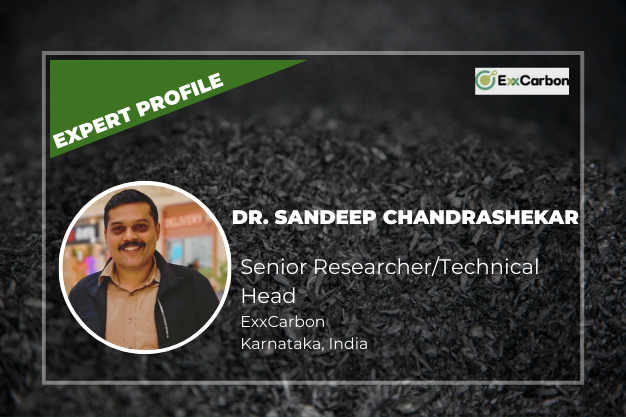
Today, we are joined by Dr. Sandeep Chandrashekhar, a professional with 16 years of experience in biocharBiochar is a carbon-rich material created from biomass decomposition in low-oxygen conditions. It has important applications in environmental remediation, soil improvement, agriculture, carbon sequestration, energy storage, and sustainable materials, promoting efficiency and reducing waste in various contexts while addressing climate change challenges. More and related arenas. He holds a PhpH is a measure of how acidic or alkaline a substance is. A pH of 7 is neutral, while lower pH values indicate acidity and higher values indicate alkalinity. Biochars are normally alkaline and can influence soil pH, often increasing it, which can be beneficial More.D. in Forestry Biotechnology from the Forest Research Institute, Dehradun, and a Master’s degree in Biotechnology from Bangalore University.
Dr. Chandrashekhar’s expertise is deeply rooted in the biochar space. He is currently the Head of Operations, Technical Sales, and Procurement for FeedstockFeedstock refers to the raw organic material used to produce biochar. This can include a wide range of materials, such as wood chips, agricultural residues, and animal manure. More, Biochar, Wood Vinegar, and Bio-oil at Exxcarbon Private Limited. Dr. Sandeep has quite recently joined Prithvi Chemical Manufacturing Co. Pvt Ltd as Technical Director and Senior Scientist also . Prior to this, he was a Senior Scientist at Multiplex Biotech Private Ltd. His professional experience also includes roles as an Innovative Biotechnologist at Cultiva Agritech Private Ltd, and a Junior Scientist at Manasa Group. His technical skills include extensive studies on beneficial microorganisms and biofertilizers. He is also proficient in DNA fingerprinting and molecular biology techniques, which he has applied to his research on plant genetics and soil microbiology. .We are pleased to have him share his insights with us today.
Shanthi Prabha : Your work spans forestry, biotechnology, and now, biochar. Could you tell us about your journey and what initially sparked your interest in the potential of biochar as a sustainable solution?
Sandeep Chandrashekhar: My scientific journey began with a master’s degree and an internship at the National Centre for Biological Sciences (NCBS), where I developed a passion for plant sciences. This led me to the University of Agricultural Sciences (UAS), where I worked as a research fellow on a project to develop a disease-resistant pomegranate variety. Here, I first used biochar under my Principal Investigator’s guidance to improve the health and survival of young plants, sparking my initial interest in this material.
In 2013, I was accepted into the Ph.D. program at the Forest Research Institute (FRI), a significant milestone that led to a CSIR fellowship in 2015. During my doctoral studies, my focus on biochar was solidified. I assisted my guide in his pioneering research on using biochar to sustainably increase bamboo yield. The success of this project, which was featured in the Bangalore Mirror, demonstrated biochar’s potential for sustainable agriculture and enhanced my practical understanding.
My research gained international recognition when I was awarded the Darwin fellowship in 2016. This fellowship allowed me to visit the UK, where I learned about the Terra PretaTerra preta, meaning “black earth” in Portuguese, is a type of highly fertile soil found in the Amazon Basin. It is characterized by its high biochar content, which contributes to its long-term fertility and ability to support productive agriculture More soils of the Amazon and how their unique mineral composition, combined with biochar, creates incredibly fertile land. This insight connected my modern research with ancient agricultural wisdom, deepening my appreciation for biochar as a powerful tool for improving soil health and promoting sustainable growth.
My journey with biochar evolved from a practical application in a lab to a comprehensive understanding of its potential as a sustainable solution for modern agricultural and environmental challenges, inspired by both cutting-edge research and timeless practices.
SP: Your Darwin Fellowship in the UK and subsequent research on the influence of geology on Terra Preta soils is fascinating. How did that experience shape your understanding of biochar’s role in soil health and fertility, especially in the context of the unique mineral compositions of different soils?
SC: My Darwin Fellowship in the UK fundamentally changed how I view biochar. My prior work focused on its practical use for boosting crop yields. However, this fellowship, with its emphasis on historical ecology and soil science, taught me to see soil as a dynamic product of geology, weathering, and mineral composition. I realized the success of ancient Terra Preta soils wasn’t just due to biochar but its long-term interaction with specific minerals. This proved that a “one-size-fits-all” biochar solution is ineffective. Now, my research begins with analyzing a site’s geological history and mineralogy to create a tailored solution, a approach directly inspired by Charles Darwin’s work on geology. This experience transformed my understanding of biochar from a simple tool to a sophisticated, context-dependent technology.
SP: The biochar industry is heavily focused on feedstock. Your work with coconut shell biochar and bamboo biochar is quite interesting. What specific challenges and opportunities have you encountered with these feedstocks in a commercial setting in India?
SC: My work in establishing a pyrolysisPyrolysis is a thermochemical process that converts waste biomass into bio-char, bio-oil, and pyro-gas. It offers significant advantages in waste valorization, turning low-value materials into economically valuable resources. Its versatility allows for tailored products based on operational conditions, presenting itself as a cost-effective and efficient More unit in Bangalore highlighted the critical importance of feedstock standardization. We began with a range of agricultural wastes, but our focus shifted to mixed wood sources, with growing interest in coconut shells and bamboo.
In the Tumkur region, coconut shells are an abundant waste product that yields a premium biochar with high fixed carbon content and a microporous structure, making it ideal for activated carbonActivated carbon is a form of carbon that has been processed to create a vast network of tiny pores, increasing its surface area significantly. This extensive surface area makes activated carbon exceptionally effective at trapping and holding impurities, like a molecular sponge. It is commonly More used in water and air purification. The main challenges are logistics—collecting the scattered shells—and the energy-intensive processing of this tough, low-density material.
Bamboo, a cultivated crop, offers a sustainable and large-scale supply due to its rapid growth. Its biochar has a different structure with larger pores, making it highly effective as a soil amendmentA soil amendment is any material added to the soil to enhance its physical or chemical properties, improving its suitability for plant growth. Biochar is considered a soil amendment as it can improve soil structure, water retention, nutrient availability, and microbial activity. More for improving aeration and water retention in agriculture. Challenges include sourcing uniform culms at a viable price and the need for significant pre-processing, such as chipping and drying. Unlike coconut shells, bamboo biochar has a lower fixed carbon percentage, making it less suitable for high-value activated carbon.
SP: Beyond soil amendment, your research includes utilizing wood vinegar, a byproduct of pyrolysis. Can you elaborate on the potential of wood vinegar as a natural pesticide, soil improver, and composting aid, and what are the most promising applications you’ve seen so far?
SC: My After standardizing feedstock from various agricultural wastes, we now primarily use mixed wood sources to create biochar-based organic fertilizers and three distinct wood vinegar products. My work has particularly focused on hardwood vinegar, a natural byproduct of biochar production, which is rich in phenols and organic acids. This composition gives it strong antimicrobial properties and makes it a versatile, long-lasting solution for sustainable agriculture. We’ve seen its effectiveness across a wide range of applications. As a plant growth promoter, it enhances photosynthesis, root growth, and nutrient absorption, leading to more vigorous plants and better yields in both food crops and ornamental flowers. It also acts as a natural pesticide and fungicide, helping to protect plants from pests and diseases. When applied to soil, it functions as a soil improver by boosting beneficial microbial activity and increasing nutrient availability, which can even help reclaim degraded soils. Furthermore, it serves as a composting aid by speeding up decomposition, and when used undiluted, it works as a natural herbicide. This comprehensive product line demonstrates our commitment to creating innovative, eco-friendly solutions for modern agricultural challenges.
SP: You’re also exploring innovative uses for the remaining bio-oil from the pyrolysis process, such as for polyurethane resins. What does this research entail, and how could it help create a more economically viable and zero-waste biochar production model?
SC: My My research extends beyond biochar to the entire pyrolysis process, focusing on an economically viable, zero-waste production model. The key to this model is finding a high-value use for bio-oil, a liquid co-product with low value. My work involves chemically upgrading this raw bio-oil, typically acidic and unstable, into a valuable chemical building block: bio-based polyols. These polyols can be used to create polyurethane resins, a market traditionally reliant on petroleum. This research is crucial because it makes biochar production more profitable. By upgrading bio-oil from a low-grade fuel to a specialty chemical, we can generate significant revenue to offset the high capital costs of the pyrolysis unit. This approach creates a truly zero-waste system where biochar is used for soil, bio-oil becomes a valuable industrial chemical, and the gaseous co-product, syngasSyngas, or synthesis gas, is a fuel gas mixture consisting primarily of hydrogen and carbon monoxide. It is produced during gasification and can be used as a fuel source or as a feedstock for producing other chemicals and fuels. More, powers the unit itself. This circular model not only provides a sustainable way to manage agricultural waste but also reduces our dependence on fossil fuels for chemical production.
SP: In your experience, what is the most significant challenge in scaling up biochar production and application in a country like India, and how are you working to address it?
SC: My Scaling up biochar production in India faces two major hurdles: the logistical challenge of collecting vast, dispersed agricultural waste and the economic challenge of expensive production technology. The feedstock is abundant but scattered across millions of farms, making it costly to transport. We also face standardization issues with wild-harvested materials like Prosopis juliflora and Lantana camara, which have inconsistent properties. To solve this, I’m working on a multi-product, zero-waste biorefinery model. This strategy focuses on diversifying revenue by converting pyrolysis co-products, such as bio-oil, into high-value chemicals like bio-polyols for polyurethane. The revenue from these specialty chemicals can subsidize the entire operation. Additionally, we use the syngas generated during the process to power the unit, making the system energy self-sufficient. We are also optimizing logistics with a decentralized model, where local communities process feedstock into compact forms like briquettes before transport. This integrated approach transforms agricultural waste from a burden into a valuable resource, making biochar production a sustainable and scalable solution for India.
SP: Given your background in plant pathology and plant-microbe interactions, how does the application of biochar impact the microbial life in the soil, and how can this be leveraged to improve crop health?
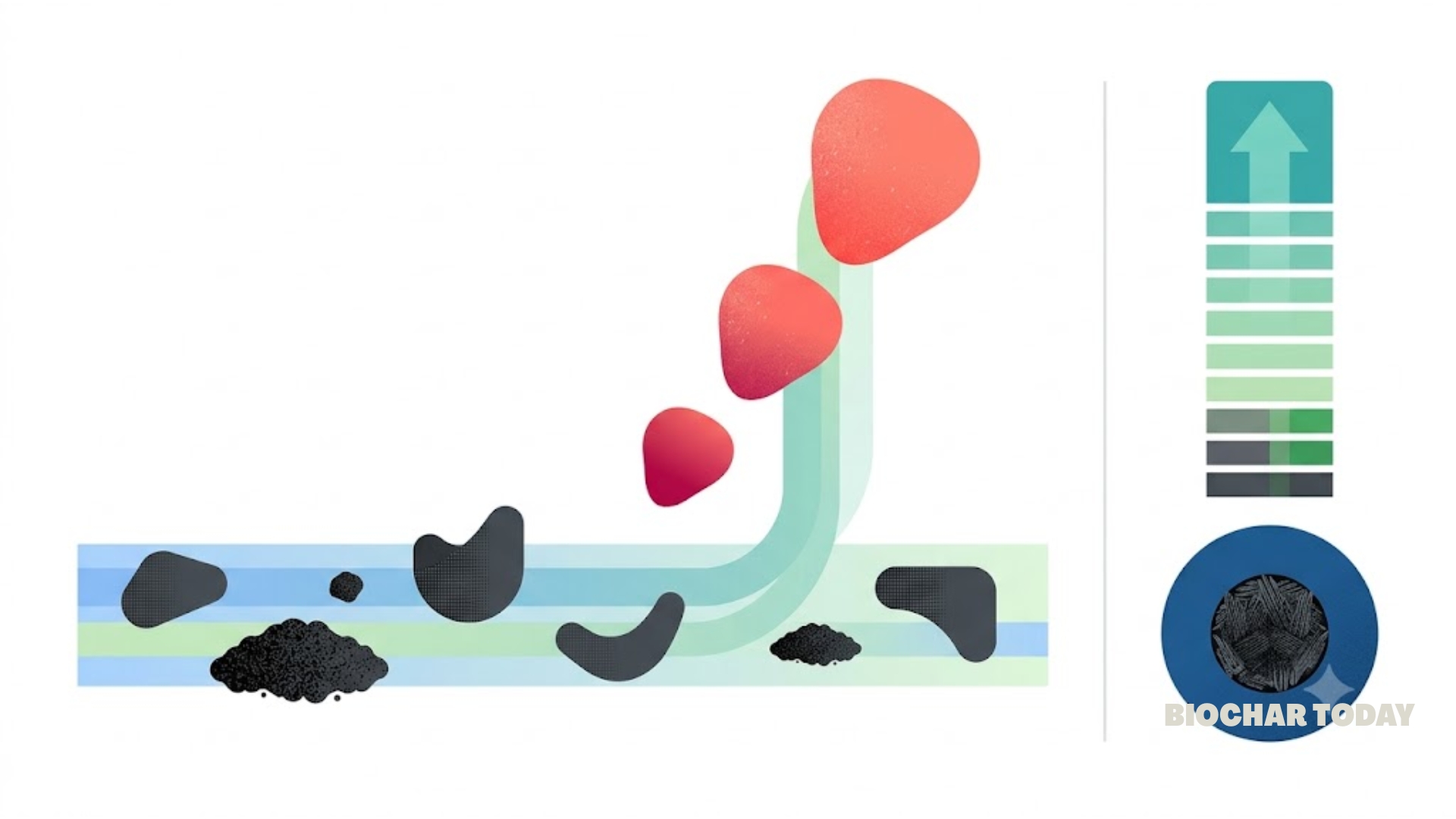
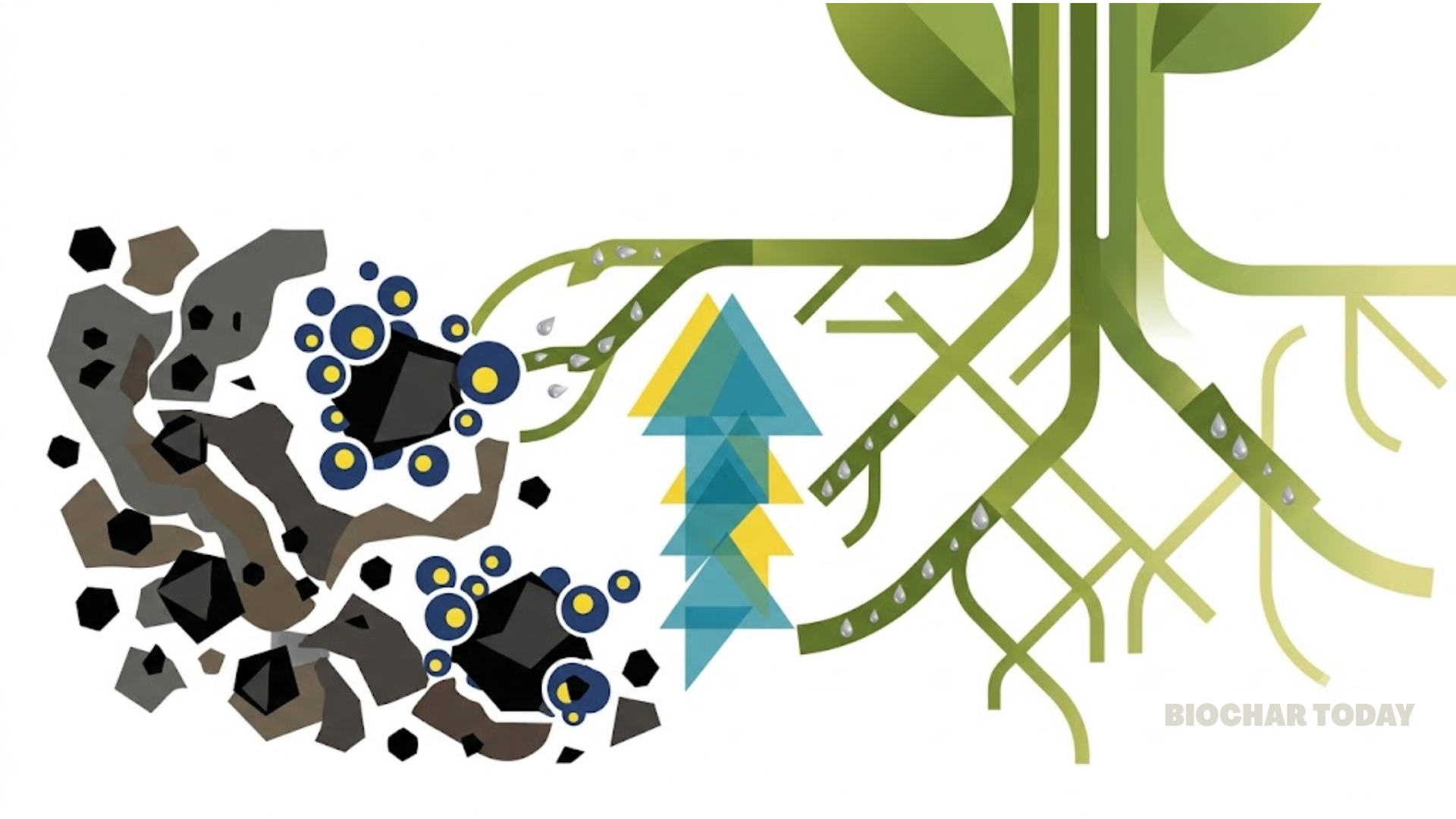
SC: My Biochar significantly benefits soil microbial communities by acting as both a physical habitat and a chemical modulator. Its highly porous structure creates a protected “microbial apartment complex” that shields beneficial microorganisms from predators and environmental stress. Chemically, biochar acts as a pH buffer, creating a more neutral environment that favors beneficial bacteria over pathogenic fungi. Its high cation exchange capacity (CEC) allows it to hold and release nutrients slowly, ensuring a consistent food source for microbes involved in nutrient cycling.
This improved microbial environment directly contributes to enhanced crop health in several ways. A more active and diverse microbial community leads to enhanced nutrient cycling, making nutrients more available to plants and reducing the need for synthetic fertilizers. This promotes stronger plant growth and higher yields. Additionally, a healthy soil microbiome can induce Systemic Resistance (ISR) in plants, triggering an immune response that makes them more resilient to both pests and environmental stresses like drought. Finally, biochar’s physical and chemical properties, combined with the beneficial microbes it hosts, lead to direct pathogen suppressionPathogens are harmful microorganisms that can cause plant diseases. Biochar can help suppress these pathogens by creating a more balanced soil environment and promoting the growth of beneficial microorganisms that compete with the bad guys. More, outcompeting soil-borne pathogens and acting as a natural form of biocontrol. Overall, biochar transforms soil into a vibrant ecosystem that actively supports plant health and aligns with sustainable agriculture practices.
SP: What role does your expertise in DNA fingerprinting and molecular biology play in your current research? For example, how do you measure the impact of biochar on plant genetics or soil microbiology?
SC: My My expertise in DNA fingerprinting and molecular biology is critical for my biochar research, allowing me to measure its impact on both plant genetics and soil microbiology. For soil microbiology, I use DNA-based techniques to understand how biochar affects microbial communities. Specifically, 16S rRNA Gene Sequencing creates a “microbial fingerprint” of the soil, showing changes in the diversity and abundance of beneficial microbes, while Quantitative PCR (qPCR) precisely measures the population size of specific microbes, such as nitrogen-fixing bacteria.
In terms of plant genetics, I study how a biochar-amended soil influences gene expression. I use RNA Sequencing (RNA-Seq) to provide a snapshot of all the genes being expressed in the plant, which helps us understand its resilience to stress. Additionally, I use Gene Marker Analysis to confirm the stability of desired traits in transgenic plants grown with biochar. These molecular techniques allow me to link macro-level observations like higher yields to the micro-level changes occurring in genes and microbes, providing a comprehensive, science-backed understanding of biochar’s true impact and helping to advance sustainable agriculture.
SP: What advice would you give to young researchers or entrepreneurs in India who are looking to enter the biochar space?
SC: My For young biochar researchers and entrepreneurs in India, success hinges on a multi-revenue, zero-waste model. The biggest financial opportunity lies in the carbon credit market, where selling certified carbon sequestration will generate far more revenue than just selling biochar as a soil amendment. To ensure profitability, you must also explore high-value applications for biochar. A promising area is its use as a low-carbon binder in construction materials, which positions your venture in the growing green building market. Ultimately, a successful strategy combines scientific rigor with a business plan that diversifies revenue streams—primarily carbon credits and innovative products—to turn agricultural waste into a profitable, sustainable enterprise.
SP: Looking ahead, what do you see as the next major breakthrough or trend for the biochar industry in the next 5-10 years?
SC: My The most significant breakthrough for the biochar industry in the next 5-10 years will be its transition from a product-centric model to a carbon removal service-centric industry, with carbon credits becoming the primary revenue driver. Historically, biochar’s low market price as a soil amendment has made profitability difficult, but its true value lies in its ability to permanently sequester atmospheric carbon dioxide. As voluntary carbon markets mature, revenue from selling carbon credits will become the financial foundation for projects, attracting significant investment. This new economic model will be integrated with a zero-waste biorefinery concept. Carbon credits will provide the main revenue, while high-value co-products like bio-oil (for polyurethane) will provide a crucial second income stream. The syngas generated will also make the process energy self-sufficient. For this to happen, three key advancements are needed: greater standardization and certification to verify biochar quality and permanence; more modular and automated technology for decentralized production; and digital monitoring using blockchain and sensors to build trust in carbon credits. In essence, the biochar industry will redefine itself as a global player in carbon removal, driven by a profitable, multi-product, carbon credit-based business model.
You can find Dr. Sandeep’s professional profiles at the following links:
- LinkedIn Profile: www.linkedin.com/in/sandeep-chandrashekhar-ph-d-334b4b24
- Google Scholar Profile: https://scholar.google.com/citations?user=E9cnyIUAAAAJ&hl=en



Leave a Reply