
Key Takeaways
- Reusing rice hull biocharBiochar is a carbon-rich material created from biomass decomposition in low-oxygen conditions. It has important applications in environmental remediation, soil improvement, agriculture, carbon sequestration, energy storage, and sustainable materials, promoting efficiency and reducing waste in various contexts while addressing climate change challenges. More as a standalone growing medium increases strawberry fruit yields by eighteen percent compared to using it fresh.
- Rice hull biochar retains over ninety eight percent of its carbon structure even after years of continuous crop cultivation.
- Alternative organic mediums like cedar bark decompose over time, losing organic matter and decreasing in stability.
- Recycling agricultural waste as hydroponic substrates lowers production costs and offers long term carbon storage to combat climate change.
- Managing irrigation frequency with small volumes prevents oxygen shortages in the root zones of tightly packed biochar mediums.
In a research article published in Engineering in Agriculture, Environment and Food, authors Sakalya Rajapakse and Munehiro Tanaka evaluated alternative organic substrates to replace traditional hydroponic mediums like peat and coir. Controlled environment agriculture provides efficient resource use, but conventional inorganic mediums require high energy to manufacture, causing significant carbon emissions. By investigating the reusability and carbon storage capacity of rice hull biochar and cedar bark media, the authors aimed to design a circular business model for strawberry growers. Their findings reveal that these agricultural byproducts perform exceptionally well as standalone options for crop cultivation.
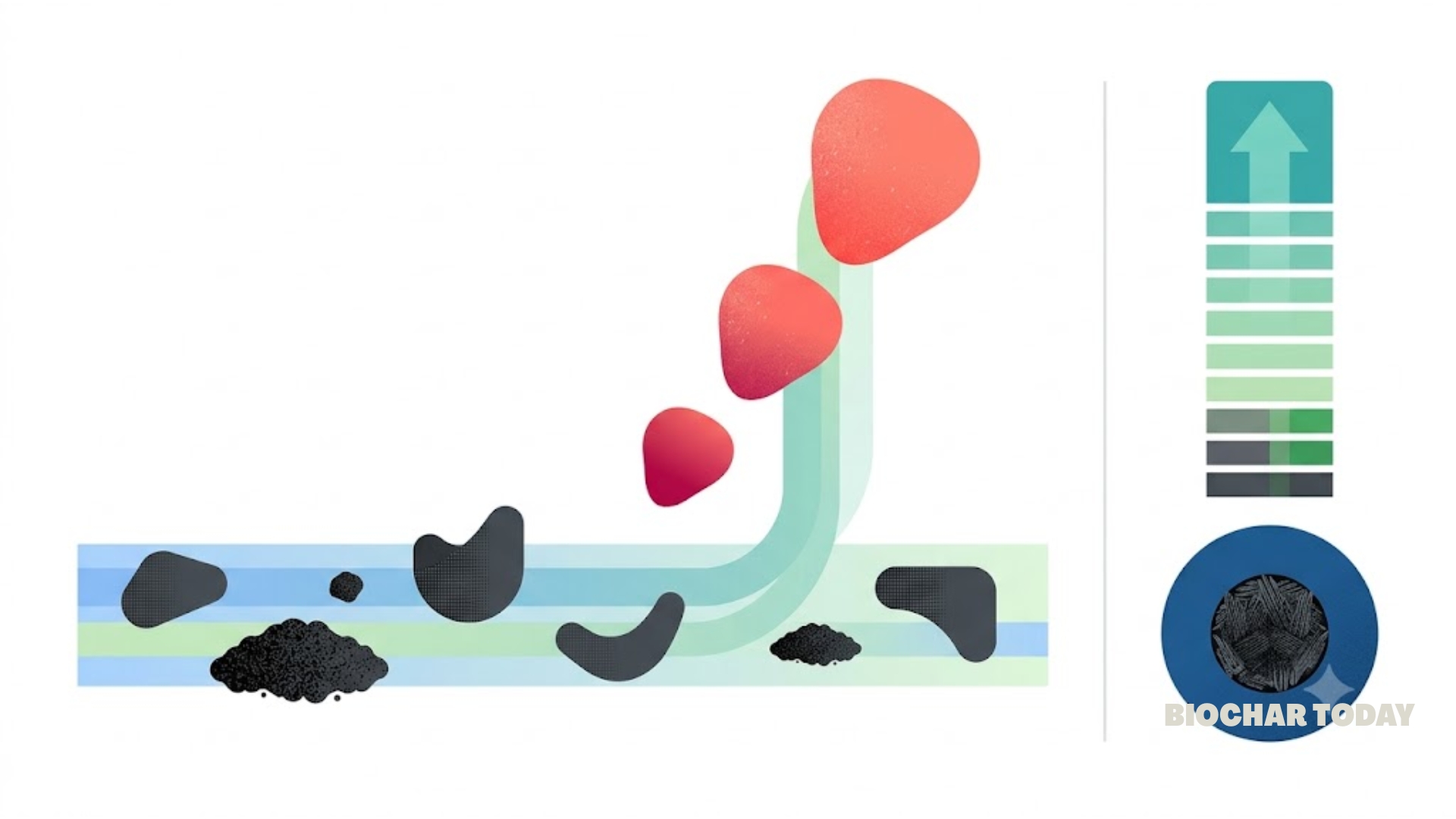
The results show that strawberry harvests vary depending on whether the growing medium is freshly prepared or recycled from a previous season. Fresh cedar bark media initially generated a higher total yield of four hundred and thirteen grams per plant, compared to three hundred and fifty-four grams per plant from fresh rice hull biochar. However, reusing the media for a second consecutive year reversed this dynamic, significantly boosting production capacity. Recycled cedar bark media caused a minor four percent yield expansion, while recycled rice hull biochar triggered a major eighteen percent increase in total strawberry yield, producing four hundred and nineteen grams per plant. This impressive growth surge in the recycled biochar occurred because extended exposure to nutrient solutions gradually improved its structural properties, helping it stabilize over time.
PDF+ 4
A detailed property analysis confirmed that the physical degradation profiles of these two organic media differ substantially over long periods of cultivation. Cedar bark media gradually decomposed during the growing cycle, experiencing a three point four percent drop in organic matter within a single year. This biological decay alters its structural integrity, forcing commercial operations to periodically add fresh wood fibers to keep the solid phase stable. In contrast, the rice hull biochar proved highly durable, retaining its core porous infrastructure with minimal overall loss in total porosityPorosity of biochar is a key factor in its effectiveness as a soil amendment and its ability to retain water and nutrients. Biochar’s porosity is influenced by feedstock type and pyrolysis temperature, and it plays a crucial role in microbial activity and overall soil health. Biochar More. Furthermore, fresh biochar initially exhibited a highly alkaline pHpH is a measure of how acidic or alkaline a substance is. A pH of 7 is neutral, while lower pH values indicate acidity and higher values indicate alkalinity. Biochars are normally alkaline and can influence soil pH, often increasing it, which can be beneficial More of eight point ninety-nine, which can limit plant nutrient absorption. Continuous use naturally corrected this chemical imbalance, bringing the recycled biochar down to an optimal pH of five point zero seven.
Beyond stabilizing the root environment, the study highlighted the excellent ion exchange dynamics and nutrient leachingLeaching is the process where nutrients are dissolved and carried away from the soil by water. This can lead to nutrient depletion and environmental pollution. Biochar can help reduce leaching by improving nutrient retention in the soil. More behaviors unique to the biochar substrate. During initial water filtrations, the fresh biochar actively released substantial amounts of potassium and silicon into the surrounding root zone. Hydroponic systems are frequently deficient in silicon, making the biochar a highly valuable mineral supplier that enhances fruit quality and boosts natural disease resistance. The biochar medium also acted as a chemical buffer by actively adsorbing calcium from the liquid fertilizer and then slowly releasing it over an extended cultivation timeline. Meanwhile, the cedar bark medium remained virtually inert, displaying minimal interaction with the fertilizer elements.
Ultimately, the long-term evaluation proved that rice hull biochar provides outstanding environmental advantages regarding global greenhouse gas reduction. Even after seven years of continuous agricultural use, the biochar medium successfully retained roughly ninety-eight point four percent of its original carbon material. The research team calculated that the biochar locks away a massive carbon stock weight of zero point forty kilograms per kilogram of material. When scaled up to commercial facilities, two short trough beds filled with this recycled agricultural waste store twelve point fifty-six kilograms of carbon stock. Because it minimizes substrate disposal, resists decomposition, and provides exceptional water retention, recycled biochar stands out as a highly profitable and carbon-neutral standalone alternative for modern sustainable horticulture.
Source: Rajapakse, S., & Tanaka, M. (2026). Influence of rice hull biochar and cedar bark media on strawberry productivity and carbon sequestration potential in hydroponic systems. Engineering in Agriculture, Environment and Food, 19(2), 87-95.





Leave a Reply