
This is the sixth in a our series of Biochar Expert Profiles, where we celebrate those who have dedicated their passion, expertise, and innovation to advancing the biocharBiochar is a carbon-rich material created from biomass decomposition in low-oxygen conditions. It has important applications in environmental remediation, soil improvement, agriculture, carbon sequestration, energy storage, and sustainable materials, promoting efficiency and reducing waste in various contexts while addressing climate change challenges. More field. These experts come from all walks of life: renowned scientists whose groundbreaking research has redefined possibilities, emerging researchers whose fresh perspectives are shaping the future, industry leaders who are growing the market through new technologies and business models, and unsung heroes who work tirelessly to enrich soils with biochar. Whether it’s their pioneering techniques, insightful discoveries, or unwavering dedication, these individuals are the heart and soul of the biochar revolution. By highlighting their contributions and sharing their knowledge, this series aims to inspire the biochar community at large.
Dr. Naeimeh Vali is a leading researcher at the Swedish Center of Resource Recovery, University of Borås in Sweden, specializing in the crucial intersection of thermal conversion, waste-to-energy technologies, and material recycling, with a significant focus on biochar. With over five years of experience at the University, including her doctoral research, Naeimeh has become a prominent voice in exploring the transformative potential of biochar, particularly in resource recovery from challenging feedstocks like sewage sludge. Her expertise spans the entire biochar lifecycle, from optimizing production through pyrolysisPyrolysis is a thermochemical process that converts waste biomass into bio-char, bio-oil, and pyro-gas. It offers significant advantages in waste valorization, turning low-value materials into economically valuable resources. Its versatility allows for tailored products based on operational conditions, presenting itself as a cost-effective and efficient More and co-pyrolysis, utilizing tools like thermodynamic modeling, to investigating its diverse applications in agriculture, environmental remediation, and advanced materials. Naeimeh’s passion for sustainable solutions and her commitment to a circular economy make her an invaluable expert to feature in Biochar Today.
Join us in this exclusive interview as we delve into Dr. Naeimeh’s insightful perspectives on biochar’s challenges, opportunities, and future.
Shanthi Prabha: What inspired you to pursue research on biochar, and what is the most exciting aspect of your work?
Naeimeh Vali: It started with a simple but powerful question: Can we turn waste into something truly valuable? My passion for sustainable resource recovery and environmental protection led me to explore biochar. During my PhD, I saw the urgent need to address two major challenges: the environmental risks of municipal sewage sludge and the global phosphorus crisis. Biochar presented a unique solution — enabling both pollution control and nutrient recycling. What excites me most is biochar’s transformative potential in supporting a circular economy, especially its role in closing the phosphorus loop, stabilizing contaminants, and contributing to climate goals through carbon sequestration.
SP: What are the key challenges and opportunities in producing biochar from sewage sludge?
NV: The challenges lie in the sludge’s complex composition — high ashAsh is the non-combustible inorganic residue that remains after organic matter, like wood or biomass, is completely burned. It consists mainly of minerals and is different from biochar, which is produced through incomplete combustion. Ash Ash is the residue that remains after the complete More content, variable moisture, and contamination with heavy metals and organic pollutants. However, these same challenges bring opportunities. Pyrolysis allows us to crack organic contaminants, stabilize or remove heavy metals, and retain nutrients like phosphorus in the solid fraction. The process can be optimized to generate engineered biochar with specific functionalities for soil improvement, environmental remediation, or material development.
SP: How does co-pyrolysis with agricultural residues affect the properties and applications of biochar?
NV: Co-pyrolysis significantly enhances the quality of sludge-derived biochar. By blending sewage sludge with agricultural residues like wheat straw or bakery waste, we improve the carbon content, porosityPorosity of biochar is a key factor in its effectiveness as a soil amendment and its ability to retain water and nutrients. Biochar’s porosity is influenced by feedstock type and pyrolysis temperature, and it plays a crucial role in microbial activity and overall soil health. Biochar More, and phosphorus availabilityPhosphorus is another essential nutrient for plant growth, but it can sometimes be locked up in the soil and unavailable to plants. Biochar can help release phosphorus from the soil and make it more accessible to plants, reducing the need for chemical fertilizers. More while reducing the concentration and mobility of heavy metals. This process enables the production of safer and more effective biochar, suitable for agricultural applications and possibly even for advanced material uses.
SP: Can you explain the importance of phosphorus recovery and heavy metal removal during pyrolysis, and what methods are most effective?
NV: Phosphorus is essential for food production but is a finite resource, often sourced from non-renewable phosphate rock. Recovering it from waste streams like sewage sludge is vital for sustainability. At the same time, heavy metals present in the sludge pose environmental risks. Pyrolysis enables both phosphorus recovery in a stable form and heavy metal stabilization or removal. Effective methods include optimizing pyrolysis temperature, using appropriate sludge-to-biomass mixing ratios, and applying thermodynamic modeling to guide the process.
SP: How can thermodynamic modeling contribute to the development and optimization of biochar production processes?
NV: Thermodynamic modeling plays a vital role in predicting the fate of elements during pyrolysis. By simulating equilibrium states, we can understand how temperature, feedstockFeedstock refers to the raw organic material used to produce biochar. This can include a wide range of materials, such as wood chips, agricultural residues, and animal manure. More composition, and reactions influence the formation and distribution of nutrients and contaminants. This minimizes experimental trial-and-error, supports process optimization, and helps design biochar with desired characteristics for specific applications.
SP: What are some of the most promising applications of biochar in addressing environmental challenges and promoting sustainable agriculture?
NV: Sewage sludge-derived biochar has several promising applications, including:
- Soil amendmentA soil amendment is any material added to the soil to enhance its physical or chemical properties, improving its suitability for plant growth. Biochar is considered a soil amendment as it can improve soil structure, water retention, nutrient availability, and microbial activity. More: improving nutrient retention, water holding, and structure.
- Phosphorus-rich fertilizers: especially important for circular nutrient management.
- Environmental remediation: adsorbing pollutants in soils or water.
- Carbon sequestration: capturing stable carbon to mitigate climate change.
SP: What are the potential benefits and risks of using biochar in different applications, and how can these be managed?
NV: Benefits include enhanced soil fertility, pollutant adsorptionBiochar has a remarkable ability to attract and hold onto pollutants, like heavy metals and organic chemicals. This makes it a valuable tool for cleaning up contaminated soil and water. More, and greenhouse gas mitigation. Risks may stem from potential residual contaminants in the biochar, particularly when derived from waste. These can be managed through:
- Careful feedstock selection.
- Process control (temperature, residence timeResidence time refers to the duration that the biomass is heated during the pyrolysis process. The residence time can influence the properties of the biochar produced. More, gaseous atmospheres).
- Post-treatment or activation.
- Adhering to quality standards and regulatory guidelines.
SP: What are the key factors that will influence the future of biochar, and what role do you see it playing in the transition to a circular economy?
NV: Key factors include:
- Stronger policy and regulatory support.
- Scientific innovation in feedstock utilization and application.
- Industry-academia collaboration to scale up technologies. Biochar can be a cornerstone of circular economy strategies — recovering nutrients, improving soil, reducing waste, and locking carbon into a stable form. Its multifaceted applications make it a powerful tool in resource-efficient and climate-smart systems.
SP: What advice would you give to students or researchers interested in pursuing a career in biochar?
NV: Stay curious and interdisciplinary. Biochar research spans thermodynamics, environmental engineering, agriculture, and materials science. Embrace real-world problems, develop modeling and lab skills, and seek collaborations across sectors. Most importantly, focus on research that creates a tangible impact — for people, the environment, and future generations.
SP: What facilities and resources are available at your center for biochar research, and what other research projects are you currently working on? Can you describe any scholarship opportunities for students pursuing biochar research at your center?
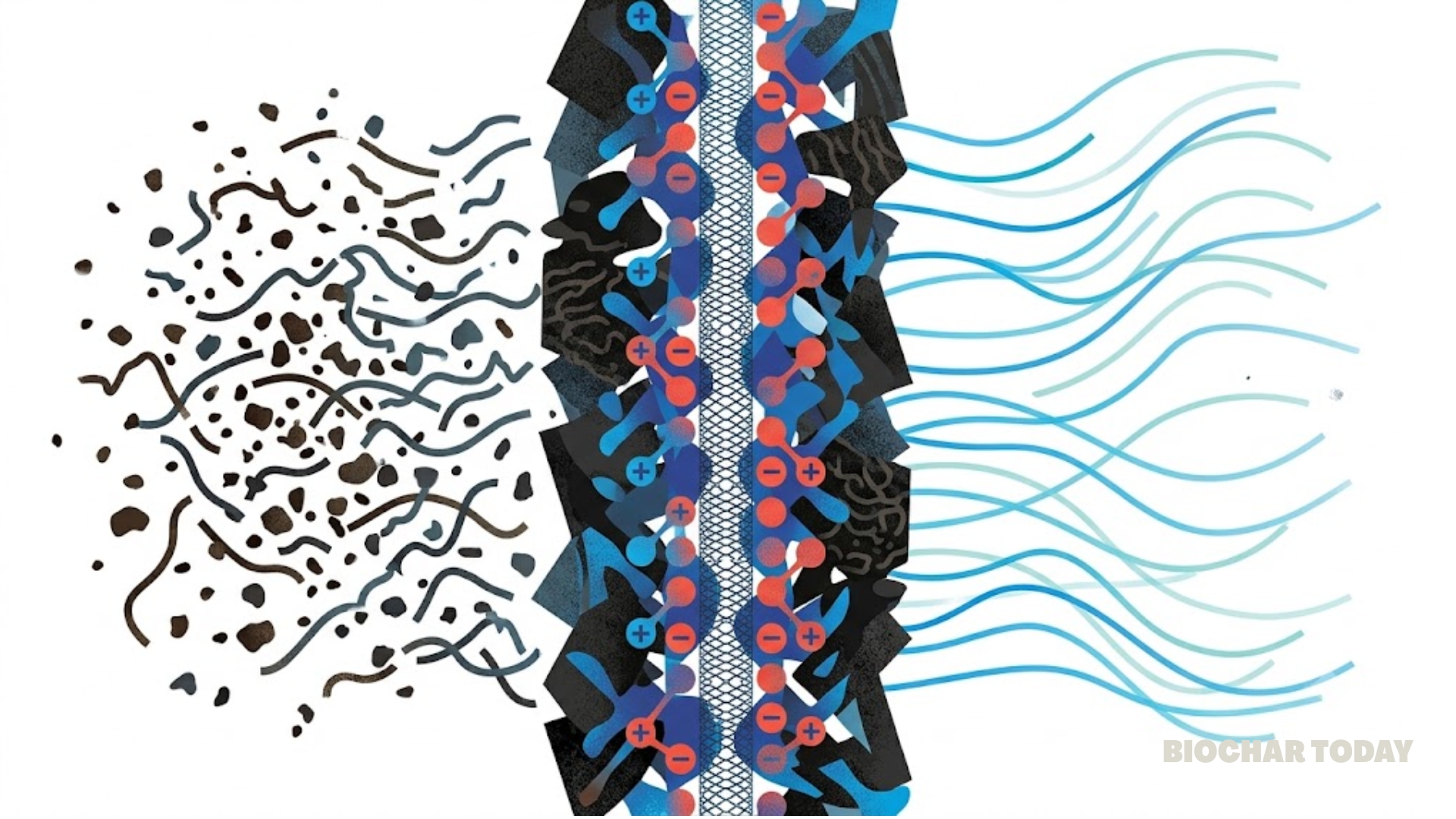
NV: The University of Borås offers a comprehensive suite of facilities and resources dedicated to advanced biochar research. Our capabilities include pyrolysis and co-pyrolysis processes supported by equipment such as a thermogravimetric analyzer (TGA), a fixed-bed pyrolyzer equipped with a high-temperature oven and gas atmosphere control, and a larger lab-scale rotating pyrolyzer suitable for processing more substantial sample volumes. For material preparation and digestion, we utilize acid and microwave digestion systems. Our analytical resources include Microwave Plasma – Atomic Emission Spectroscopy (MP-AES), an Elemental Analyzer (HCNS(O)), Fourier Transform Infrared Spectroscopy (FTIR), bomb calorimetry, and additional TGA systems for detailed thermal and compositional analysis of fuels and biochars. Currently, our ongoing research projects span a diverse range of topics, including the application of biochar in lithium-ion battery production, recycling and characterization of black mass and battery residues, and the pyrolysis and co-pyrolysis of agricultural waste, food waste, and sewage sludge for use as soil amendments and fertilizers. We are also exploring the development of biomass-derived chars for wastewater treatment, specifically targeting the removal of microplastics and other environmental pollutants.
While we currently do not offer direct scholarships for biochar research, students and researchers are encouraged to seek external funding from national and international research bodies or participate in exchange research programs. We welcome inquiries from those interested in collaborating or joining our research efforts and are happy to assist in identifying suitable funding opportunities.




Leave a Reply