

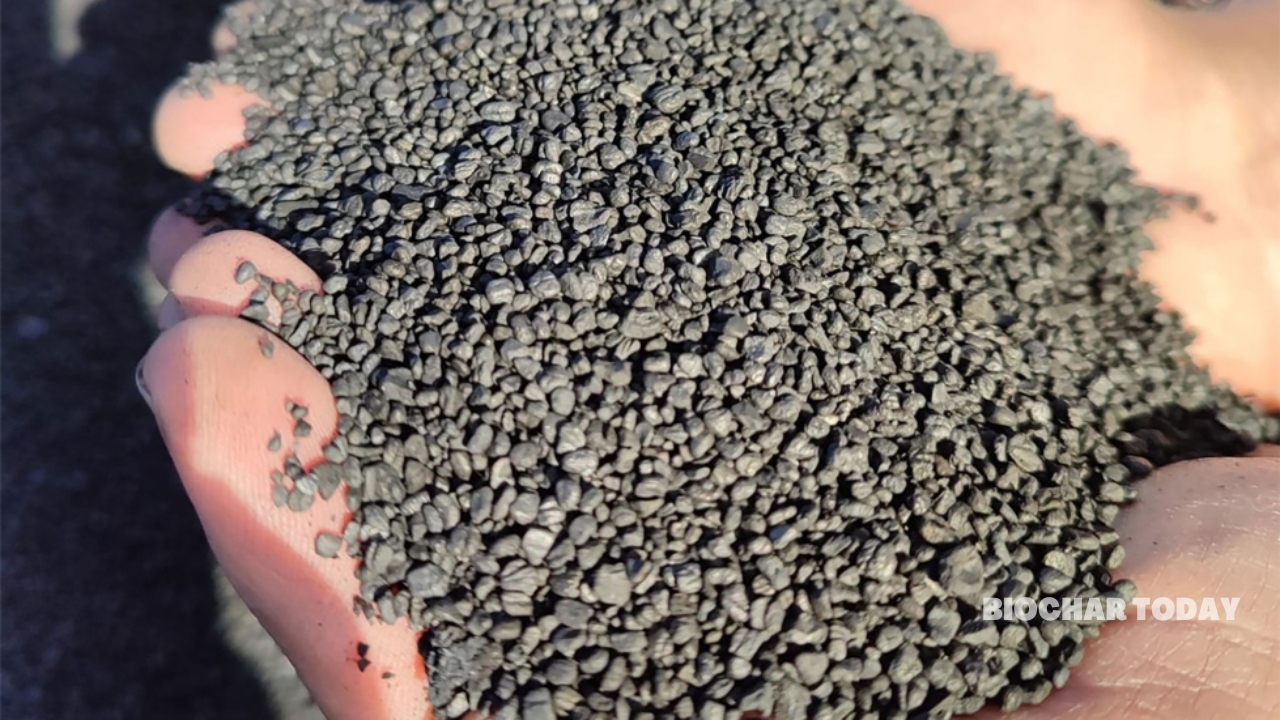
We know biocharBiochar is a carbon-rich material created from biomass decomposition in low-oxygen conditions. It has important applications in environmental remediation, soil improvement, agriculture, carbon sequestration, energy storage, and sustainable materials, promoting efficiency and reducing waste in various contexts while addressing climate change challenges. More starts as a carbon-rich material, born from biomassBiomass is a complex biological organic or non-organic solid product derived from living or recently living organism and available naturally. Various types of wastes such as animal manure, waste paper, sludge and many industrial wastes are also treated as biomass because like natural biomass these More heated in a low-oxygen dance called pyrolysisPyrolysis is a thermochemical process that converts waste biomass into bio-char, bio-oil, and pyro-gas. It offers significant advantages in waste valorization, turning low-value materials into economically valuable resources. Its versatility allows for tailored products based on operational conditions, presenting itself as a cost-effective and efficient More. What’s truly fascinating, though, is how this humble beginning leads to a world of possibilities. It’s not just about producing charcoalCharcoal is a black, brittle, and porous material produced by heating wood or other organic substances in a low-oxygen environment. It is primarily used as a fuel source for cooking and heating. More. The charm lies in the tunability of biochar. Imagine a chef carefully adjusting oven temperature, heating speed, and cooking time to create different textures and flavors from the same ingredients. Similarly, by precisely controlling pyrolysis conditionsThe conditions under which pyrolysis takes place, such as temperature, heating rate, and residence time, can significantly affect the properties of the biochar produced. More – from the type of feedstockFeedstock refers to the raw organic material used to produce biochar. This can include a wide range of materials, such as wood chips, agricultural residues, and animal manure. More (what it’s made from) to the exact temperature, heating rate, and residence time – we can engineer biochar with specific characteristics.
For cosmetic formulators, this isn’t just a technical detail; it’s a new frontier. It transforms biochar from a generic additive into a purpose-built ingredient, designed to address particular skin concerns or seamlessly integrate into complex cosmetic formulations.


Leave a Reply