
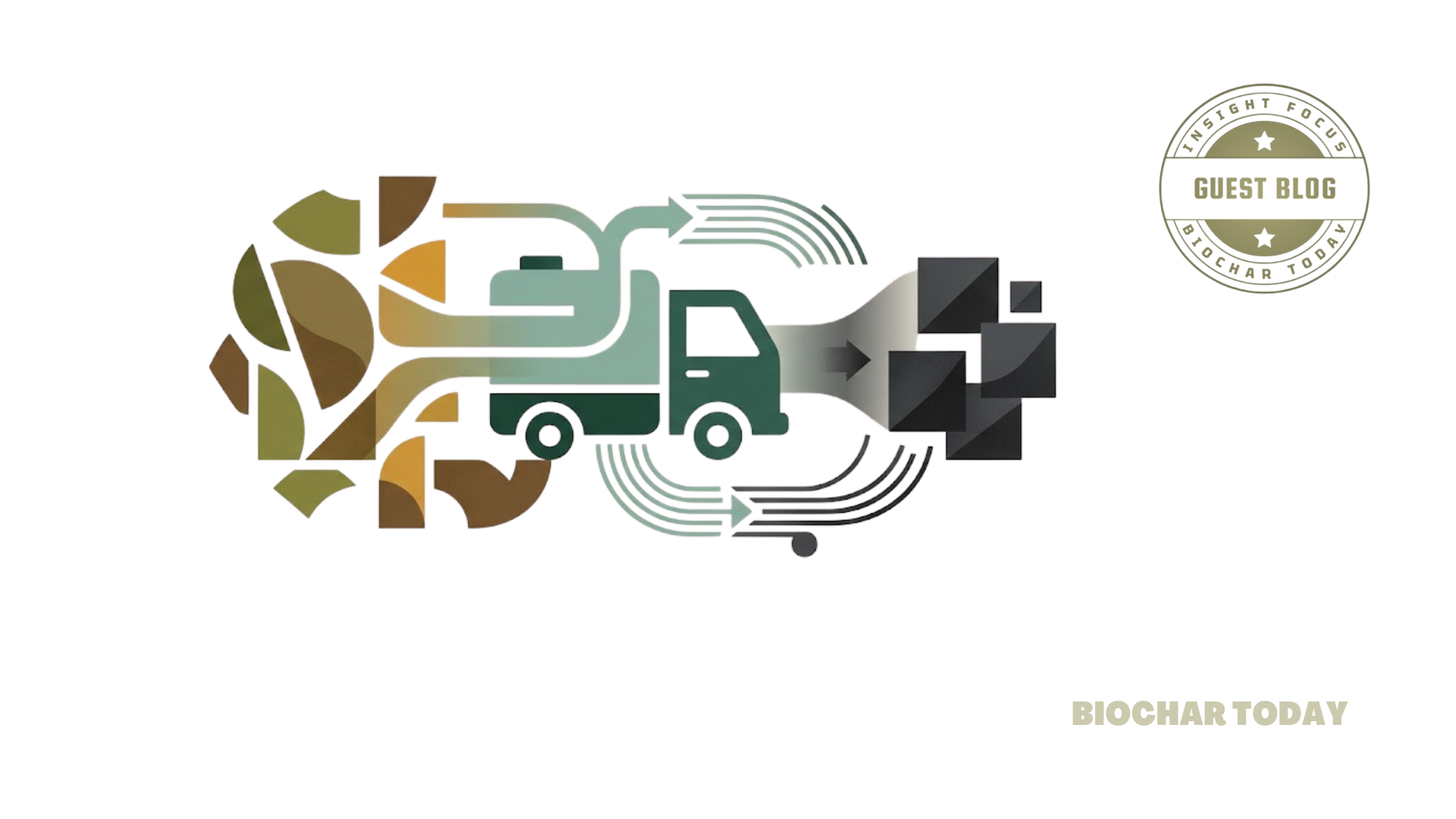
Forestry operations, farms, arborists, municipalities, and agricultural processors generate substantial quantities of organic residues every year. These materials are often transported to centralized processing facilities, stockpiled, composted, or disposed of through other waste-management routes. In rural areas, where transportation distances can be considerable, handling and disposal can add significantly to operational costs. An alternative approach is to consider these materials not simply as waste, but as locally available resources that can be converted into useful products. BiocharBiochar is a carbon-rich material created from biomass decomposition in low-oxygen conditions. It has important applications in environmental remediation, soil improvement, agriculture, carbon sequestration, energy storage, and sustainable materials, promoting efficiency and reducing waste in various contexts while addressing climate change challenges. More production offers one such pathway, with decentralized and mobile pyrolysisPyrolysis is a thermochemical process that converts waste biomass into bio-char, bio-oil, and pyro-gas. It offers significant advantages in waste valorization, turning low-value materials into economically valuable resources. Its versatility allows for tailored products based on operational conditions, presenting itself as a cost-effective and efficient More systems creating opportunities to process suitable biomassBiomass is a complex biological organic or non-organic solid product derived from living or recently living organism and available naturally. Various types of wastes such as animal manure, waste paper, sludge and many industrial wastes are also treated as biomass because like natural biomass these More closer to where it is generated.
By reducing the need to transport bulky, low-density biomass over long distances, mobile biochar production could contribute to more localized resource management while supporting soil improvement, biomass utilization, and carbon removal initiatives.
Understanding Mobile Biochar Production
Decentralized biochar production involves processing biomass at or near its point of generation rather than transporting it to a large, centralized facility. Mobile pyrolysis systems are one approach to achieving this. An example is the Maine Kiln, developed by Mobile Biochar Systems in the United States. It is a trailer-mounted, wood-fired retort system designed for off-grid, batch-based biochar production.
The system uses four 55-gallon retort barrels housed within an enclosed firebox. Biomass is loaded into the barrels, which are subsequently heated within the kiln. Temperature monitoring using thermocouples and a digital meter, together with adjustments to the firebox draft, helps operators manage the processing cycle. Once the batch is complete, the barrels are removed and allowed to cool before the biochar is collected. This type of equipment illustrates how relatively compact systems can bring biomass conversion closer to farms, forestry operations, and other locations with locally available feedstocks.

Feedstock Preparation and Process Control Matter
The feasibility of mobile biochar production depends considerably on the characteristics of the available biomass. FeedstockFeedstock refers to the raw organic material used to produce biochar. This can include a wide range of materials, such as wood chips, agricultural residues, and animal manure. More moisture content, particle size, composition, and bulk density influence drying requirements, loading efficiency, processing time, and biochar yield. Materials that are relatively dry, consistently sized, and easy to handle may be more suitable for small-scale batch systems.
Process conditions are equally important. Temperature, heating rate, and residence timeResidence time refers to the duration that the biomass is heated during the pyrolysis process. The residence time can influence the properties of the biochar produced. More influence the physical and chemical characteristics of the resulting biochar. Consistent temperature monitoring and process control are therefore essential for producing material with predictable properties. However, producing biochar is not simply a matter of heating biomass. Feedstock selection, combustion conditions, emissions management, and appropriate quality testing must all be considered. The suitability of the resulting material for agricultural or environmental applications should be established through relevant characterization and testing.
Exploring the Economic Potential of Local Biomass Conversion
The economic case for decentralized biochar production extends beyond the value of the biochar itself.
For example, arborists and forestry operators may have access to substantial quantities of woody residues. Farms may generate crop residues and other biomass, while municipalities manage woody debris from landscaping and urban maintenance.
Converting suitable materials into biochar locally could provide an alternative to existing disposal or biomass-management practices.
Potential opportunities include:
- Forestry and arboriculture: Converting suitable woody residues into biochar rather than transporting all materials elsewhere.
- Agriculture: Exploring the use of locally produced biochar as a soil amendmentA soil amendment is any material added to the soil to enhance its physical or chemical properties, improving its suitability for plant growth. Biochar is considered a soil amendment as it can improve soil structure, water retention, nutrient availability, and microbial activity. More, subject to feedstock suitability and product testing.
- Municipal waste management: Evaluating the conversion of appropriate woody biomass into materials for landscaping and other environmental applications.
- Local biochar enterprises: Developing mobile production services that support organizations seeking alternatives to conventional biomass disposal.
The financial viability of these approaches will depend on several factors, including equipment investment, labor, feedstock preparation, transportation, production capacity, biochar quality, and the availability of reliable end markets.
In particular, the potential for additional revenue through biochar sales or carbon credits should be evaluated carefully rather than assumed. Carbon removal claims require appropriate monitoring, reporting, verification, and alignment with relevant carbon accounting methodologies.
Challenges and Considerations for Decentralized Systems
Although mobile biochar production offers interesting possibilities, it is not universally suitable for every biomass stream or operating environment. Feedstock availability and consistency can influence the reliability of production. High-moisture biomass may require substantial pre-drying, while variations in feedstock composition can affect process performance and final product characteristics. Operational safety, air emissions, local permitting requirements, and appropriate handling and storage procedures also need consideration. Furthermore, the economic benefits of on-site processing should be assessed against the costs of operating and maintaining mobile equipment. In some locations, centralized processing may remain more economical, particularly where larger and consistent feedstock volumes are available. A site-specific assessment is therefore essential before adopting a decentralized production model.
Building Local Circular Bioeconomies
The growing interest in biochar presents an opportunity to rethink how organic residues are managed and utilized. Rather than viewing biomass solely as a disposal challenge, businesses and communities can explore pathways that recover value from locally available resources. Mobile pyrolysis systems represent one possible approach, particularly in geographically dispersed regions where transporting bulky biomass can be challenging.
The Maine Kiln provides an example of how small-scale, mobile equipment can be integrated into this emerging landscape. More broadly, the success of decentralized biochar production will depend on matching appropriate technologies with suitable feedstocks, reliable process control, verified product quality, and viable local applications.
Ultimately, the opportunity lies not simply in producing more biochar, but in developing practical, economically viable systems that connect biomass management, resource recovery, soil health, and climate objectives.


Leave a Reply