
BiocharBiochar is a carbon-rich material created from biomass decomposition in low-oxygen conditions. It has important applications in environmental remediation, soil improvement, agriculture, carbon sequestration, energy storage, and sustainable materials, promoting efficiency and reducing waste in various contexts while addressing climate change challenges. More production is an effective way to capture about 50% of the carbon in the feedstockFeedstock refers to the raw organic material used to produce biochar. This can include a wide range of materials, such as wood chips, agricultural residues, and animal manure. More as a solid and stable product.
What about the other half?
This remaining carbon is released primarily as syngasSyngas, or synthesis gas, is a fuel gas mixture consisting primarily of hydrogen and carbon monoxide. It is produced during gasification and can be used as a fuel source or as a feedstock for producing other chemicals and fuels. More, which, when combusted to provide process heat and combined heat and power (CHP), generates a flue gas containing valuable carbon dioxide (CO2).
For Joshua Dolby, Global Head of Research and Development at the strategic environmental engineering consultancy Ricardo, capturing and utilizing this residual CO2 is the game-changer for the pyrolysisPyrolysis is a thermochemical process that converts waste biomass into bio-char, bio-oil, and pyro-gas. It offers significant advantages in waste valorization, turning low-value materials into economically valuable resources. Its versatility allows for tailored products based on operational conditions, presenting itself as a cost-effective and efficient More business model.
The Biochar Challenge: A Fragile Business Case
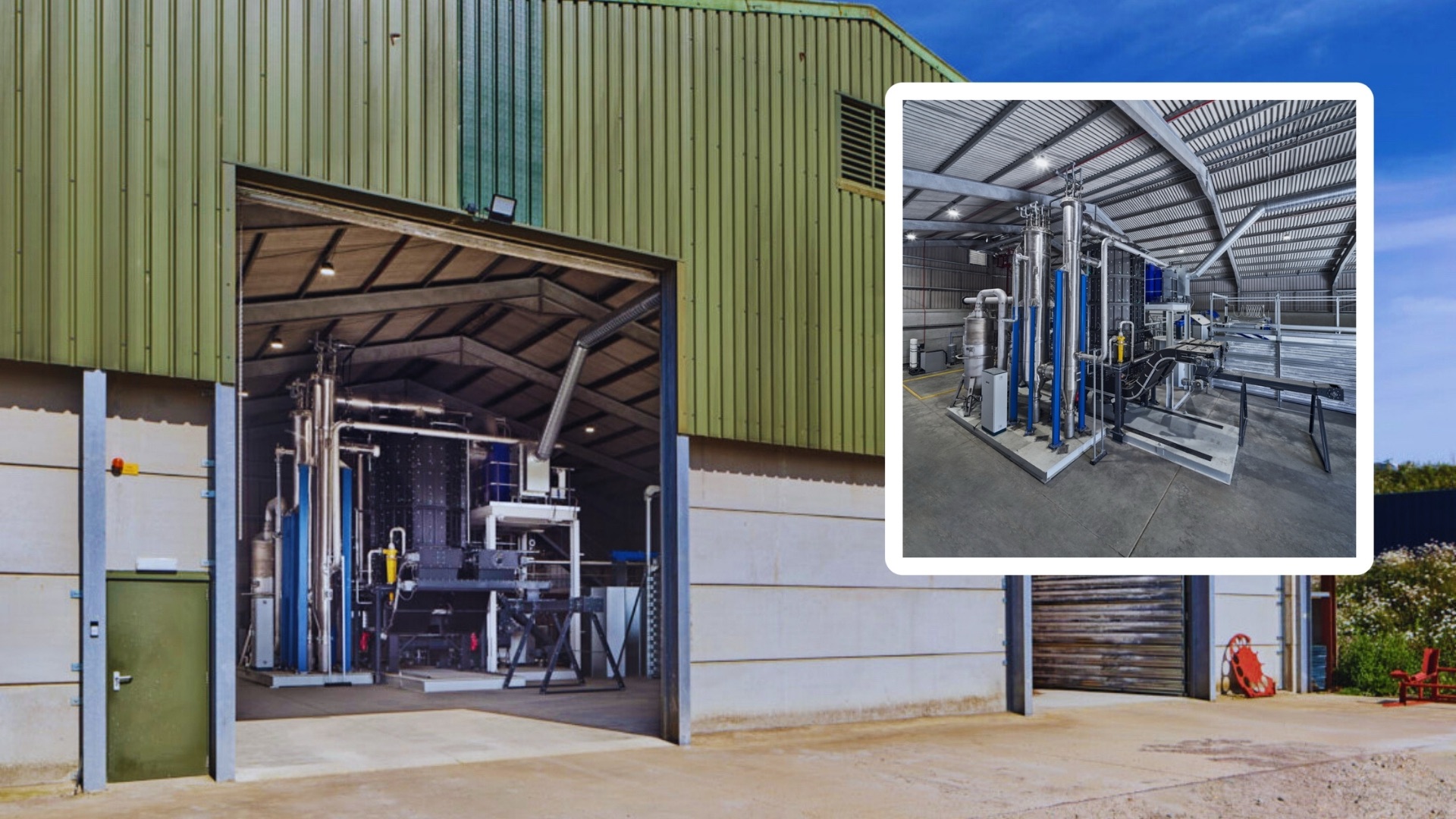
Ricardo is actively involved in the biomassBiomass is a complex biological organic or non-organic solid product derived from living or recently living organism and available naturally. Various types of wastes such as animal manure, waste paper, sludge and many industrial wastes are also treated as biomass because like natural biomass these More and waste sector, including gasificationGasification is a high-temperature, thermochemical process that converts carbon-based materials into a gaseous fuel called syngas and solid by-products. It takes place in an oxygen-deficient environment at temperatures typically above 750°C. Unlike combustion, which fully burns material to produce heat and carbon dioxide (CO2), gasification More and pyrolysis. They operate a pyrolysis CHP demonstrator plant where they have been trialing feedstocks and producing biochar.
Dolby notes that a typical pyrolysis CHP system that captures carbon as biochar generally results in a “marginal” business case. The economic viability is fragile, heavily dependent on a stable, low-cost biomass supply and a high price for biochar and its associated carbon credits.
The syngas combustion produces a flue gas with a CO2 concentration typically around 10 to 12% CO2. For a plant producing two kilotons of biochar annually, the resulting flue gas contains roughly 6.7 kilotons of CO2. This represents a significant, untapped revenue stream.
The Value Proposition: High-Priced Food Grade CO2
The conventional approach for CO2 utilization in the US—where the price of food-grade CO2 has been highly volatile and has increased rapidly in recent years—is to capture and sequester it. However, sequestering the CO2 from a smaller-scale pyrolysis plant faces several hurdles: the site would likely need to be located “pretty close” to one of the pipelines for it to be viable, and large-scale infrastructure designed for power plants might pose minimum injection amount barriers for smaller producers.
Instead of sequestration, the alternative is to purify the flue gas into food-grade CO2, a premium product with an exceptionally high market price in the US. This high market price can be a “game-changer” for annual revenues, offering an income stream that is “incredibly large” compared to the revenue from biochar and electricity generation alone. This premium price is often due to food-grade CO2 being linked to volatile gas prices because it is typically produced from fertilizer manufacturing.
Technology Deep Dive: Choosing Solvent Absorption
To capture the CO2 from the flue gas, Dolby reviewed four main capture technologies, ultimately concluding that solvent absorption is the best fit for an integrated pyrolysis plant.
The main reasons for selecting solvent absorption are rooted in its thermal nature. It is a heat-driven process, and the pyrolysis system’s syngas combustion makes waste heat available at the right temperatures to drive the solvent regeneration, creating an efficient thermal integration.
While other technologies like sorbent adsorption, membranes, and cryogenic separation exist, they have drawbacks such as high energy requirements for pressure swings, the need for multiple units to achieve high purity, or high electricity demand for chilling.
The BIOCCUS System: A Fully Integrated Solution
Ricardo has developed a patented integrated system called BIOCCUS, which combines pyrolysis CHP with a CO2 capture system. The system is integrated to use the available heat efficiently in a cascade process:
- Biomass is pyrolyzed, producing biochar and syngas.
- The syngas combustion flue gas passes through a heat recovery system, such as a hot air turbine, for heat and electricity export.
- The high-temperature waste heat from the hot air turbine is used to drive the solvent stripping column for CO2 release.
- The lower-temperature heat rejected from cooling the solvent is then used for drying the incoming biomass feedstock.
This highly integrated system achieves the potential for “very high carbon capture” and yields four valuable outputs: heat, biochar, electricity, and CO2.
The integration with the pyrolysis system offers distinct advantages for the CO2 capture process:
- The high levels of thermal integration mean the waste heat after electricity generation is sufficient to drive the CO2 capture system.
- The low oxygen content in the pyrolysis flue gas reduces the oxidization rate of the solvent, helping with replacement intervals.
- Syngas combustion helps remove some contaminants, leading to a more reliable output purity compared to capturing CO2 from anaerobic digestion.
Yes, challenges remain, including managing high particulates in the flue gas with an upstream scrubber and the resulting complexities in water management with the water-based solvent. Still, Ricardo is confident, based on testing, that a lot of “woody waste streams” can consistently achieve food-grade CO2 standards.



Leave a Reply