
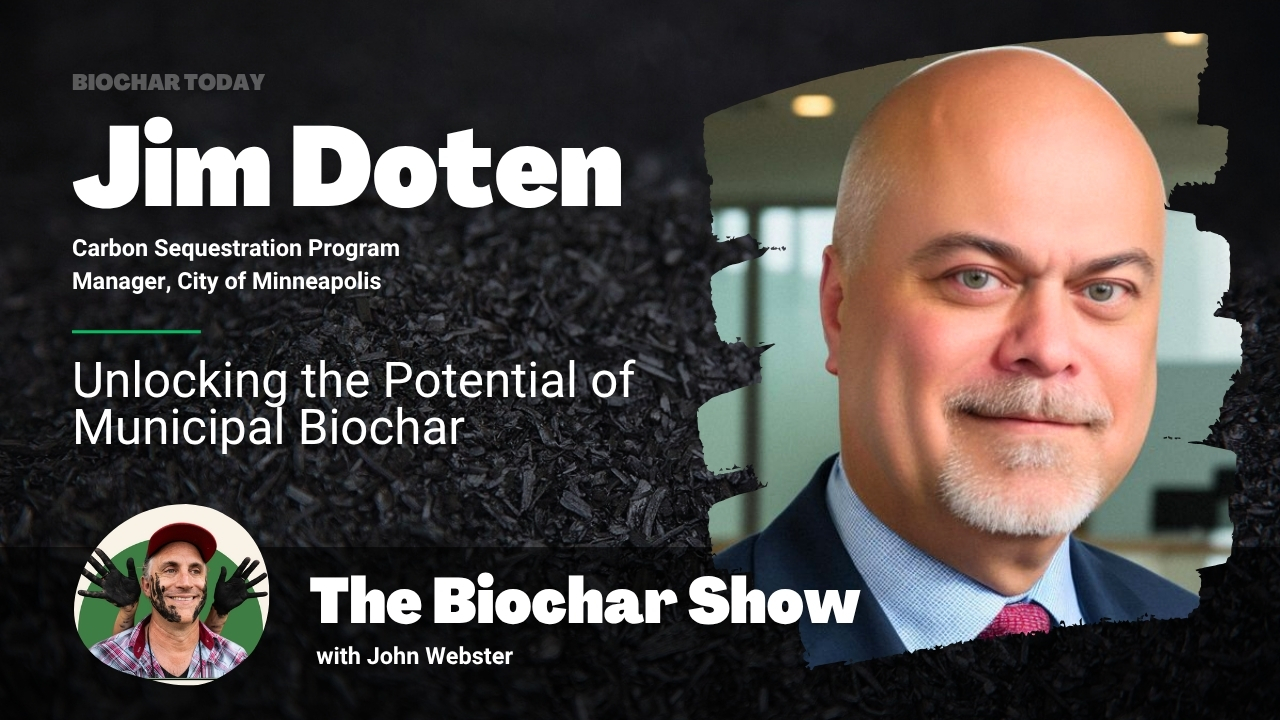
In this episode of The BiocharBiochar is a carbon-rich material created from biomass decomposition in low-oxygen conditions. It has important applications in environmental remediation, soil improvement, agriculture, carbon sequestration, energy storage, and sustainable materials, promoting efficiency and reducing waste in various contexts while addressing climate change challenges. More Show, host John Webster interviews Jim Doten, the Carbon Sequestration Program Manager for the City of Minneapolis and a leading advocate for municipal biochar. They discuss the significance of biochar in urban environments, the challenges faced in its implementation, and the role of the Minnesota Biochar Initiative (MNBI) in promoting its use. Jim shares insights on the upcoming North American Biochar Conference, the importance of community engagement, and the potential for biochar to address environmental justice issues. The conversation also touches on funding opportunities, regulatory challenges, and the future of biochar in urban applications.
ABOUT THE GUEST
Jim Doten is a seasoned environmental professional and long-time advocate for biochar. Jim currently serves as the Carbon Sequestration Program Manager for the City of Minneapolis, where he’s leading efforts to advance durable carbon storage strategies, including the use of biochar in urban and natural systems. He brings nearly four decades of experience as a professional geologist/hydrologist and has previously held the role of Supervisor of Environmental Services for the city. Jim is also the founder of the Minnesota Biochar Initiative and serves on the board of the U.S. Biochar Initiative, helping to shape national dialogue on carbon removal and ecosystem resilience. A military veteran and former U.S. Army hydrologist, Jim holds a Master’s in Environmental Policy and Management from American Military University, along with an MBA. His background bridges science, policy, and public service—making him a powerful voice in the growing movement to turn waste biomassBiomass is a complex biological organic or non-organic solid product derived from living or recently living organism and available naturally. Various types of wastes such as animal manure, waste paper, sludge and many industrial wastes are also treated as biomass because like natural biomass these More into climate solutions.
RELATED LINKS
- Jim Doten on LinkedIn: https://www.linkedin.com/in/james-doten-008b3120/
- Minnesota Biochar Initiative: https://www.mnbiocharinitiative.org
- North American Biochar Conference: https://www.biocharconference.com/
SUBSCRIBE TO THE BIOCHAR SHOW
- YouTube: http://www.youtube.com/@BiocharToday
- iTunes: https://podcasts.apple.com/us/podcast/the-biochar-show/id1793919794
- Spotify: https://open.spotify.com/show/6zf4WQcQd4VccbFcBbt16l
- Amazon Music: https://music.amazon.com/podcasts/e86c3221-27a8-47e7-9806-f31c0173e28c
- iHeart Radio: https://iheart.com/podcast/263485219
- RSS: https://feed.podbean.com/biocharshow/feed.xml

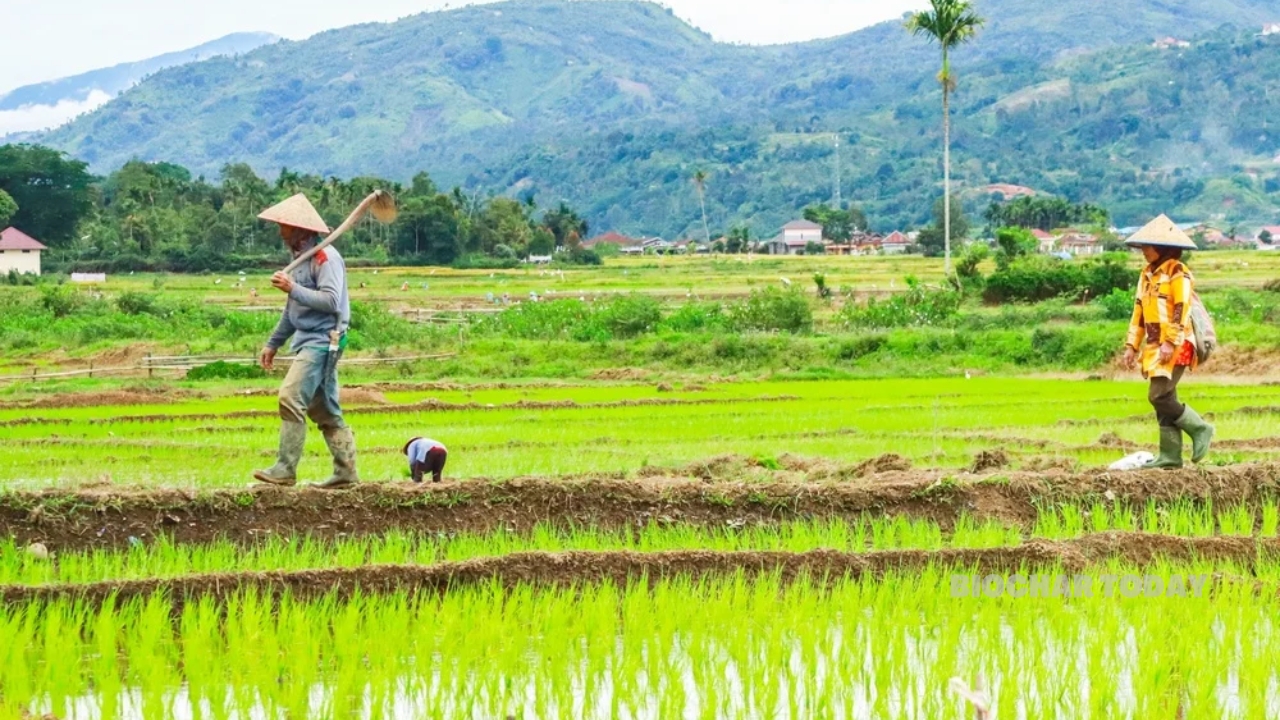
![Eucalyptus Wood Waste-Derived Biochar Achieves a Ninety-Eight Percent Removal Efficiency for Benzo[ghi]perylene in Vehicle-Wash Wastewater](https://biochartoday.com/wp-content/uploads/2026/10/SCIENCE-BLOGS-2026-2026-10-19T160523.703.jpg)

Leave a Reply