
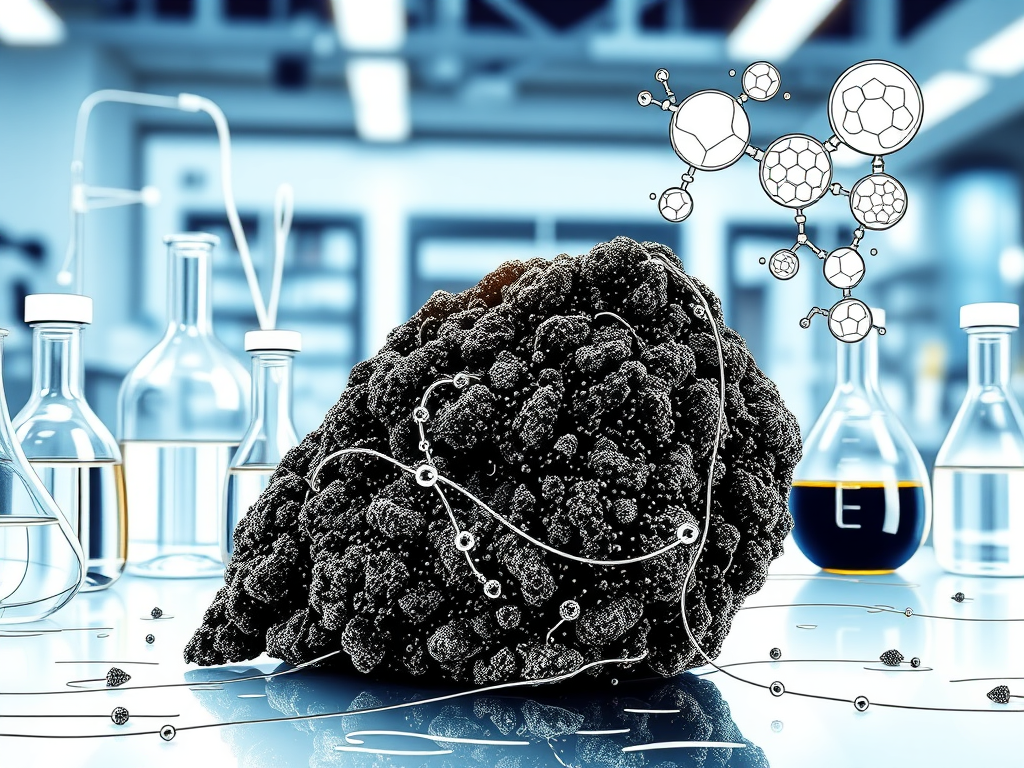
A recent study published in Environmental Research by Yi Fang and colleagues introduces an innovative, eco-friendly approach to wastewater treatment. The study details the synthesis of a novel catalyst using yeast-derived phosphorus and biocharBiochar is a carbon-rich material created from biomass decomposition in low-oxygen conditions. It has important applications in environmental remediation, soil improvement, agriculture, carbon sequestration, energy storage, and sustainable materials, promoting efficiency and reducing waste in various contexts while addressing climate change challenges. More, and its effectiveness in degrading organic pollutants in wastewater.
The authors developed a catalyst by loading Cu3P particles onto biochar, utilizing mannan-phosphate from yeast cell walls as a sustainable phosphorus source. This Cu3P/biochar catalyst demonstrated exceptional performance in breaking down Rhodamine B (RhB), a common industrial dye. The Cu3P/biochar catalyst increased RhB removal efficiency by 25.2 times and chemical oxygen demand (COD) removal efficiency by approximately 4 times, compared to biochar alone. The catalyst maintained robust performance across different real-world water samples and showed effective performance over four cycles. After regeneration, the removal rate of RhB increased to 96.4%, with minimal copper leachingLeaching is the process where nutrients are dissolved and carried away from the soil by water. This can lead to nutrient depletion and environmental pollution. Biochar can help reduce leaching by improving nutrient retention in the soil. More.
The study highlights an eco-friendly method for producing efficient catalysts from yeast biomassBiomass is a complex biological organic or non-organic solid product derived from living or recently living organism and available naturally. Various types of wastes such as animal manure, waste paper, sludge and many industrial wastes are also treated as biomass because like natural biomass these More and biochar. These catalysts have significant potential for application in wastewater treatment, offering a sustainable solution for removing pollutants.
SOURCE: Fang, Y., Ni, X., Ye, Z., Liu, X., Xiao, Q., & Huang, S. (2025). Yeast-Derived Phosphorus for Eco-friendly Synthesis of Cu3P/Biochar Catalysts with Enhanced Hydrogen Peroxide-based Fenton-like Reaction. Environmental Research,



Leave a Reply