
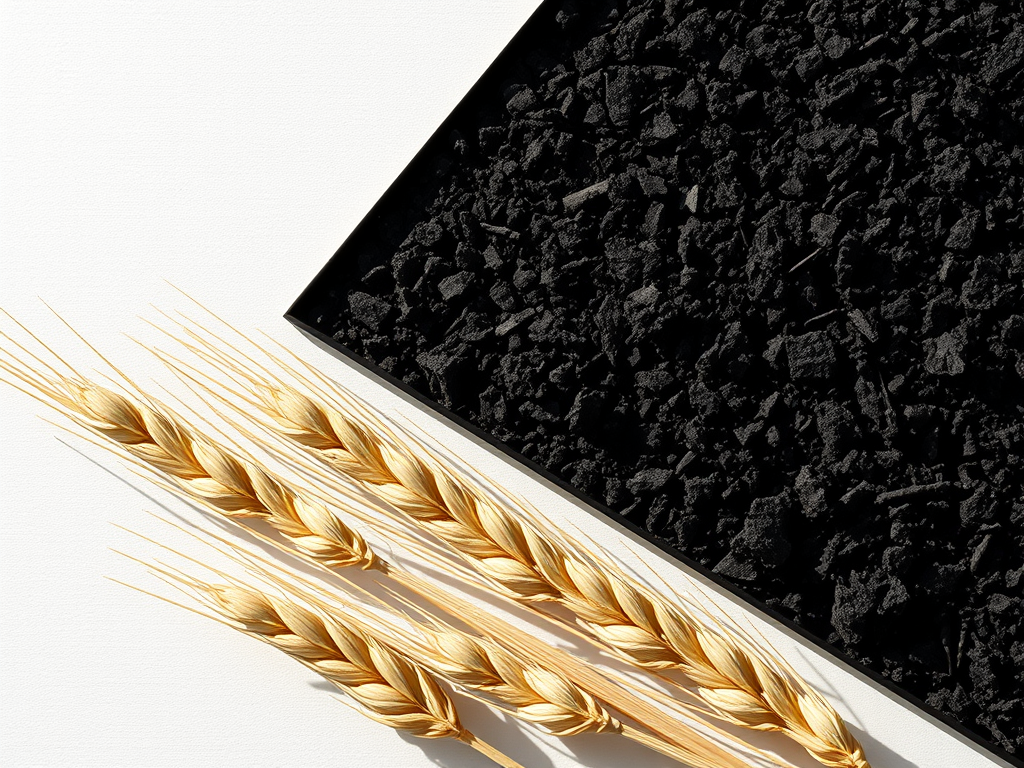
Antibiotic water pollution poses a significant threat to human health and environmental safety. Ciprofloxacin (CIP), a widely used antibiotic, is frequently detected in water bodies. In a recent study published in Chemosphere, Alawa et al., developed a novel adsorbent from agricultural waste for the effective removal of ciprofloxacin from water.
The researchers utilized a common agricultural waste product, wheat straw, to create biocharBiochar is a carbon-rich material created from biomass decomposition in low-oxygen conditions. It has important applications in environmental remediation, soil improvement, agriculture, carbon sequestration, energy storage, and sustainable materials, promoting efficiency and reducing waste in various contexts while addressing climate change challenges. More to remove pollutants from water effectively. The wheat straw was first converted to biochar through calcination and then chemically activated to create an adsorbent with high ciprofloxacin removal efficiency.
The study revealed that the activated biochar derived from wheat straw is capable of removing approximately 98% of ciprofloxacin from water. Kinetic studies showed that the adsorption of ciprofloxacin onto the developed adsorbent is rapid, reaching equilibrium within 50 minutes. Isotherm analysis indicated that the Langmuir model best describes the adsorption process, suggesting monolayer adsorption of ciprofloxacin on the biochar.
In conclusion, this research demonstrates the potential of biochar derived from agricultural waste as an efficient and sustainable solution for removing antibiotics from water. The use of wheat straw, a widely available agricultural byproduct, not only provides a cost-effective adsorbent but also addresses air pollution caused by the burning of agricultural waste. This innovative approach paves the way for the development of scalable and environmentally friendly technologies for water purification.
Source: Alawa, B., Singh, S., Chakma, S., Kishor, R., Lundborg, C. S., & Diwan, V. (2025). Development of novel biochar adsorbent using agricultural waste biomassBiomass is a complex biological organic or non-organic solid product derived from living or recently living organism and available naturally. Various types of wastes such as animal manure, waste paper, sludge and many industrial wastes are also treated as biomass because like natural biomass these More for enhanced removal of ciprofloxacin from water: Insights into the isotherm, kinetics, and thermodynamic analysis. Chemosphere, 375, 144252.https://doi.org/10.1016/j.chemosphere.2025.144252


Leave a Reply