
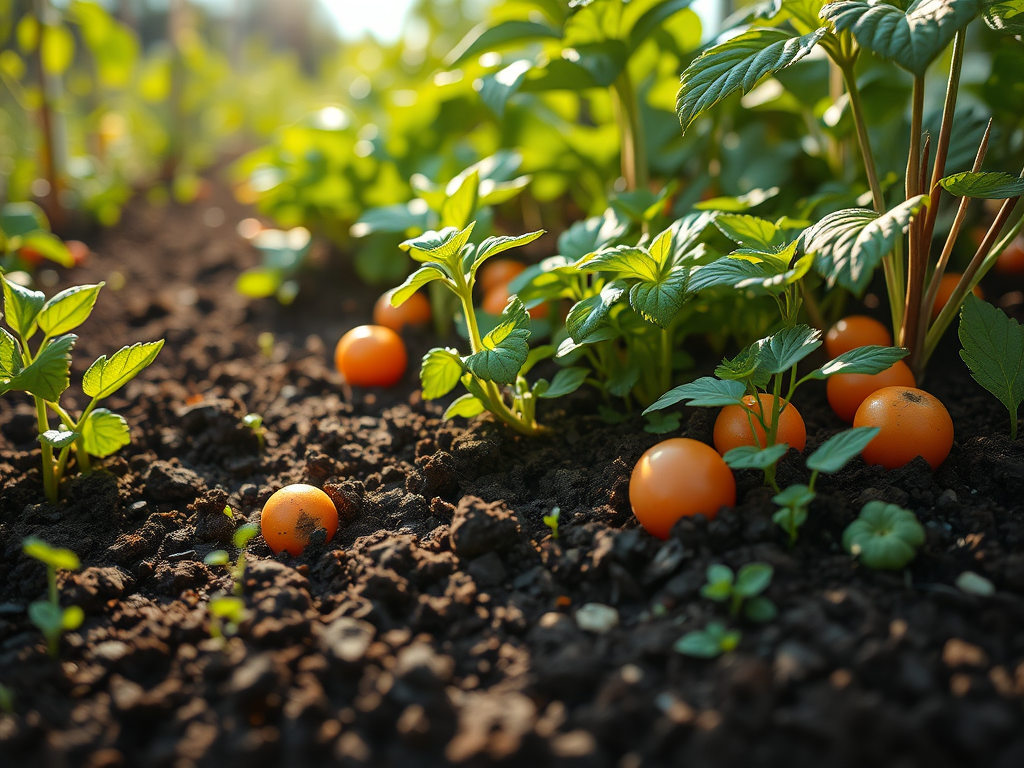
A new study published in the International Journal of Agriculture, Biology & Environment (IJAGRI) investigated the individual and combined effects of biocharBiochar is a carbon-rich material created from biomass decomposition in low-oxygen conditions. It has important applications in environmental remediation, soil improvement, agriculture, carbon sequestration, energy storage, and sustainable materials, promoting efficiency and reducing waste in various contexts while addressing climate change challenges. More, Arbuscular Mycorrhizal FungiThese are friendly fungi that form a partnership with plant roots. They act like an extension of the root system, helping plants access water and nutrients more effectively. Biochar can create a cozy habitat for these helpful fungi, boosting their growth and improving plant health. More (AMF), and nitrogen on soil health and garden egg production. The research, conducted by Jean Bosco Ngarukiyimana et al., reveals that these three factors do not have a synergistic effect but rather independently contribute to improving key soil properties and plant productivity
The study found that biochar, AMF, and nitrogen each had a significant impact on soil pHpH is a measure of how acidic or alkaline a substance is. A pH of 7 is neutral, while lower pH values indicate acidity and higher values indicate alkalinity. Biochars are normally alkaline and can influence soil pH, often increasing it, which can be beneficial More in both the rainy and dry seasons. Biochar, with a preliminary pH of 9.74, significantly increased the soil pH from 6.32, demonstrating its alkaline nature. AMF also contributed to higher soil pH, and nitrogen, while having a significant effect, tended to lower it over time. Similarly, all three factors—AMF, biochar, and nitrogen—independently and significantly increased soil organic carbon (TOC) in both seasons. The addition of biochar, which had a TOC of 25.5 mg/kg, had a particularly pronounced effect, increasing the mean soil organic carbon from 15.28 to 59.17 mg/kg. The study concluded that the effects of these amendments on soil pH and organic carbon were additive, not synergistic, meaning their combined effect was equal to the sum of their individual contributions
The research also showed that AMF, biochar, and nitrogen significantly improved Cation Exchange Capacity (CEC), a key indicator of soil fertility, in both seasons. Biochar, with a high preliminary CEC of 32.41 Cmol(+)/kg, was particularly effective, increasing the CEC in some treatment combinations from 22.5 to 55.98 Cmol(+)/kg. The researchers found that while each factor had a significant independent effect, there were no significant synergistic interactions among them. The study further revealed that AMF, biochar, and nitrogen all had a significant positive effect on root dry biomassBiomass is a complex biological organic or non-organic solid product derived from living or recently living organism and available naturally. Various types of wastes such as animal manure, waste paper, sludge and many industrial wastes are also treated as biomass because like natural biomass these More. In the rain season, the highest root dry biomass was 10.75, observed in the combined treatment of AMF, biochar, and 200 kg N/ha.
Despite the positive individual contributions of each treatment, the study did not find any significant synergistic interactions among AMF, biochar, and nitrogen on soil pH, organic carbon, CEC, or root dry biomass. This is a crucial finding because it indicates that while these amendments are effective in improving soil health, their combined application does not yield an exponentially greater effect than their individual application.
The researchers concluded that biochar and AMF can be independently and effectively used to improve soil health and plant productivity in a sustainable manner. Future research should focus on long-term studies to confirm these findings and explore the effects of different application rates and environmental conditions on these soil amendments.
Source: Ngarukiyimana, J. B., Dzomeku, I. K., Abubakari, A. H., & Rukangantambara, H. (2025). Evaluation of the Impact of Biochar on Soil properties and its synergistic effects with Arbuscular Mycorrhizal Fungi. International Journal of Agriculture, Biology & Environment (IJAGRI), 6(3), 1-18.




Leave a Reply