
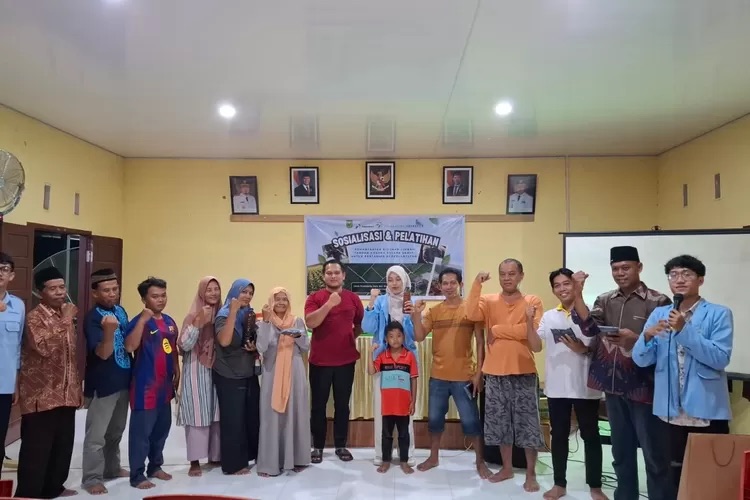
In Pematang Jaya, Indonesia, a student team from the University of Riau (UNRI) recently conducted a technical training initiative aimed at transforming underutilized agricultural residues into high-value commodities. The program, part of the university’s community service mandate, focused on teaching local residents how to process palm oil waste through controlled pyrolysisPyrolysis is a thermochemical process that converts waste biomass into bio-char, bio-oil, and pyro-gas. It offers significant advantages in waste valorization, turning low-value materials into economically valuable resources. Its versatility allows for tailored products based on operational conditions, presenting itself as a cost-effective and efficient More. By utilizing empty fruit bunches and palm shells, the project established a localized production cycle for biocharBiochar is a carbon-rich material created from biomass decomposition in low-oxygen conditions. It has important applications in environmental remediation, soil improvement, agriculture, carbon sequestration, energy storage, and sustainable materials, promoting efficiency and reducing waste in various contexts while addressing climate change challenges. More and liquid smoke, targeting both environmental remediation and agricultural productivity.
The primary challenge addressed by the UNRI team is the significant volume of palm oil processing byproducts that remain unmanaged in the Riau region. In many Indonesian farming communities, these organic materials are frequently discarded or left to decompose in situ, which can lead to methane emissions and logistical burdens for plantation owners. The lack of accessible technology and technical expertise has historically prevented smallholder communities from capturing the economic and carbon-sequestration value inherent in these abundant biomassBiomass is a complex biological organic or non-organic solid product derived from living or recently living organism and available naturally. Various types of wastes such as animal manure, waste paper, sludge and many industrial wastes are also treated as biomass because like natural biomass these More streams.
To address these gaps, the UNRI students introduced a decentralized pyrolysis solution involving a simplified reactor drum. During the training sessions, participants learned to load palm oil shells and empty fruit bunches into the apparatus for thermal conversion in a low-oxygen environment. This process facilitates the carbonization of the biomass into biochar while simultaneously distilling the byproduct gases into liquid smoke. The instruction provided by the university team covered the entire operational cycle, from feedstockFeedstock refers to the raw organic material used to produce biochar. This can include a wide range of materials, such as wood chips, agricultural residues, and animal manure. More preparation to the collection and storage of the final products.
The immediate outcomes of this initiative include the reduction of localized agricultural waste and the creation of two functional agricultural inputs. The resulting biochar offers Pematang Jaya farmers a means to improve soil structure and nutrient retention, while the liquid smoke provides an organic alternative for pest control and wood preservation. This project demonstrates the technical feasibility of converting palm oil industry residues into marketable resources at the village level, effectively turning a waste liability into a community asset.


Leave a Reply