
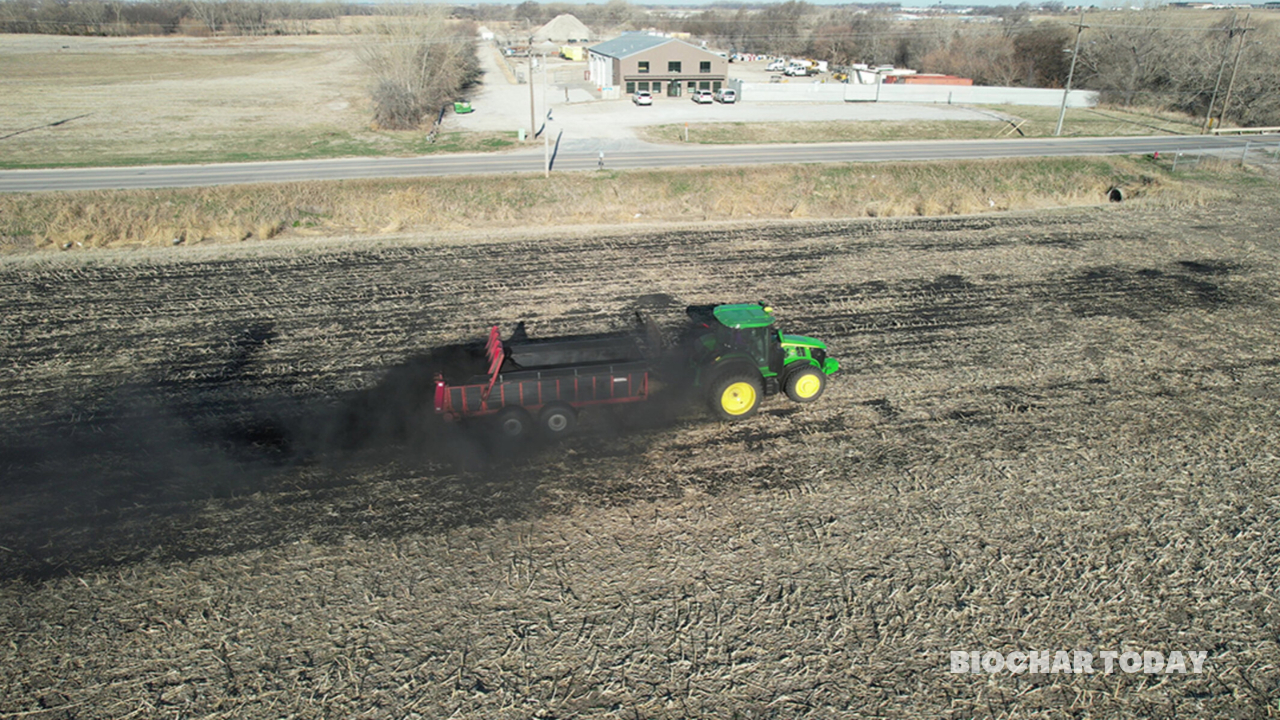
Researchers at the University of Nebraska–Lincoln (UNL) have published findings assessing the agronomic performance and financial feasibility of utilizing locally sourced eastern redcedar biocharBiochar is a carbon-rich material created from biomass decomposition in low-oxygen conditions. It has important applications in environmental remediation, soil improvement, agriculture, carbon sequestration, energy storage, and sustainable materials, promoting efficiency and reducing waste in various contexts while addressing climate change challenges. More across agricultural production systems in Nebraska, United States. Drawing from trials conducted at the Eastern Nebraska Research, Extension and Education Center (ENREEC), the South Central Agricultural Laboratory (SCAL), and an acre-scale plot in Lincoln, the UNL team demonstrated that redcedar biochar delivers rapid soil improvements within twelve months of application. To scale adoption, the university is establishing collaborative rancher-farmer networks funded by the American Farmland Trust and the USDA NRCS Conservation Innovation Grant program.
The central challenge confronting regional adoption is the prohibitive cost of commercial biochar, which frequently exceeds $1,000 per ton due to absent localized processing infrastructure. At the same time, regional ecosystems face severe degradation from eastern redcedar encroachment, which affects nearly 500,000 acres of grazing rangeland across the Great Plains. Agricultural producers require concrete verification that local feedstockFeedstock refers to the raw organic material used to produce biochar. This can include a wide range of materials, such as wood chips, agricultural residues, and animal manure. More processing can offset high input costs through nutrient retention and yield improvements, rather than generating unrecoverable capital expenditures.
To address both economic and ecological bottlenecks, UNL researchers designed field trials evaluating eastern redcedar biochar applied at rates of 8 and 31 tons per acre, integrated with standard agricultural equipment such as conventional manure spreaders and disc plows. The intervention connects ranchers clearing invasive redcedar with row-crop farmers seeking organic soil conditioners. Field trials tested biochar across rainfed and irrigated corn-soybean systems to measure carbon storage, bulk density reductions, and potential fertilizer savings under commercial and organic nutrient regimes.
The research established that locally produced redcedar biochar successfully enhances soil organic carbon storage and nutrient retention without immobilizing nitrogen or depressing crop yields. While immediate crop yields remained statistically unchanged, residual nitrogen and phosphorus retention indicated potential fertilizer savings of up to 35 pounds of urea ammonium nitrate per acre and 22 pounds of monoammonium phosphate per acre. These findings demonstrate that local sourcing and standard spreading machinery can lower adoption hurdles, allowing producers to capitalize on enhanced input efficiency across the regional agricultural sector.



Leave a Reply