
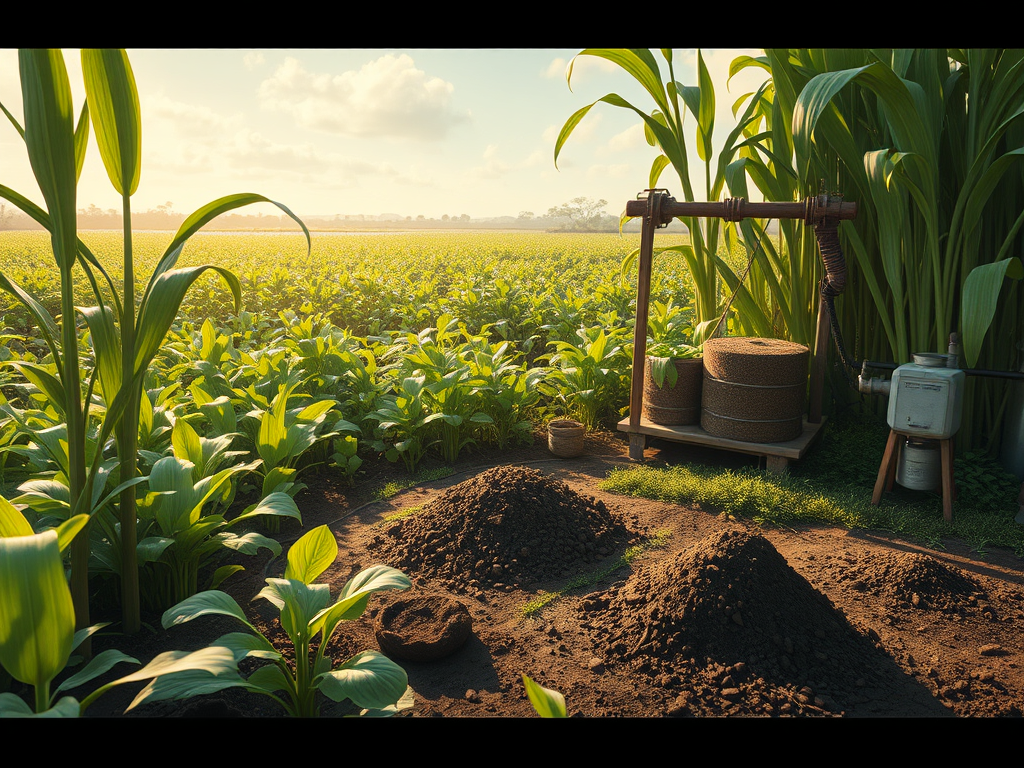
Water hyacinth is one of the world’s most invasive aquatic weeds, choking waterways and disrupting ecosystems. But what if this nuisance plant could be turned into something useful? In a study published in International Review of Applied Sciences and Engineering, Nittin Johnson Jeyaraj and Vanitha Sankararajan explore how biocharBiochar is a carbon-rich material created from biomass decomposition in low-oxygen conditions. It has important applications in environmental remediation, soil improvement, agriculture, carbon sequestration, energy storage, and sustainable materials, promoting efficiency and reducing waste in various contexts while addressing climate change challenges. More made from water hyacinth can improve soil health and support sustainable agriculture.
The researchers collected water hyacinth biomassBiomass is a complex biological organic or non-organic solid product derived from living or recently living organism and available naturally. Various types of wastes such as animal manure, waste paper, sludge and many industrial wastes are also treated as biomass because like natural biomass these More and heated it in a low-oxygen environment to produce biochar. They analyzed its chemical composition, structure, and thermal properties using advanced techniques like X-ray diffraction (XRD), Fourier transform infrared spectroscopy (FTIR), and scanning electron microscopy (SEM). Their findings show that water hyacinth biochar (WHBC) retains essential soil nutrients like nitrogen, phosphorus, and potassium. It also has a porous structure, which enhances soil water retention—critical for drought-prone areas.
WHBC had an optimal production temperature range of 230–664°C, with 300°C yielding the best balance of stability and nutrient retention. The analysis confirmed that WHBC is carbon-rich, making it a valuable tool for long-term carbon sequestration in soil, reducing greenhouse gas emissions while improving fertility. Additionally, its alkaline properties can help neutralize acidic soils.
Despite these benefits, WHBC’s microstructure lacked sufficient porosityPorosity of biochar is a key factor in its effectiveness as a soil amendment and its ability to retain water and nutrients. Biochar’s porosity is influenced by feedstock type and pyrolysis temperature, and it plays a crucial role in microbial activity and overall soil health. Biochar More for maximum effectiveness. The authors suggest that pre-treating the biomass before pyrolysisPyrolysis is a thermochemical process that converts waste biomass into bio-char, bio-oil, and pyro-gas. It offers significant advantages in waste valorization, turning low-value materials into economically valuable resources. Its versatility allows for tailored products based on operational conditions, presenting itself as a cost-effective and efficient More could enhance its performance as a soil amendmentA soil amendment is any material added to the soil to enhance its physical or chemical properties, improving its suitability for plant growth. Biochar is considered a soil amendment as it can improve soil structure, water retention, nutrient availability, and microbial activity. More. With further optimization, WHBC could be a game-changer for sustainable farming, transforming a troublesome weed into an agricultural asset.
Jeyaraj, N. J., & Sankararajan, V. (2025). Water hyacinth biomass-based biochar: Preparation and characterizations for sustainable soil amendment. International Review of Applied Sciences and Engineering, 14(2). https://doi.org/10.1556/1848.2025.00870




Leave a Reply