
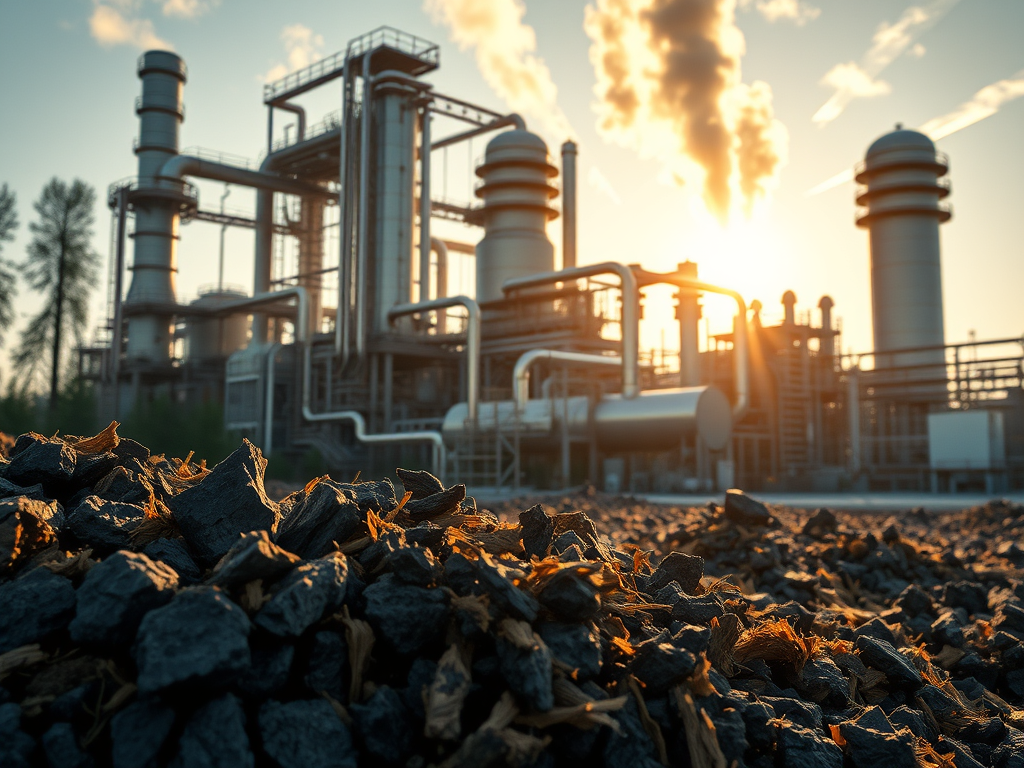
In the quest for sustainable energy solutions, researchers are constantly exploring new ways to produce cleaner and more efficient fuels. One promising avenue is the co-gasification of coal and biomassBiomass is a complex biological organic or non-organic solid product derived from living or recently living organism and available naturally. Various types of wastes such as animal manure, waste paper, sludge and many industrial wastes are also treated as biomass because like natural biomass these More, a process that converts these materials into a hydrogen-enriched gas called syngasSyngas, or synthesis gas, is a fuel gas mixture consisting primarily of hydrogen and carbon monoxide. It is produced during gasification and can be used as a fuel source or as a feedstock for producing other chemicals and fuels. More. Syngas can be used to generate electricity with lower emissions compared to traditional coal-fired power plants. A recent study published in Explorematics Journal by Ozonoh et al., delves into the intricacies of this process, examining the effects of locally synthesized catalysts and gasificationGasification is a high-temperature, thermochemical process that converts carbon-based materials into a gaseous fuel called syngas and solid by-products. It takes place in an oxygen-deficient environment at temperatures typically above 750°C. Unlike combustion, which fully burns material to produce heat and carbon dioxide (CO2), gasification More temperatures on the quality and efficiency of syngas production. The authors focused on the co-gasification of coal and pine sawdust (PSD), a readily available and cost-effective biomass source.
The researchers found that the use of catalysts significantly enhanced the gasification process, resulting in higher yields of syngas and reduced tar formation. Tar, a byproduct of gasification, can clog equipment and reduce the efficiency of the process. The catalysts, derived from pine sawdust biocharBiochar is a carbon-rich material created from biomass decomposition in low-oxygen conditions. It has important applications in environmental remediation, soil improvement, agriculture, carbon sequestration, energy storage, and sustainable materials, promoting efficiency and reducing waste in various contexts while addressing climate change challenges. More (PSD-BC) and nickel-pine sawdust biochar (Ni-PSD-BC), proved to be effective in breaking down tar and promoting the production of cleaner syngas.
Temperature also played a crucial role in the gasification process. The researchers observed that increasing the temperature from 700°C to 900°C led to a significant increase in the production of hydrogen (H2) and carbon monoxide (CO), the main components of syngas. This increase in temperature also contributed to a reduction in tar content. The findings of this study have important implications for the development of cleaner and more efficient energy production technologies. By optimizing the use of catalysts and gasification temperatures, it is possible to produce high-quality syngas that can be used to generate electricity with minimal environmental impact.
This research underscores the potential of co-gasification as a sustainable energy solution, particularly in regions with abundant coal and biomass resources. As we continue to grapple with the challenges of climate change, the development and implementation of such technologies will be critical in our transition to a cleaner and more sustainable energy future.
SOURCE: Ozonoh, M., Iwarere, S. A., & Daramola, M. O. (2024). Evaluation of the effects of locally synthesized catalysts and temperature on gasification products during co-gasification of coal and biomass. Explorematics Journal, 5(2), 207-219.





Leave a Reply