
Key Takeaways
- Tobacco stem biocharBiochar is a carbon-rich material created from biomass decomposition in low-oxygen conditions. It has important applications in environmental remediation, soil improvement, agriculture, carbon sequestration, energy storage, and sustainable materials, promoting efficiency and reducing waste in various contexts while addressing climate change challenges. More effectively kills harmful soil bacteria that cause severe crop diseases while protecting beneficial soil microbes.
- The temperature at which biochar is produced determines whether it generates free radicals or non-radical reactive oxygen compounds to fight plant diseases.
- Biochar produced at higher temperatures generates non-radical oxygen species that completely eliminate target plant pathogens.
- Applying tobacco stem biochar significantly increases the richness, complexity, and stability of beneficial bacteria in the plant root zone.
- Tailoring biochar production temperatures provides a reliable, eco-friendly alternative to chemical soil disinfectants for managing crop infections.
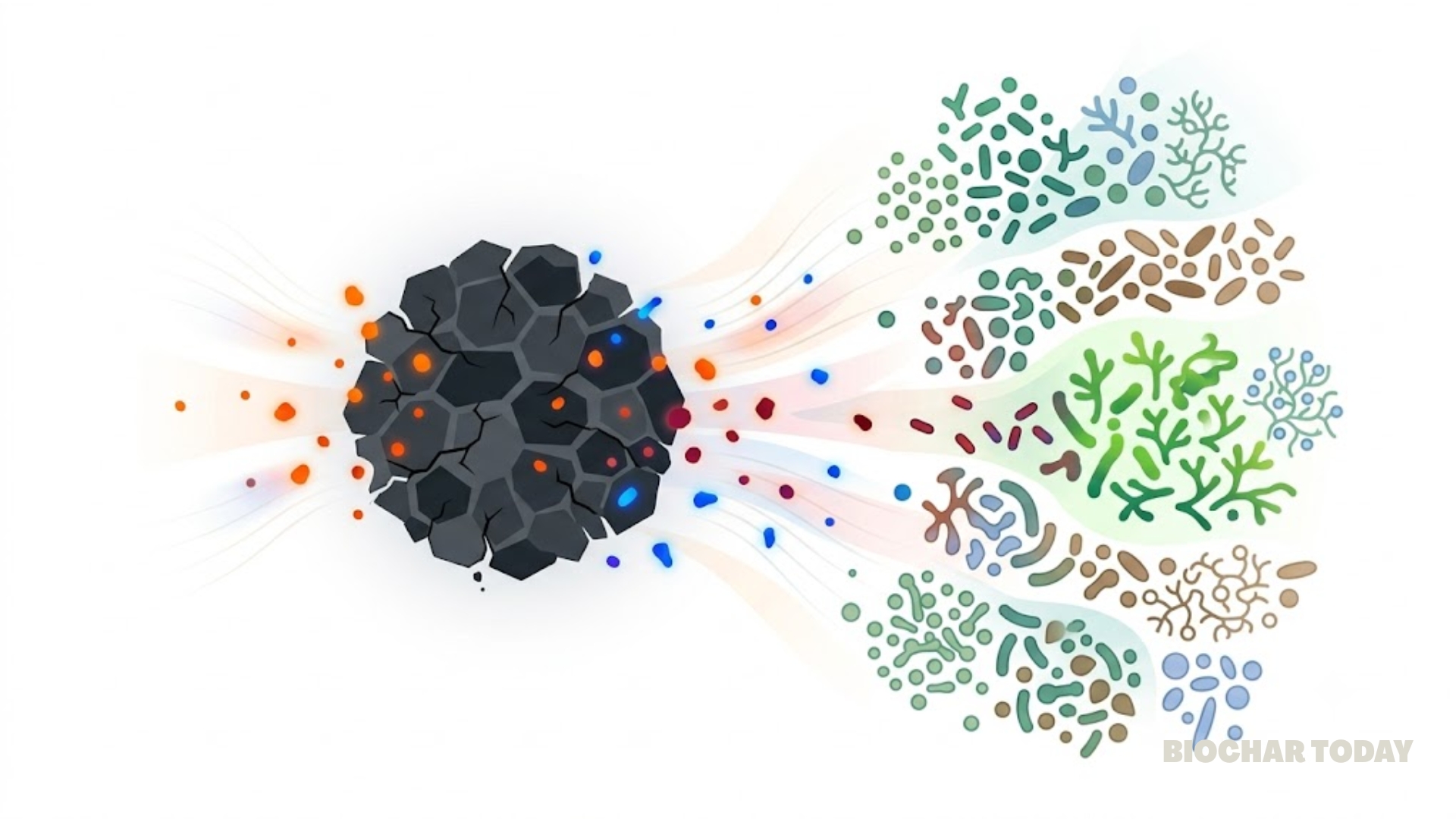
A newly published study in Biochar by Meng Liu, Siqi Shen, Haiyang Qiao, Huiqiang Yang, Yaru Zhu, Yawei Zhou, and Hanzhong Jia reveals how tobacco stem biochar directly suppresses harmful soil-borne plant pathogens through temperature-dependent pathways of reactive oxygen species. Soil-borne diseases present a persistent threat to global agricultural yield, often causing severe crop losses and food insecurity. Conventional chemical disinfestation methods eliminate harmful pathogens but indiscriminately destroy beneficial soil microbial communities, leading to ecological degradation and long-term soil health decline. While biochar has traditionally been recognized for improving soil physical properties and serving as a microbial habitat, this research demonstrates that carefully engineered biochar directly eradicates destructive bacterial strains while actively fostering beneficial microbial networks in the rhizosphere.
The researchers discovered that the temperature used during biomassBiomass is a complex biological organic or non-organic solid product derived from living or recently living organism and available naturally. Various types of wastes such as animal manure, waste paper, sludge and many industrial wastes are also treated as biomass because like natural biomass these More pyrolysisPyrolysis is a thermochemical process that converts waste biomass into bio-char, bio-oil, and pyro-gas. It offers significant advantages in waste valorization, turning low-value materials into economically valuable resources. Its versatility allows for tailored products based on operational conditions, presenting itself as a cost-effective and efficient More fundamentally determines the specific type and antibacterial potency of the reactive oxygen species generated by tobacco stem biochar. Lignin-rich tobacco stem biomass serves as an exceptional precursor for persistent free radicals, which react with surrounding oxygen to produce active chemical species. Biochar produced at lower temperatures of three hundred to four hundred degrees Celsius primarily yields free radical species such as hydroxyl and superoxide radicals. These lower-temperature materials achieve strong antibacterial suppression rates ranging from ninety-two point nine percent to ninety-nine point six percent against the destructive plant pathogen Ralstonia solanacearum. In contrast, biochars pyrolyzed at higher temperatures ranging from five hundred to seven hundred degrees Celsius predominantly generate non-radical reactive oxygen species, including hydrogen peroxide and singlet oxygen, which achieve a complete one hundred percent eradication of the pathogen.
This distinct shift from radical to non-radical chemical pathways explains why high-temperature biochars deliver superior antimicrobial performance against soil-borne diseases. The production of non-radical singlet oxygen steadily increases with higher pyrolysis temperatures, creating intense oxidative stress that disrupts bacterial cell wall integrity and inactivates essential cellular enzymes. Extended evaluation confirmed that this antibacterial action causes permanent cellular destruction rather than inducing a temporary dormant state, preventing pathogen recovery over time. Crucially, the direct antibacterial effect operates reliably across varying application rates without requiring light activation or crystalline metal catalysts, confirming that persistent free radicals inherent to the carbon matrix drive the underlying catalytic oxidation process.
Beyond suppressing harmful bacterial populations, applying tobacco stem biochar to contaminated soil models dramatically restructures the surrounding rhizosphere microbiome to favor plant health. In soil pot experiments using tomato seedlings, two percent biochar amendments significantly elevated overall bacterial richness and increased the structural complexity and stability of beneficial microbial networks. Rather than causing broad-spectrum biological damage like chemical soil fumigants, biochar-derived reactive oxygen species selectively eliminate sensitive disease-causing bacteria while allowing resilient plant-growth-promoting bacteria to thrive. The resulting soil environment exhibits elevated microbial network connectivity, enhanced ecological resilience, and reduced disease transmission risks.
These empirical findings offer a transformative approach for sustainable agriculture by establishing precise temperature controls for tailoring biochar functionality. By shifting from broad-spectrum soil sterilants to targeted biochar applications, growers and agricultural scientists can effectively suppress destructive soil pathogens while simultaneously restoring soil biodiversity. Matching specific pyrolysis temperatures to target pathogen vulnerabilities provides a scalable, eco-friendly framework for crop protection, organic waste recycling, and long-term soil health management.
Source: Liu, M., Shen, S., Qiao, H., Yang, H., Zhu, Y., Zhou, Y., & Jia, H. (2026). Biochar modulates soil microbial communities via reactive oxygen species derived from its constituents. Biochar, 8, Article 122.




Leave a Reply