
Key Takeaways
- A new two-stage process uses alkaline biocharBiochar is a carbon-rich material created from biomass decomposition in low-oxygen conditions. It has important applications in environmental remediation, soil improvement, agriculture, carbon sequestration, energy storage, and sustainable materials, promoting efficiency and reducing waste in various contexts while addressing climate change challenges. More and ferrate to efficiently convert sewage sludge into high-value chemicals.
- The new method yielded 10,495 milligrams of chemical oxygen demand per liter of medium-chain fatty acids, a substantial increase over other methods.
- The biochar works synergistically with the ferrate oxidant to break down the complex sludge and suppress methane-producing microbes.
- The treatment makes the primary product caproic acid, shifting preference away from less valuable fatty acids.
- This technology provides a path to a circular economy, turning municipal waste into sustainable, carbon-neutral alternatives to petroleum-derived products.
A paper titled “Staged modulation using synergistic alkaline biochar-ferrate enhances medium-chain fatty acid production from waste activated sludge,” published in Communications Engineering by Yufen Wang, Ya Ji, Xiaofeng Luo, Tingting Zhu, Bing-Jie Ni, and Yiwen Liu, introduces an innovative two-stage process. This process overcomes critical limitations in transforming waste activated sludge (WAS)—an inevitable and environmentally burdensome byproduct of wastewater treatment—into versatile, high-value medium-chain fatty acids (MCFAs). The strategy involves a synergistic AlkBC-ferrate pretreatment stage followed by a targeted MCFA-producing fermentation stage.
The results of the developed stage-optimized modulation strategy were dramatically superior to all comparison groups. The maximum MCFA production reached an unprecedented 10,495.0 mg COD L−1 (chemical oxygen demand per liter). This production level was 20.6-fold higher than the control group, 15.2-fold higher than the AlkBC-alone group, and 2.3-fold higher than the ferrate-alone group. The study also found a fundamental shift in the product profile. In the control and single-treatment groups, the primary product was less valuable butyric acid (a short-chain fatty acid). In contrast, the AlkBC-ferrate group exhibited a strong preference for MCFAs, with caproic acid dominating the liquid-phase products and the MCFA proportion soaring to 62.8%. This shift indicates that the combined treatment leads to a significantly higher-value product output.
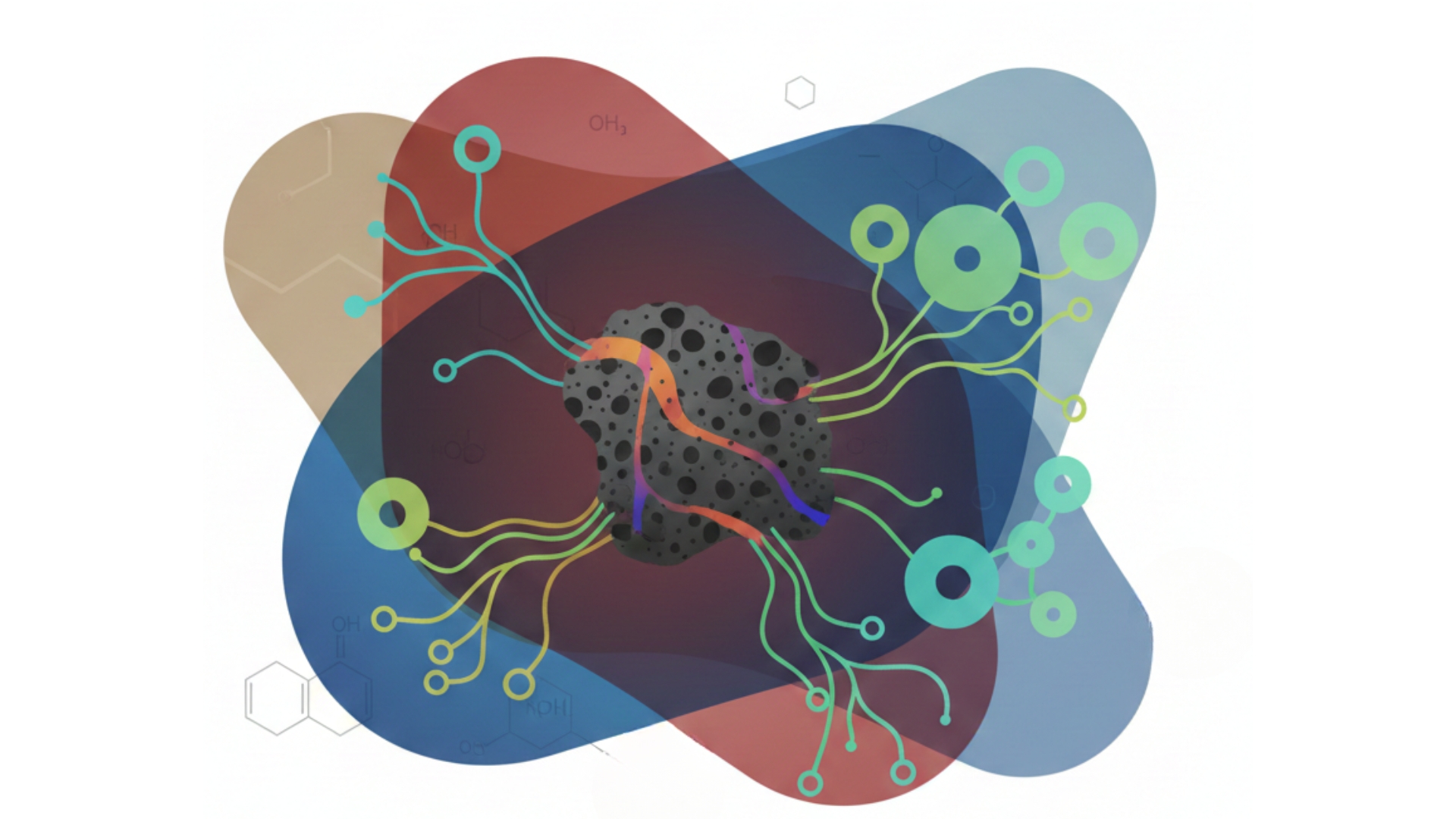
The process works well because it uses a two-stage mechanism. First, the alkaline biochar (AlkBC) helps activate ferrate, a very strong oxidant. When activated, ferrate forms short-lived but powerful iron species (Fe(IV) and Fe(V)) that break apart the tough, complex structure of waste activated sludge. The natural alkalinity of banana-peel-derived AlkBC further helps dissolve the sludge. As a result, a large amount of soluble organic matter (SCOD) is released—5,450 mg COD/L, which is 36.3% more than using ferrate alone.
In the second stage, the AlkBC itself changes after reacting with ferrate. Its surface becomes coated with Fe₂O₃ nanoparticles, turning it into a good conductor. This improved biochar boosts electron transfer in the fermentation system by nearly 238%, speeding up chain elongation—the step that converts short-chain fatty acids (SCFAs) into more valuable medium-chain fatty acids (MCFAs). It also shapes the microbial community: it increases helpful bacteria like Macellibacteroides and Trichococcus, while reducing methanogens such as Methanobacterium, which would otherwise consume SCFAs and hydrogen needed for MCFA production.
The AlkBC–ferrate method also helps reduce unwanted byproducts. It cuts long-chain alcohols—another competing product—down to 1,160.6 mg COD/L, compared to 5,229.6 mg COD/L in the control. Because this method strongly suppresses methanogens, methane production drops by more than 95%. Economically, this approach is much more profitable. It provides a net benefit of about $680 per ton of dry sludge, while the control system gives only $29 and ferrate alone gives about $210. The process also supports a circular economy. It turns sewage sludge into carbon-neutral MCFAs that can replace petroleum-based chemicals. The iron left in the system can be recovered as vivianite, a valuable phosphate mineral, helping close both iron and phosphorus cycles.
Future improvements will aim to lower costs even further by generating ferrate directly inside the system and using ethanol naturally produced from the pretreated sludge instead of buying commercial chemicals.
Source: Wang, Y., Ji, Y., Luo, X., Zhu, T., Ni, B.-J., & Liu, Y. (2025). Staged modulation using synergistic alkaline biochar-ferrate enhances medium-chain fatty acid production from waste activated sludge. Communications Engineering.


Leave a Reply