
Key Takeaways
- Researchers found a way to turn leftover tomato stems, which are usually thrown away or burned, into a powerful cleaning material called biocharBiochar is a carbon-rich material created from biomass decomposition in low-oxygen conditions. It has important applications in environmental remediation, soil improvement, agriculture, carbon sequestration, energy storage, and sustainable materials, promoting efficiency and reducing waste in various contexts while addressing climate change challenges. More.
- This tomato-based biochar is incredibly effective at soaking up harmful synthetic dyes that factories often leak into rivers and lakes.
- By changing the temperature used to make the biochar, scientists can “tune” the material to target different types of chemical pollutants.
- The cleaning process works best in slightly acidic water, making it a practical solution for treating real-world industrial wastewater.
- Using farm waste to clean water creates a “circular economy” that helps the environment twice—by reducing trash and purifying our water supplies.
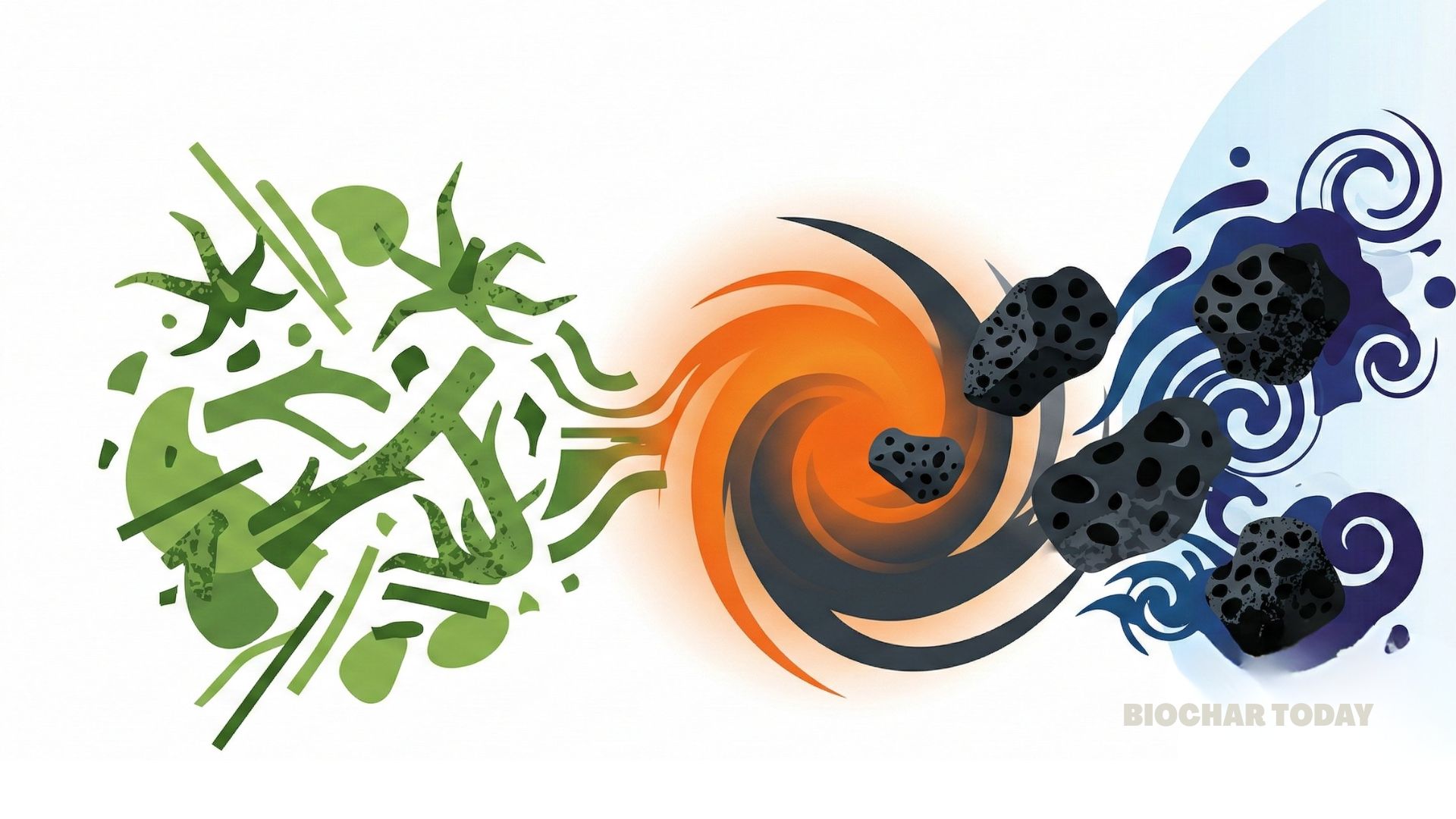
In a detailed study published in the journal Materials, researchers Beata Doczekalska, Krzysztof Kuśmierek, and Andrzej Świątkowski investigated how agricultural waste can be transformed into a high-value tool for environmental protection. Specifically, the team focused on tomato stems, a common byproduct of large-scale greenhouse farming that is frequently discarded or incinerated, leading to wasted resources and potential air pollution. By subjecting these stems to a process called pyrolysis—heating the material in the absence of oxygen—the researchers created various types of biochar. They tested these materials to see how well they could remove two notorious industrial dyes, Direct Orange 26 and Rhodamine B, from water.
The findings demonstrate that tomato stem biochar is an exceptionally versatile and powerful adsorbent. One of the most significant results of the study was the sheer capacity of the material to soak up pollutants. For the anionic dye known as Direct Orange 26, the biochar produced at high temperatures reached a maximum adsorption capacity of over one hundred milligrams for every single gram of biochar used. This performance is notably higher than many other natural or mineral-based cleaners currently used in water treatment. The researchers discovered that as the production temperature increased from four hundred to seven hundred degrees Celsius, the biochar became more “alkaline” and developed a more complex surface chemistry, which allowed it to trap the orange dye molecules more effectively through electrical attraction.
While the material was highly successful at removing the orange dye, the study also explored its performance against a different type of pollutant, a cationic dye called Rhodamine B. Interestingly, the researchers found that the biochar made at a lower temperature was actually more effective for this specific task. This reveals a critical insight for the water treatment industry: the “recipe” for making biochar can be adjusted depending on exactly what kind of pollution needs to be cleaned up. Even though the surface area of these biochars was relatively small compared to expensive laboratory chemicals, their unique surface chemistry allowed them to outperform many costlier alternatives. This makes tomato stem biochar a promising, budget-friendly option for large-scale industrial use.
The study also looked at how real-world water conditions, such as acidity and saltiness, affect the cleaning process. The researchers found that the biochar’s ability to clean water is highly dependent on the water’s pHpH is a measure of how acidic or alkaline a substance is. A pH of 7 is neutral, while lower pH values indicate acidity and higher values indicate alkalinity. Biochars are normally alkaline and can influence soil pH, often increasing it, which can be beneficial More level. Both types of dyes were removed most efficiently when the water was slightly acidic. This is a vital finding because many industrial waste streams are naturally acidic, meaning this biochar could potentially be used without having to add extra chemicals to balance the water first. Furthermore, the cleaning power remained steady even when the water contained various salts, suggesting that the biochar would remain effective in complex, “messy” industrial environments rather than just in clean laboratory water.
Beyond just the chemical results, this research highlights a significant move toward a more sustainable and circular economy. By taking a waste product from the food industry and using it to fix a pollution problem in the textile or paper industries, we reduce the overall environmental footprint of human activity. The production of this biochar also serves as a form of carbon sequestration, trapping carbon that was once in the atmosphere in a stable, solid form. This dual benefit of waste reduction and water purification offers a compelling argument for the widespread adoption of biochar technology in global sustainability efforts.
Ultimately, the researchers concluded that tomato stems are a prime candidate for producing high-efficiency, low-cost water filters. The study provides a scientific roadmap for how different temperatures and chemical interactions can be used to create customized cleaning materials. As industries face stricter regulations regarding the discharge of toxic dyes into the environment, natural solutions like tomato-based biochar provide a robust and economically viable path forward. This work proves that the answers to some of our most pressing environmental challenges might be found in the very waste we leave behind in our fields and greenhouses.
Source: Doczekalska, B., Kuśmierek, K., & Świątkowski, A. (2026). Valorization of Tomato Stems into Biochar for Efficient Adsorptive Removal of Cationic and Anionic Dyes from Aqueous Solutions. Materials, 19(867).



Leave a Reply