
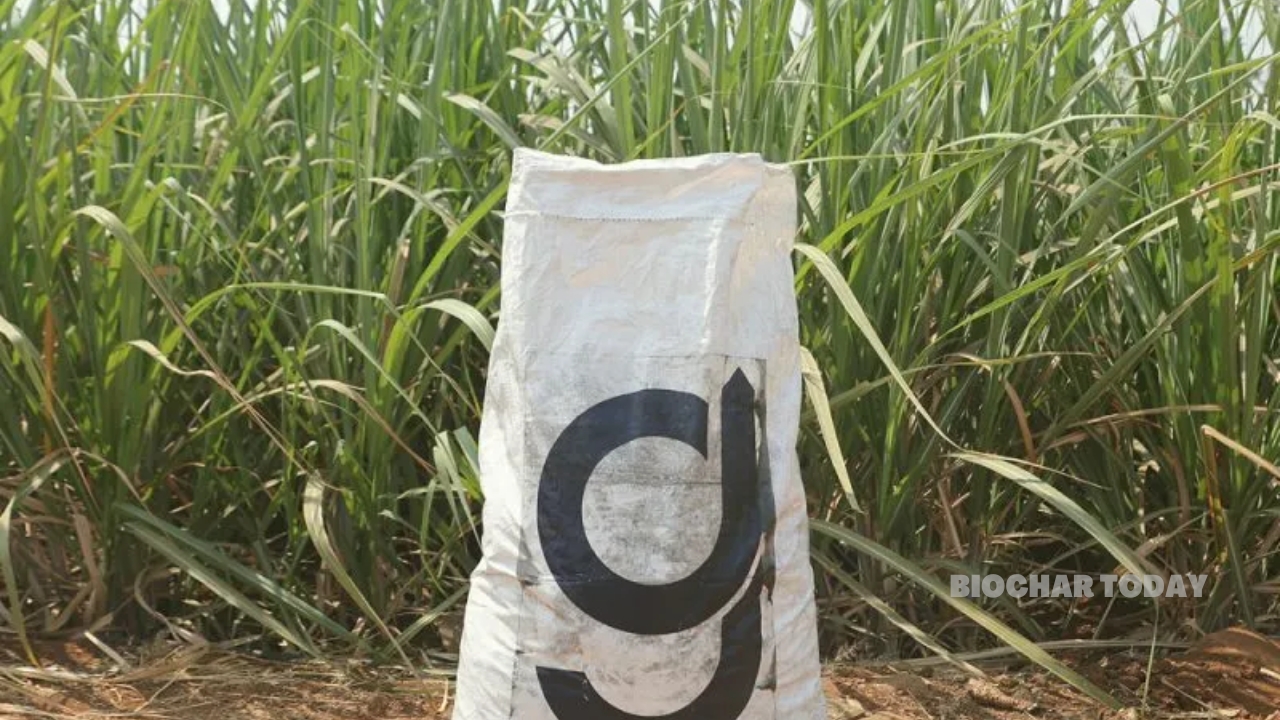
Carbon marketplace Supercritical and carbon removal venture Ground Up have announced an exclusive partnership to scale biocharBiochar is a carbon-rich material created from biomass decomposition in low-oxygen conditions. It has important applications in environmental remediation, soil improvement, agriculture, carbon sequestration, energy storage, and sustainable materials, promoting efficiency and reducing waste in various contexts while addressing climate change challenges. More production and carbon removal operations across India. Ground Up becomes the first project selected for Supercritical’s Supply Development Program, which provides technical, engineering, and commercial support to early-stage carbon removal developers. Building upon Ground Up’s Project Nandani pilot in Maharashtra—which issued its initial Isometric-validated carbon credits and expects to deliver 2,500 tonnes this year—the venture plans to build a multi-site network co-located with major Indian sugar mills. The collaboration aims to remove at least 50,000 tonnes of carbon dioxide by 2028 and could ultimately engage a network of more than 550,000 farmers.
The primary challenge addressed by this initiative is the widespread agricultural waste management issue in India, specifically the open-field burning of crop residues. In the Kolhapur District of Maharashtra alone, farmers generate approximately 2 million tonnes of sugarcane leaves and tops annually, with roughly 85% currently disposed of through open burning. This practice contributes to localized air pollution and greenhouse gas emissions while wasting significant organic carbon feedstocks. Additionally, early-stage carbon removal projects in developing markets often face operational barriers, including securing off-take commitments, technical engineering validation, and capital required to scale beyond initial pilot facilities.
To mitigate these operational and environmental issues, Ground Up collects sugarcane residues in partnership with a local aggregator and processes the biomassBiomass is a complex biological organic or non-organic solid product derived from living or recently living organism and available naturally. Various types of wastes such as animal manure, waste paper, sludge and many industrial wastes are also treated as biomass because like natural biomass these More into biochar via a centralized pyrolysisPyrolysis is a thermochemical process that converts waste biomass into bio-char, bio-oil, and pyro-gas. It offers significant advantages in waste valorization, turning low-value materials into economically valuable resources. Its versatility allows for tailored products based on operational conditions, presenting itself as a cost-effective and efficient More facility. Supercritical supports this effort by extending capital and volume commitments while assisting with the technical and commercial requirements necessary for industrial scaling. The produced biochar is returned to agricultural lands, sequestering atmospheric carbon in soil for over 200 years. Field trials conducted by Ground Up demonstrate that land application enhances soil productivity, yielding agricultural improvements of up to 38% for sugarcane crops and 59% for wheat crops.
The partnership secures the funding required for Ground Up’s next production facility, which is scheduled to begin operations next year near major sugar mills. By transitioning from a localized pilot to an integrated supply network, the project creates a structured channel for verified biochar carbon removal credits within the voluntary carbon market. Local agricultural communities benefit directly from reduced open burning, alternative residue management revenue streams, and improved crop yields resulting from biochar soil application.



Leave a Reply