
The agricultural sector is increasingly recognized as a primary contributor to global greenhouse gas emissions, responsible for approximately 24% of the world’s total. In the United States, specifically Florida, the citrus industry has faced a dual crisis of soil degradation and citrus greening disease, leading to a 95% production decline since 1998. To combat these environmental and economic pressures, industrial-scale biocharBiochar is a carbon-rich material created from biomass decomposition in low-oxygen conditions. It has important applications in environmental remediation, soil improvement, agriculture, carbon sequestration, energy storage, and sustainable materials, promoting efficiency and reducing waste in various contexts while addressing climate change challenges. More production is emerging as a critical strategy for carbon removal and soil restoration. SunnyDay Renewables is currently leading this transition through the development of a large-scale facility designed to convert agricultural wood waste into stable carbon.
The primary challenge addressed by this initiative is the environmental impact of traditional agricultural waste management and the inefficiency of synthetic fertilizers. Conventional practices, such as open burning, release significant amounts of CO2 and black carbon, while synthetic fertilizers contribute to nearly 4.7% of global emissions through production and the release of nitrous oxide. In Florida’s sandy soils, these chemical-intensive methods have historically disrupted microbial communities and reduced water-holding capacity. Scaling biochar production has previously been hindered by technological limitations in processing efficiency and the ability to handle high volumes of biomassBiomass is a complex biological organic or non-organic solid product derived from living or recently living organism and available naturally. Various types of wastes such as animal manure, waste paper, sludge and many industrial wastes are also treated as biomass because like natural biomass these More consistently.
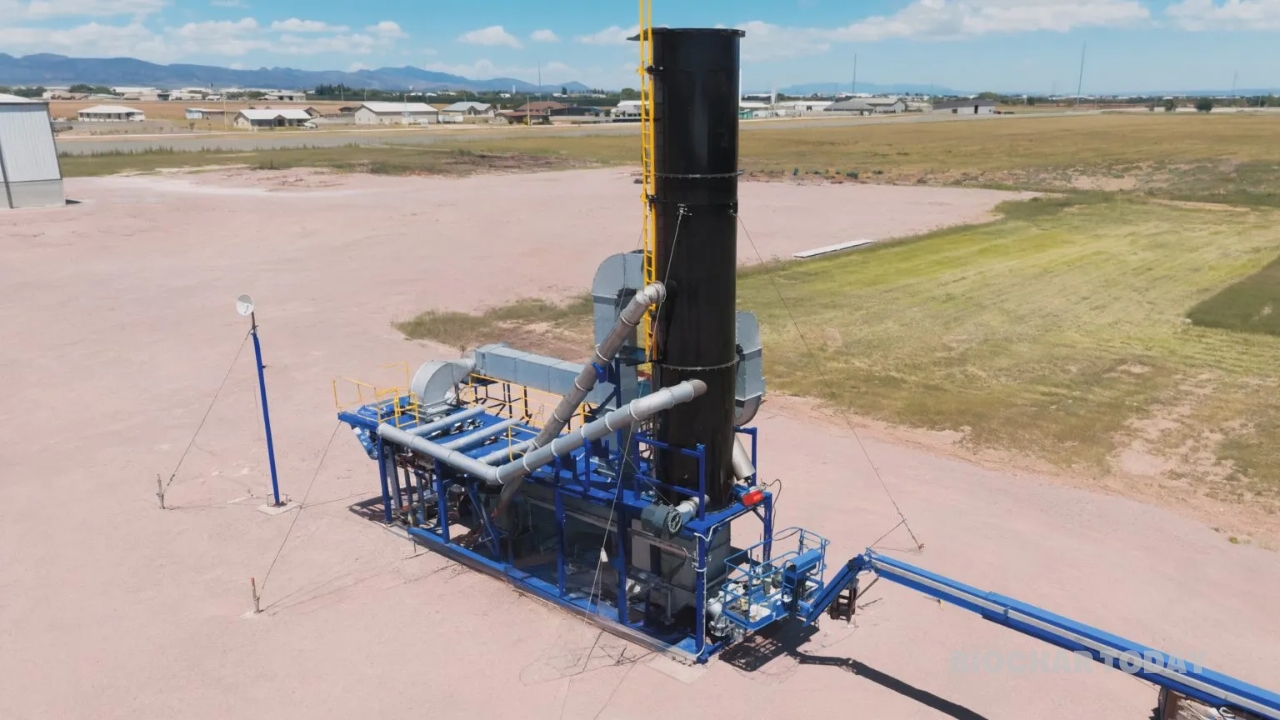
To resolve these logistical and environmental hurdles, SunnyDay Renewables has partnered with Biomass Energy Techniques (BET) to deploy a $30 million facility in Wellington, Florida. The project utilizes BET’s fourth-generation PRD8000 pyrolysisPyrolysis is a thermochemical process that converts waste biomass into bio-char, bio-oil, and pyro-gas. It offers significant advantages in waste valorization, turning low-value materials into economically valuable resources. Its versatility allows for tailored products based on operational conditions, presenting itself as a cost-effective and efficient More kiln, a prototype unit that is twice as efficient as previous models and capable of processing four tons of biomass per hour. By utilizing wood waste from local equestrian operations, the facility creates a circular economy model. The system integrates a boiler and Organic Rankine Cycle (ORC) generator, allowing the pyrolysis process to be energy-neutral while generating over 3 megawatt hours of renewable energy annually for the grid.
The deployment of this technology is expected to yield significant environmental outcomes, including the annual production of 25,000 to 30,000 tons of biochar. According to the project specifications, this volume will sequester over 75,000 tons of CO2 per year. Beyond carbon removal, the application of the resulting biochar is projected to increase soil water retention by up to 20% and reduce the necessity for synthetic inputs by enhancing nutrient cycling. These results demonstrate a scalable pathway for transitioning agricultural waste into a climate solution while revitalizing soil vitality in degraded regions.


Leave a Reply