
Key Takeaways
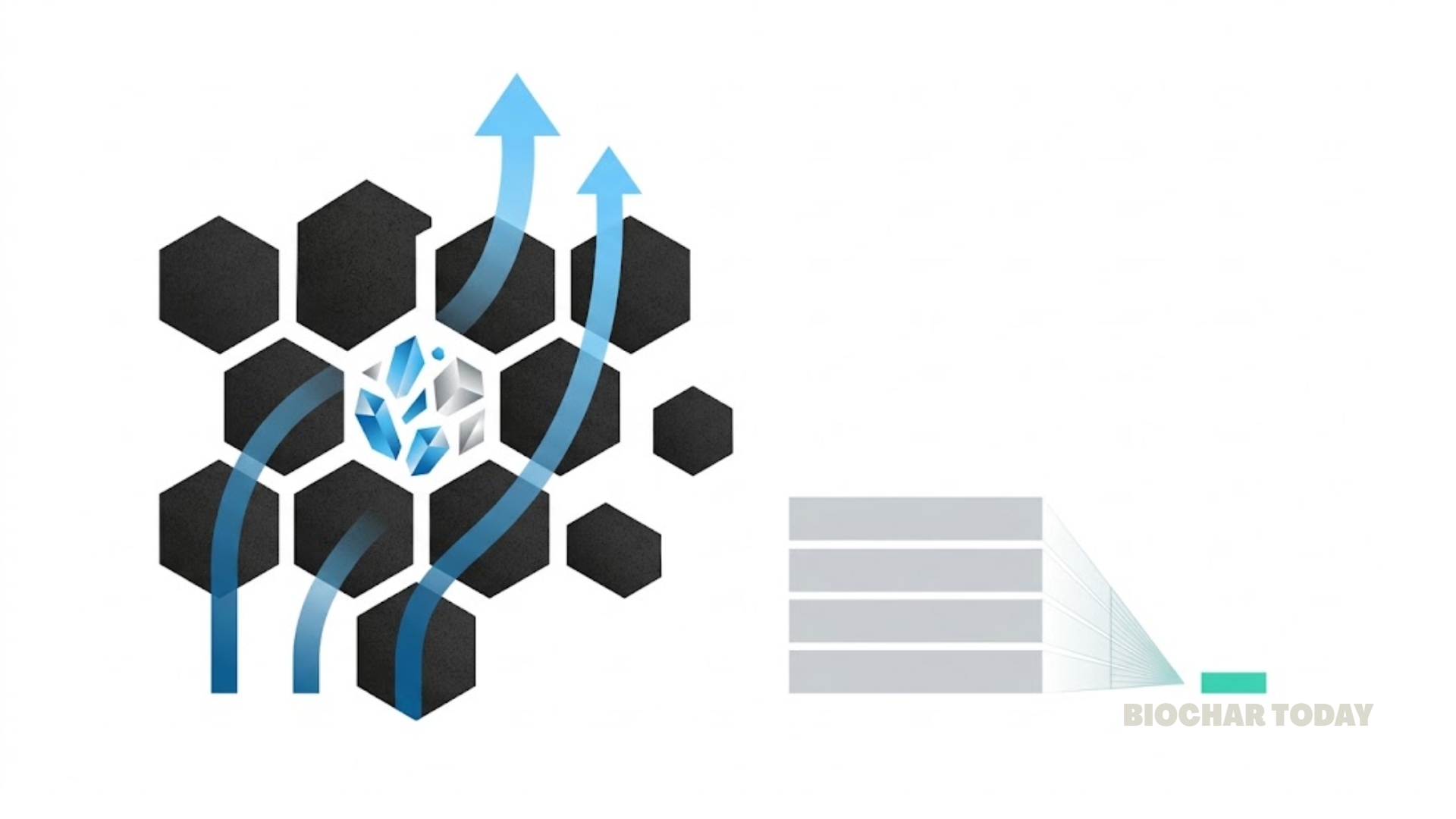
- Incorporating a minor fraction of advanced nanomaterials into a biocharBiochar is a carbon-rich material created from biomass decomposition in low-oxygen conditions. It has important applications in environmental remediation, soil improvement, agriculture, carbon sequestration, energy storage, and sustainable materials, promoting efficiency and reducing waste in various contexts while addressing climate change challenges. More base dramatically slashes the financial burden of high-performance water purification.
- Artificial intelligence models successfully predict biochar properties and pollutant removal with high accuracy, eliminating traditional trial-and-error laboratory experiments.
- Advanced biochar composites provide highly targeted purification mechanisms that break down the most persistent chemical and biological pollutants in water.
- While complex composite materials maximize pollutant removal, pristine biochar remains the most sustainable and cost-effective option for routine water treatment.
- Using local agricultural wastes and switching to solar drying significantly reduces the environmental footprint and production costs of engineered biochars.
In a comprehensive review published in the journal Biochar, lead author Ojima Z. Wada and co-authors examined the performance, mechanisms, and economic trade-offs of next-generation wastewater treatment platforms. The research highlights how conventional water treatment facilities are currently inadequate for eliminating a growing class of anthropogenic substances known as emerging pollutants. These dangerous substances include personal care products, pharmaceuticals, surfactants, and toxic forever chemicals. By evaluating data from hundreds of recent scientific papers, the researchers established a clear design-to-deployment framework. This strategy categorizes biochar platforms into three distinct operational tiers based on chemical complexity, regional treatment objectives, and municipal resource constraints to guide clean water initiatives responsibly.
The findings demonstrate that while pristine biochar is an incredibly sustainable first line of defense costing around 144 dollars per ton, its performance remains moderate because it relies primarily on basic physical entrapment mechanisms. To target highly persistent organic pollutants, material scientists utilize advanced tier three composites. These hybrid materials fuse the low-cost carbon base with technical nanomaterials like graphene, titanium dioxide, metal-organic frameworks, or specialized polymers. The resulting combinations introduce highly powerful degradation pathways including visible-light photocatalysis, specific molecular sieving, and catalytic ozonation. These combined pathways completely breakdown stubborn pollutants like chemical dyes, endocrine disruptors, microplastics, and dangerous hospital pathogens that easily bypass standard municipal wastewater networks.
A major highlight of the investigation centers on the massive financial barriers associated with advanced nanomaterials and how biochar hybridization successfully resolves this scalability problem. On their own, pure engineered nanomaterials are exceptionally expensive, with zinc oxide nanoparticles reaching roughly 190,400 dollars per ton, bimetallic alternatives costing 569,000 dollars per ton, and high-performance MXenes commanding a staggering 20.33 million dollars per ton. These extreme costs prevent large-scale municipal deployment. However, the researchers discovered that combining a ninety percent fraction of sustainable biochar with just a ten percent fraction of high-cost MXene yields a hybrid composite costing 2.03 million dollars per ton. This tactical formulation represents an immediate eighteenfold cost reduction compared to the pure advanced material while fully preserving the superior chemical affinity, high speed, and exceptional pollutant removal capacity of the nanomaterial.
Beyond economic metrics, the review underscores the transformative role of artificial intelligence and machine learning in accelerating the structural design of these tailored sorbents. Traditional material optimization relies heavily on slow, empirical trial-and-error experiments. By utilizing advanced tree-based ensemble algorithms like random forests and gradient boosting, contemporary researchers can reliably predict final biochar surface properties and pollutant removal with high statistical accuracy. These predictive models hyper-optimize synthesis parameters, revealing that operational system features like wastewater acidity, sorbent dosage, and reaction time are ultimately more critical to real-world remediation success than intrinsic material characteristics alone. The study concludes by advocating for an artificial intelligence-guided deployment strategy that prioritizes simple, eco-friendly pristine biochar where effective, strategically reserving expensive advanced composites as a vital last resort.
Source: Wada, O. Z., McKay, G., Al-Ansari, T., & Mahmoud, K. A. (2026). AI-driven biochar engineering for emerging pollutants removal from water: performance, mechanisms, and environmental perspectives. Biochar, 8(1), 61.




Leave a Reply