
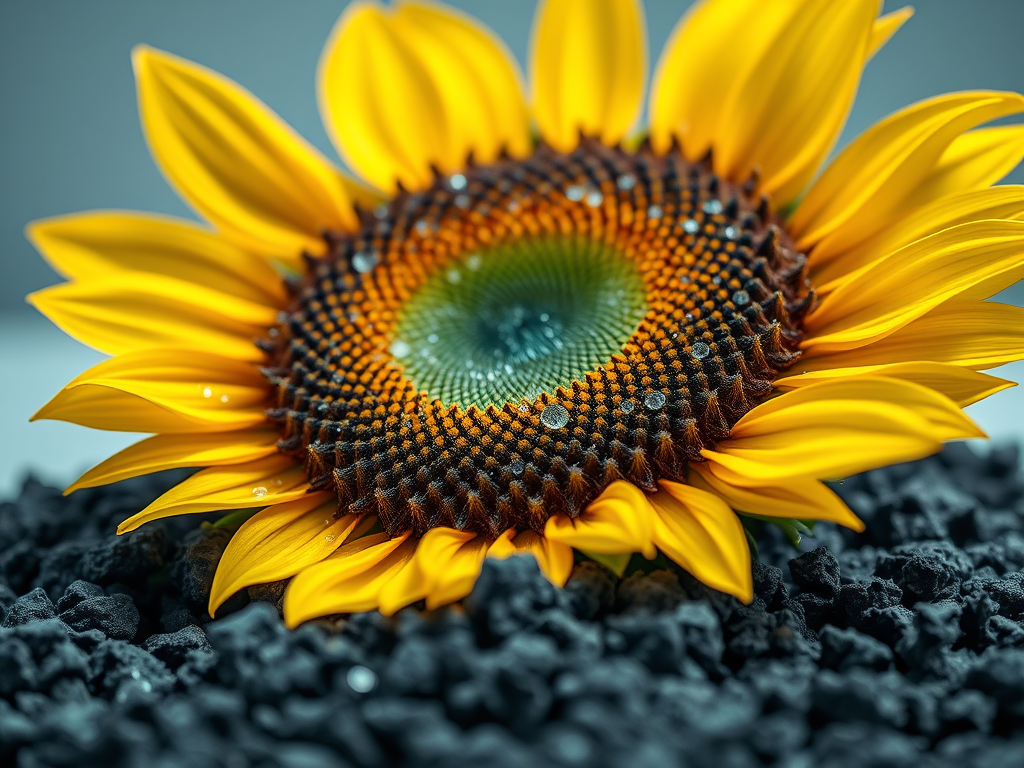
In a recent study published in BiomassBiomass is a complex biological organic or non-organic solid product derived from living or recently living organism and available naturally. Various types of wastes such as animal manure, waste paper, sludge and many industrial wastes are also treated as biomass because like natural biomass these More Conversion and Biorefinery, Gado et al., explored an innovative approach to tackle cadmium (Cd) pollution in water using biocharBiochar is a carbon-rich material created from biomass decomposition in low-oxygen conditions. It has important applications in environmental remediation, soil improvement, agriculture, carbon sequestration, energy storage, and sustainable materials, promoting efficiency and reducing waste in various contexts while addressing climate change challenges. More derived from sunflower stems. The research highlights that biochar, when modified with nickel oxide (NiO) and cobalt oxide (CoO) nanoparticles, demonstrates exceptional efficiency in removing Cd ions from aqueous solutions. This finding suggests a promising, sustainable solution for wastewater treatment.
The researchers synthesized biochar from sunflower stems through pyrolysisPyrolysis is a thermochemical process that converts waste biomass into bio-char, bio-oil, and pyro-gas. It offers significant advantages in waste valorization, turning low-value materials into economically valuable resources. Its versatility allows for tailored products based on operational conditions, presenting itself as a cost-effective and efficient More at 300°C and enhanced it with NiO and CoO nanoparticles using ultrasound. This modification improved the biochar’s structural and surface properties, making it highly effective in capturing Cd ions. The most effective removal of Cd occurred at a pHpH is a measure of how acidic or alkaline a substance is. A pH of 7 is neutral, while lower pH values indicate acidity and higher values indicate alkalinity. Biochars are normally alkaline and can influence soil pH, often increasing it, which can be beneficial More of 6.0, a contact time of 120 minutes, and a sorbent dose of 4.0 g/L. Under these conditions, the CoO-modified biochar showed the highest sorption capacity, adsorbing 16.3 mg/g of Cd.
The process by which the biochar captures Cd ions follows a pseudo-second-order kinetic model, indicating chemical sorption where Cd ions bond with the biochar’s surface. The Langmuir isotherm model further confirmed that the sorption occurs as a monolayer. Notably, the CoO-doped biochar retained 89.8% of its effectiveness over five regeneration cycles, showcasing its potential for repeated use in industrial applications.
Compared to other sorbents, the biochar in this study exhibits superior selectivity, stability, and regeneration capacity. This makes it a cost-effective and environmentally friendly alternative for treating wastewater, addressing the limitations of traditional methods like chemical precipitation and membrane filtration. The use of sunflower stem-derived biochar not only offers a solution for water purification but also converts agricultural waste into a valuable resource.
This research contributes to the development of efficient, biochar-based sorbents for heavy metal remediation, offering a sustainable and scalable approach for tackling water pollution.
SOURCE: Gado, W. S., Morshedy, A. S., Taha, E. H., El-Zahhar, A. A., Alghamdi, M. M., El Naggar, A. M. A., & El-Fawal, E. M. (2025). Efficient removal of cadmium ions from wastewater using metal oxide-doped sunflower stem-generated biochar: sorption mechanism and performance. Biomass Conversion and Biorefinery




Leave a Reply