
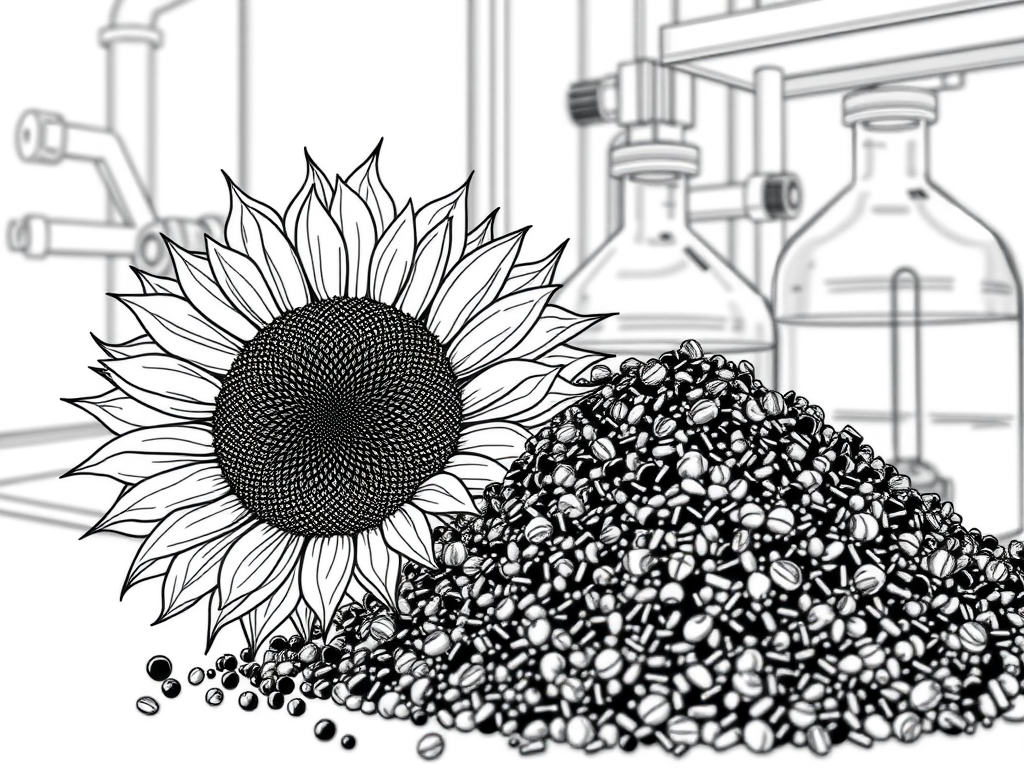
Industrial activities, particularly the textile industry, often release harmful organic and inorganic contaminants into aquatic environments, posing significant environmental and health risks. Among these pollutants are nitrophenols, including 4-Nitrophenol (4-NP), which are utilized in the synthesis of pesticides, dyes, and pharmaceuticals. These compounds are known for their ecotoxicity, mutagenicity, and carcinogenicity, making their removal from wastewater crucial before discharge. While various treatment methods exist, such as advanced oxidation and biodegradation, many are expensive and energy-intensive. Adsorption, using inexpensive and eco-friendly materials like agricultural waste, has emerged as a promising alternative.
In a recent study published in Engineering, Technology & Applied Science Research, Amir Djellouli, Yamina Berredjem, and Mohamed Yagoub explored the potential of biocharBiochar is a carbon-rich material created from biomass decomposition in low-oxygen conditions. It has important applications in environmental remediation, soil improvement, agriculture, carbon sequestration, energy storage, and sustainable materials, promoting efficiency and reducing waste in various contexts while addressing climate change challenges. More derived from sunflower seed hulls (SSHB690) as a cost-effective adsorbent for removing 4-NP from aqueous solutions. Their research aimed to synthesize, characterize, and evaluate the adsorption capabilities of this novel biosorbent.
The researchers prepared SSHB690 from sunflower seed hulls collected from an oasis in Biskra, Algeria. The hulls underwent a meticulous preparation process involving washing, drying, chopping, and grinding to achieve a fine particle size. The material was then pyrolyzed at 690°C for three hours under oxygen-restricted conditions, followed by acid treatment and drying to produce the final biochar.
Characterization of SSHB690 using techniques like X-Ray Diffraction (XRD), Scanning Electron Microscopy (SEM), Brunauer-Emmett-Teller (BET), and Fourier Transform Infrared (FTIR) spectroscopy revealed significant improvements in its properties compared to raw sunflower seed hulls. The biochar exhibited a greatly increased surface area (388.0277 m2/g) and total pore volume (0.224263 cm3/g), in stark contrast to the raw hulls which had a very low surface area (3.7315 m2/g) and negligible porosityPorosity of biochar is a key factor in its effectiveness as a soil amendment and its ability to retain water and nutrients. Biochar’s porosity is influenced by feedstock type and pyrolysis temperature, and it plays a crucial role in microbial activity and overall soil health. Biochar More. This enhanced porosity and disorganized structure, resulting from the pyrolysisPyrolysis is a thermochemical process that converts waste biomass into bio-char, bio-oil, and pyro-gas. It offers significant advantages in waste valorization, turning low-value materials into economically valuable resources. Its versatility allows for tailored products based on operational conditions, presenting itself as a cost-effective and efficient More and acid activation, contributed to a higher number of active adsorption sites. FTIR analysis also identified the presence of functional groups that increase the carbon’s polarity and adsorption capacity, enabling it to effectively capture organic contaminants.
Batch adsorption experiments were conducted to assess the effectiveness of SSHB690 in removing 4-NP under various conditions, including temperature, pHpH is a measure of how acidic or alkaline a substance is. A pH of 7 is neutral, while lower pH values indicate acidity and higher values indicate alkalinity. Biochars are normally alkaline and can influence soil pH, often increasing it, which can be beneficial More, concentration, contact time, and material dose. The study found that the optimal conditions for 4-NP removal were achieved at 25°C (298 K) and a pH of 5.5, resulting in an impressive maximum removal efficiency of 95%.
The adsorption process was rapid initially, with a significant increase in 4-NP uptake during the first 60 minutes due to the abundance of free active sites on the SSHB690 surface. Equilibrium was largely reached after 120 minutes, with approximately 86.42% of the pollutant removed. The effect of pH was also critical; removal efficiency increased as pH rose from highly acidic conditions, peaking around pH 3.62 before declining. This is because higher pH values lead to a reduction in proton competition for active sites and an increase in the negative charge of the biochar surface, favoring 4-NP uptake.
Modeling of the adsorption data showed that the Liu isotherm model provided the best fit, suggesting a homogeneous surface and a monolayer adsorption process. The maximum adsorption capacity predicted by the Langmuir model was 244.48 mg/g. Kinetic studies indicated that the adsorption rate followed a Pseudo-Second-Order model, implying that chemical adsorption is the rate-limiting step. Furthermore, thermodynamic parameters confirmed that the adsorption process was exothermic and spontaneous, meaning it releases heat and occurs naturally.
This research successfully demonstrates the potential of transforming agricultural waste like sunflower seed hulls into valuable, high-performance adsorbents for environmental remediation. The development of SSHB690 offers a sustainable and cost-effective solution for treating industrial wastewater contaminated with phenolic compounds, potentially contributing to a circular economy and creating new economic opportunities. Future work will focus on optimizing the production of activated carbonActivated carbon is a form of carbon that has been processed to create a vast network of tiny pores, increasing its surface area significantly. This extensive surface area makes activated carbon exceptionally effective at trapping and holding impurities, like a molecular sponge. It is commonly More from this feedstockFeedstock refers to the raw organic material used to produce biochar. This can include a wide range of materials, such as wood chips, agricultural residues, and animal manure. More and conducting field trials to evaluate its performance in real-world industrial settings.
Source: Brar, G. S., Malhotra, K., Kumar, R., Lamba, J., Way, T. R., Prasad, R., & Adhikari, S. (2025). Investigating the Impact of Broiler Litter Application Method and Biochar on Phosphorus LeachingLeaching is the process where nutrients are dissolved and carried away from the soil by water. This can lead to nutrient depletion and environmental pollution. Biochar can help reduce leaching by improving nutrient retention in the soil. More. Water Air Soil Pollut, 236(558).




Leave a Reply