
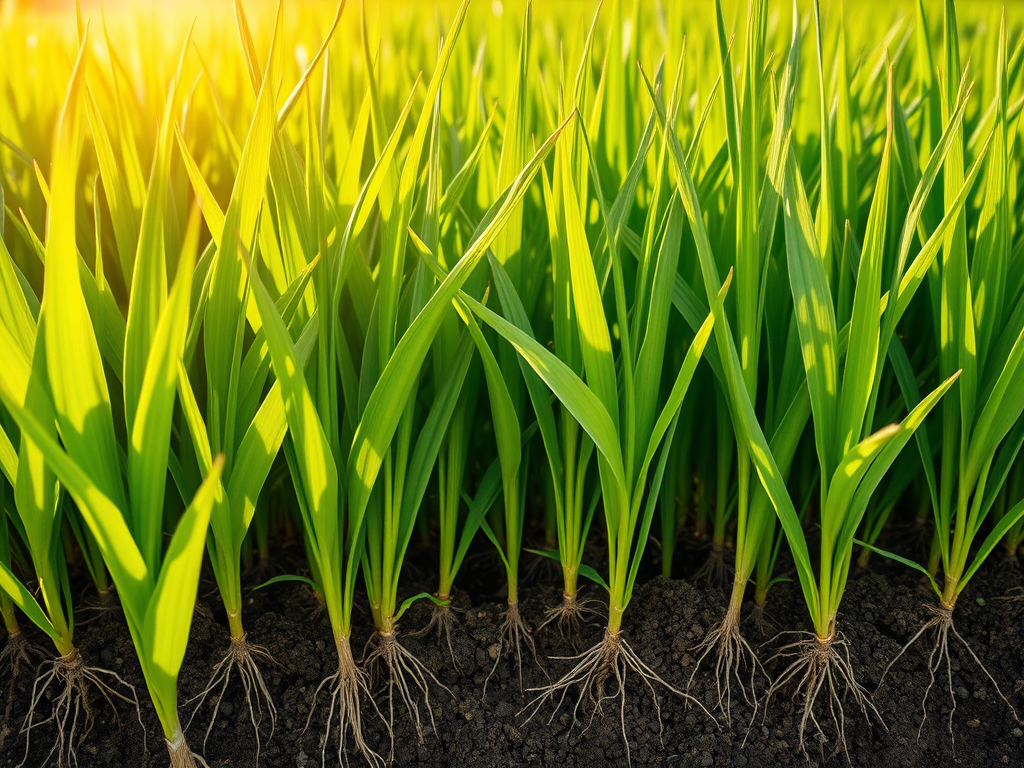
The research article “Effectiveness of sulfur-modified wheat straw biocharBiochar is a carbon-rich material created from biomass decomposition in low-oxygen conditions. It has important applications in environmental remediation, soil improvement, agriculture, carbon sequestration, energy storage, and sustainable materials, promoting efficiency and reducing waste in various contexts while addressing climate change challenges. More in alleviating vanadium stress in rice: impacts on growth, photosynthesis, and redox regulation” published in Biochar by Altaf et al. investigates the potential of sulfur-modified biochar (SBC) to alleviate the negative effects of vanadium (V) contamination on rice (Oryza sativa). Vanadium, a recognized environmental pollutant, can severely hinder plant growth and development. This study compares the effectiveness of SBC with standard biochar (BC) in mitigating vanadium stress at a concentration of 35 mg L⁻¹.
The findings of Altaf and colleagues clearly demonstrate that vanadium stress significantly impedes rice seedling growth. Compared to plants treated with biochar (both standard and sulfur-modified), vanadium-stressed plants exhibited substantial reductions in key growth parameters. These included decreased shoot fresh weight, lower chlorophyll pigment content, reduced photosynthetic assimilation rates, and impaired root attributes. Furthermore, the researchers observed a higher accumulation of vanadium in both the shoots and roots of plants subjected to vanadium stress alone.
Interestingly, the application of sulfur-modified biochar (SBC) proved to be more effective in promoting rice growth compared to the application of standard biochar (BC) under vanadium stress. Specifically, rice plants treated with SBC showed remarkable increases: 61.41% in fresh weight, 63.04% in root length, 66.66% in chlorophyll a content, 52.20% in chlorophyll b content, and 52.95% in carotenoid content. Additionally, SBC application enhanced gas exchange attributes, indicating improved photosynthetic efficiency.
A crucial finding of this study was the significant reduction in vanadium accumulation in rice plants treated with SBC. Compared to the vanadium-stressed plants, SBC application led to a 58.33% decrease in vanadium accumulation in the shoots and a 43.79% decrease in the roots. This demonstrates the superior ability of sulfur-modified biochar to limit the uptake and translocation of vanadium within the rice plant.
The study also delved into the mechanisms by which SBC enhances vanadium stress tolerance in rice. The application of SBC was found to positively influence the antioxidant defense system of the rice plants, likely contributing to their ability to cope with the oxidative stress induced by vanadium.
In conclusion, the research provides compelling evidence for the efficacy of sulfur-modified wheat straw biochar in alleviating vanadium stress in rice. Its application not only promotes significant improvements in plant growth and photosynthetic efficiency but also effectively reduces the accumulation of vanadium in plant tissues. These findings highlight the potential of SBC as a valuable amendment for mitigating vanadium toxicity in rice cultivation and potentially in other agricultural systems facing similar contamination challenges.
Source : Altaf, M. M., Ashraf, S., Khan, M. Q. N., Sun, X., Li, D., El-Sheikh, M. A., Xu, S., & Zhu, Z. (2025). Effectiveness of sulfur-modified wheat straw biochar in alleviating vanadium stress in rice: impacts on growth, photosynthesis, and redox regulation. Biochar, 7, 71.



Leave a Reply