
Key Takeaways
- Processing sugarcane waste at high temperatures creates a highly effective material for cleaning industrial wastewater.
- Strong acidic treatment combined with high heat allows this biocharBiochar is a carbon-rich material created from biomass decomposition in low-oxygen conditions. It has important applications in environmental remediation, soil improvement, agriculture, carbon sequestration, energy storage, and sustainable materials, promoting efficiency and reducing waste in various contexts while addressing climate change challenges. More to trap significantly more pollutants than standard charcoalCharcoal is a black, brittle, and porous material produced by heating wood or other organic substances in a low-oxygen environment. It is primarily used as a fuel source for cooking and heating. More.
- The resulting material consists of microscopic particles that provide a massive surface area for capturing toxic heavy metals.
- This eco-friendly recycling method turns sugary leftovers into a powerful tool for environmental protection and water purification.
- Analysis shows that high-heat biochar is more stable and contains higher amounts of pure carbon needed for industrial use.
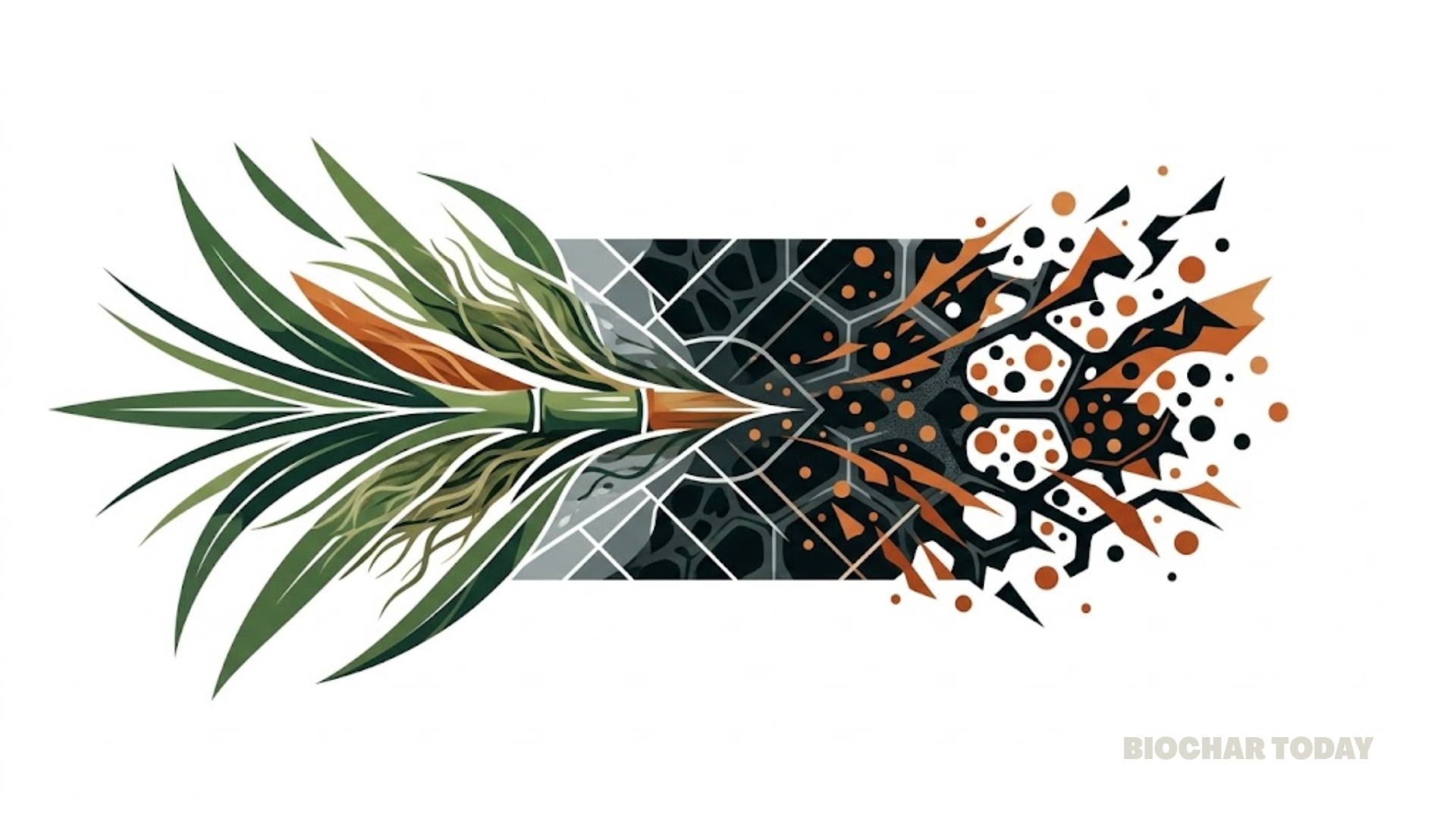
The journal IOP Conference Series: Earth and Environmental Science recently published a detailed investigation by Nimas Mayang Sabrina Sunyoto, Hendrix Yulis Setyawan, Sri Suhartini, Ika Atsari Dewi, Sakunda Anggarini, Muhamad Imam Fahurrozi, and Hariana on how varying production conditions impact the quality of biochar derived from sugarcane bagasse. As Indonesia continues to lead in sugar production, generating over two million tons of sugarcane annually, the resulting bagasse waste presents a significant environmental challenge and a unique opportunity for resource recovery. The researchers focused on converting this biomassBiomass is a complex biological organic or non-organic solid product derived from living or recently living organism and available naturally. Various types of wastes such as animal manure, waste paper, sludge and many industrial wastes are also treated as biomass because like natural biomass these More into activated micro biochar, a material prized for its porous structure and ability to adsorb hazardous pollutants from liquid waste. By exploring the interaction between high heat and chemical activation, the study provides a roadmap for producing high-performance adsorbents from agricultural leftovers.
The most significant finding of the research is that higher pyrolysisPyrolysis is a thermochemical process that converts waste biomass into bio-char, bio-oil, and pyro-gas. It offers significant advantages in waste valorization, turning low-value materials into economically valuable resources. Its versatility allows for tailored products based on operational conditions, presenting itself as a cost-effective and efficient More temperatures combined with stronger acid concentrations dramatically enhance the carbon structure and cleaning potential of the material. When the sugarcane waste was processed at 600°C, the moisture content dropped to a mere 2.20%, significantly improving the accessibility of the microscopic pores required for adsorption. Simultaneously, the pure carbon content, known as fixed carbon, rose to 66.50%, which meets the rigorous requirements of Indonesian national quality standards. This increase in carbon stability is essential for ensuring that the biochar remains effective over time when used in industrial water filters.
The study highlights how the combined thermal and chemical treatment transforms the physical surface of the biochar. The iodine number, a key indicator of how well a material can trap small molecules, reached an impressive 721.55 milligrams per gram in the best-performing sample. This represent a substantial leap in performance compared to untreated samples, confirming that the sulfuric acid acts as a powerful dehydrating agent that clears out organic clutter to open up new pathways for pollutants. Furthermore, particle size analysis confirmed that the final product was reduced to a micro-scale size of approximately 13.6 micrometers. These tiny particles provide a massive total surface area of nearly 796 square meters per gram, allowing for much better contact between the biochar and the contaminated water.
Beyond just surface area, the researchers used specialized light-based analysis to identify the chemical “hooks” on the biochar’s surface. They discovered nineteen distinct types of functional groups, including sulfonates and carbonyls, which were successfully grafted onto the material through the acid treatment. These groups are crucial because they act as chemical magnets that can grab onto toxic heavy metals like hexavalent chromium, which is common in industrial runoff. The presence of these oxygen and sulfur-containing groups confirms that the micro biochar is not just a physical filter but a chemically active agent capable of complex interactions with wastewater contaminants.
The research ultimately proves that sugarcane bagasse is a highly viable raw material for sustainable wastewater treatment technologies. While some parameters like ashAsh is the non-combustible inorganic residue that remains after organic matter, like wood or biomass, is completely burned. It consists mainly of minerals and is different from biochar, which is produced through incomplete combustion. Ash Ash is the residue that remains after the complete More content remained slightly above ideal limits due to the natural minerals found in the plant waste, the overall structural development and adsorption capacity position this micro biochar as a promising alternative to expensive commercial charcoal. By optimizing the pyrolysis at 600°C and using a strong 5M acid activation, scientists can now produce a material that effectively bridges the gap between agricultural waste management and environmental protection. This approach not only provides a solution for the millions of tons of waste generated by sugar mills but also offers a low-cost, high-efficiency pathway for securing cleaner water for industrial and agricultural use.
Source: Sunyoto, N. M. S., Setyawan, H. Y., Suhartini, S., Dewi, I. A., Anggarini, S., Fahurrozi, M. I., & Hariana. (2026). Effect of H2SO4 solution concentration and pyrolysis temperature on the characteristics of activated micro biochar from sugarcane bagasse waste. IOP Conference Series: Earth and Environmental Science, 1617, 012017.


Leave a Reply