
San Francisco Climate Week 2025 brought together thousands of climate professionals, technologists, policymakers, and community members across the city for a week of decentralized programming focused on the climate crisis and what to do about it. Organized by Climatebase and supported by dozens of local and global partners, the week featured more than 475 events ranging from major panels and summits to walking tours, open houses, and field demonstrations.
A few key themes stood out across the programming. The urgent need to scale carbon dioxide removal (CDR) technologies, the role of innovative climate financing in getting solutions off the ground, and the power of grassroots, decentralized action.
Biochar and Carbon Removal in Practice
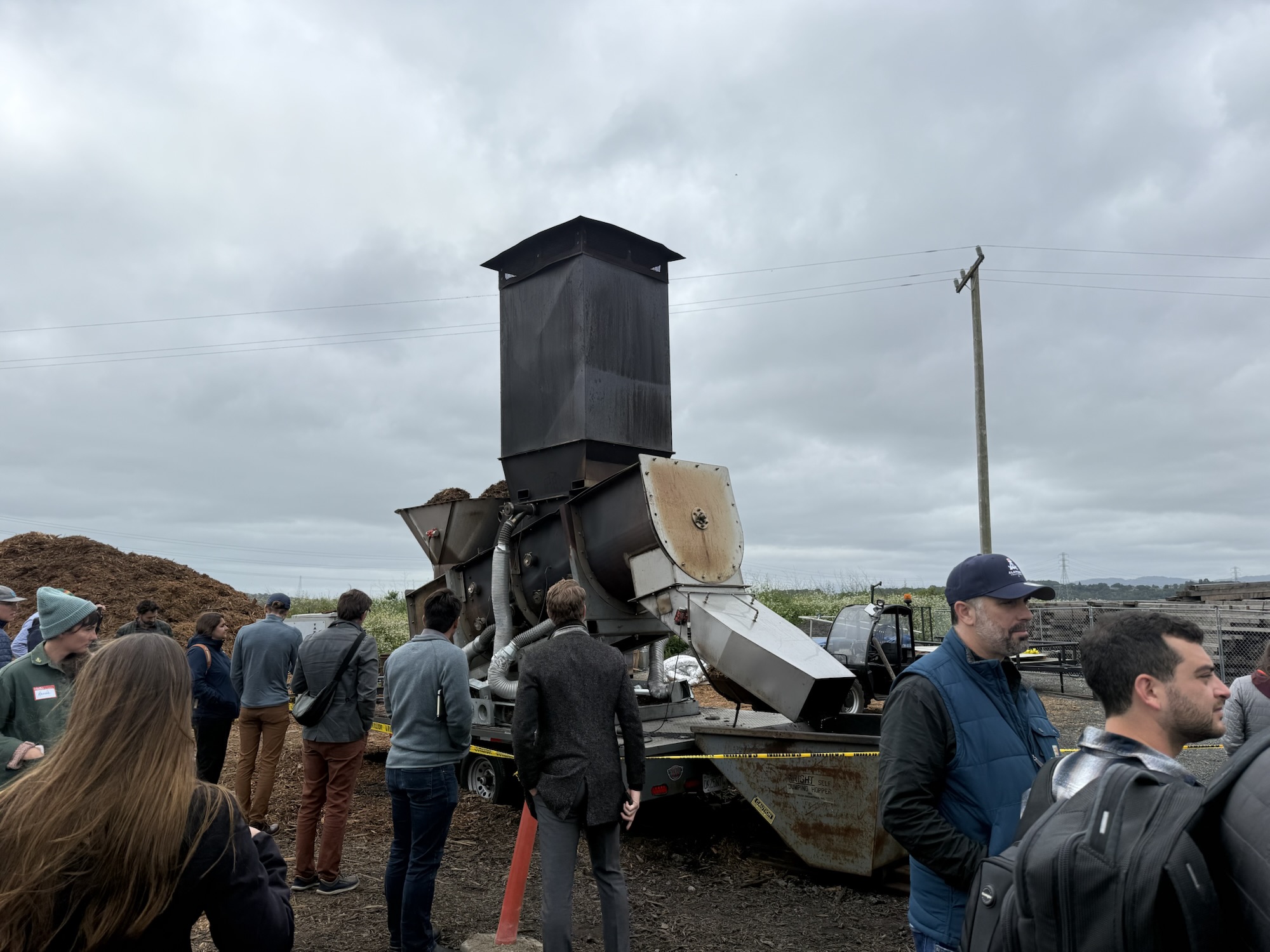
One of the most impactful events I attended was a live demonstration from Takachar, a social enterprise that develops portable, low-cost machines for converting crop and forestry waste into biocharBiochar is a carbon-rich material created from biomass decomposition in low-oxygen conditions. It has important applications in environmental remediation, soil improvement, agriculture, carbon sequestration, energy storage, and sustainable materials, promoting efficiency and reducing waste in various contexts while addressing climate change challenges. More. Their technology is specifically designed for use in rural or low-income areas where open burning of agricultural residues is still common. By transforming this waste into biochar, Takachar’s system simultaneously prevents air pollution, reduces greenhouse gas emissions, and sequesters carbon in a highly stable form. The demo offered a hands-on look at how localized carbon removal technologies can be deployed where they are needed most, without requiring major infrastructure or investment. It was a practical, deployable solution that checks multiple climate and development boxes at once.
There was also a workshop hosted by the International Biochar Initiative, which focused on the development of the World Biochar Certificate. As biochar becomes a more accepted method of carbon sequestration in voluntary and compliance markets, there is a growing need for standards that ensure consistency, transparency, and accountability. The workshop explored what it takes to certify a biochar product for climate impact, including lifecycle assessments, traceability, feedstockFeedstock refers to the raw organic material used to produce biochar. This can include a wide range of materials, such as wood chips, agricultural residues, and animal manure. More requirements, and storage durability. The discussion highlighted the increasing professionalization of the biochar space and the need to bridge the gap between climate science, land stewardship, and carbon markets.
A Climate Week of Technological Progress
Across every venue there was a clear sense that we’re entering a new phase of climate action where technology, policy, and grassroots energy are coming together.
What stood out this year is how technology is being used not as a silver bullet, but as a tool for transformation. Whether it’s portable biochar units, regenerative energy systems, or verified carbon removal platforms, the climate tech on display is starting to look more mature, more accessible, and more scalable. It’s clear we’re moving beyond isolated efforts and toward something impactful.


Leave a Reply