

Valorization of Prosopis Juliflora biocharBiochar is a carbon-rich material created from biomass decomposition in low-oxygen conditions. It has important applications in environmental remediation, soil improvement, agriculture, carbon sequestration, energy storage, and sustainable materials, promoting efficiency and reducing waste in various contexts while addressing climate change challenges. More for supercapacitor application: Techno-economic and lifecycle analysis. Journal of Cleaner Production. https://doi.org/10.1016/j.jclepro.2024.143409
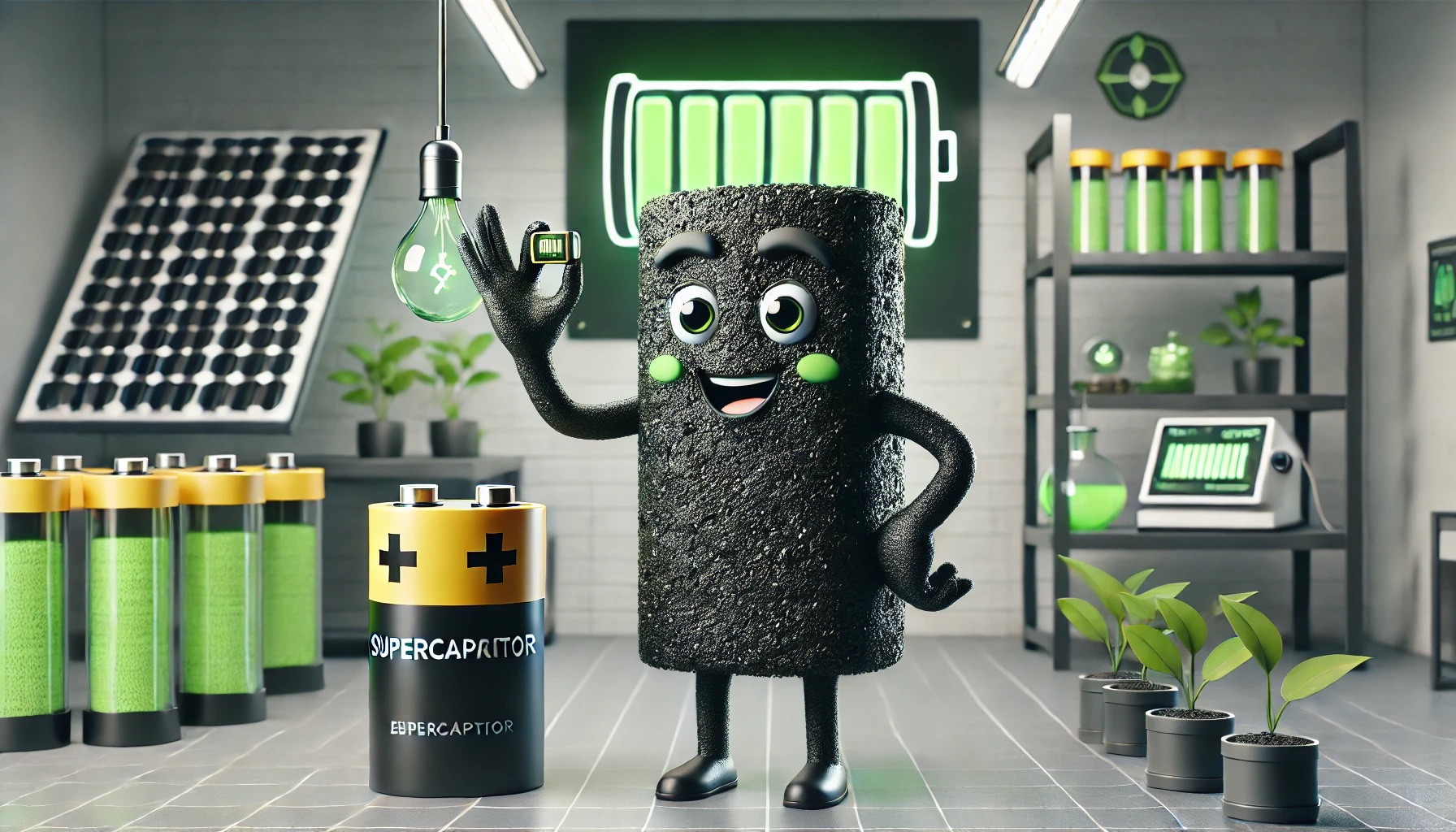
A study published in the Journal of Cleaner Production explores the potential of using Prosopis juliflora (PJ) biochar in supercapacitor applications. PJ is an invasive species that poses environmental risks but also serves as a sustainable source of biomassBiomass is a complex biological organic or non-organic solid product derived from living or recently living organism and available naturally. Various types of wastes such as animal manure, waste paper, sludge and many industrial wastes are also treated as biomass because like natural biomass these More. Through pyrolysisPyrolysis is a thermochemical process that converts waste biomass into bio-char, bio-oil, and pyro-gas. It offers significant advantages in waste valorization, turning low-value materials into economically valuable resources. Its versatility allows for tailored products based on operational conditions, presenting itself as a cost-effective and efficient More, PJ biomass can be converted into biochar, bio-oil, and pyrogas. Researchers used a 1:4 biochar-to-KOH ratio to produce activated carbonActivated carbon is a form of carbon that has been processed to create a vast network of tiny pores, increasing its surface area significantly. This extensive surface area makes activated carbon exceptionally effective at trapping and holding impurities, like a molecular sponge. It is commonly More (PJBAC-K4) with a high surface area and mesoporosity.
The activated carbon demonstrated excellent electrochemical performance, with a specific capacitance of 288 F/g and high cyclic stability over 10,000 charge-discharge cycles. Techno-economic analysis revealed that PJBAC-K4 could be produced for $18.41 per kg, which translates to about 0.006 cents per farad (F). Additionally, the lifecycle analysis highlighted the lower global warming potential of PJ-derived activated carbon compared to traditional commercial activated carbons.
This study offers a novel approach to sustainable energy storage, with the PJ biochar-based supercapacitor electrodes providing an eco-friendly and cost-effective alternative to conventional materials. The research emphasizes the importance of process optimization and highlights the economic and environmental benefits of using biomass waste in advanced energy applications.



Leave a Reply