
Threpsilvisut, et al (2024) Practical Guidelines for Farm Waste Utilization in Sustainable Kale Production. Horticulturae. https://doi.org/10.3390/horticulturae10050525
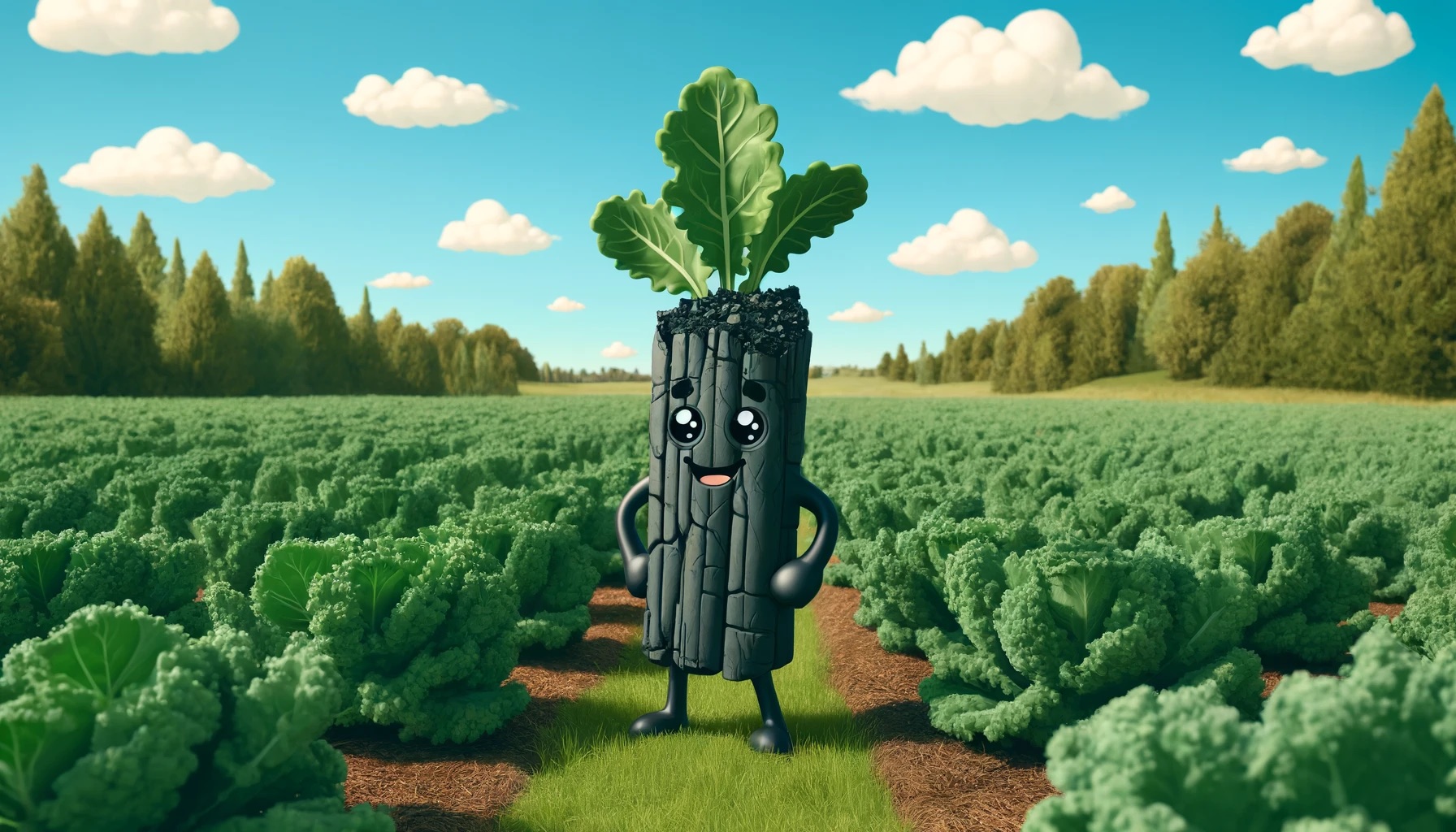
Sustainable agriculture practices continue to gain traction, with a significant focus on utilizing farm waste to improve soil health and crop yield. A recent study explores the use of decomposed sawdust, biocharBiochar is a carbon-rich material created from biomass decomposition in low-oxygen conditions. It has important applications in environmental remediation, soil improvement, agriculture, carbon sequestration, energy storage, and sustainable materials, promoting efficiency and reducing waste in various contexts while addressing climate change challenges. More, and farm waste compost as soil amendments for kale production, offering practical guidelines for farmers looking to adopt more eco-friendly and cost-effective methods.
Kale (Brassica oleracea var. sabellica) is known for its nutritional benefits and resilience to various environmental stresses, making it a popular choice among farmers. However, the cost of production can be high due to the reliance on imported peat moss as a growing medium. This study proposes an alternative by using locally available farm waste materials, which not only reduce costs but also enhance soil properties and plant growth.
The research involved testing different ratios of sawdust, biochar, and compost to determine the optimal mix for kale seedling propagation and field application. The results indicated that a mixture of 0.5:1:1 (v/v) sawdust, biochar, and compost provided the best outcomes for seed germination and seedling growth. Specifically, this combination led to the fastest germination times (2.71 days) and the highest germination percentage (78.33%).
In field conditions, the study examined various application rates of the selected growing media. The findings revealed that applying the mixture at a rate of 31.25 tons per hectare resulted in the highest fresh weight of marketable kale leaves, significantly surpassing the control group. This application rate also yielded the highest gross profit margins, showing an eightfold increase compared to the control.
The use of biochar alone as a growing medium was less effective, highlighting the importance of a balanced mix. Biochar’s high pHpH is a measure of how acidic or alkaline a substance is. A pH of 7 is neutral, while lower pH values indicate acidity and higher values indicate alkalinity. Biochars are normally alkaline and can influence soil pH, often increasing it, which can be beneficial More levels can be detrimental to seedling growth, but when combined with sawdust and compost, it contributes to improved soil structure and nutrient availability.
Economic analysis further supported the benefits of this approach. All rates of soil amendmentA soil amendment is any material added to the soil to enhance its physical or chemical properties, improving its suitability for plant growth. Biochar is considered a soil amendment as it can improve soil structure, water retention, nutrient availability, and microbial activity. More application resulted in higher net annual yields than the control, with the highest annual net cash flow observed at the 31.25 tons per hectare application rate. This method proved to be a cost-effective solution, particularly when the materials are produced on-site, reducing the need for external inputs.
This study underscores the potential of farm waste utilization in sustainable agriculture, offering a practical and profitable approach for kale production. By adopting these methods, farmers can enhance soil health, reduce production costs, and achieve higher yields, contributing to more sustainable and resilient farming practices.
For those interested in implementing these guidelines, it’s important to consider the specific conditions of their farm and adjust the ratios and application rates accordingly. Continuous monitoring and adjustments based on crop performance and soil health will ensure optimal results. This approach not only supports sustainable agriculture but also promotes a circular economy within the farming system.


Leave a Reply