
Mortada, W.I., Ghaith, M.M., Khedr, N.E. et al.Mesoporous magnetic biocharBiochar is a carbon-rich material created from biomass decomposition in low-oxygen conditions. It has important applications in environmental remediation, soil improvement, agriculture, carbon sequestration, energy storage, and sustainable materials, promoting efficiency and reducing waste in various contexts while addressing climate change challenges. More derived from common reed (Phragmites australis) for rapid and efficient removal of methylene blue from aqueous media. Environ Sci Pollut Res (2024). https://doi.org/10.1007/s11356-024-33860-3
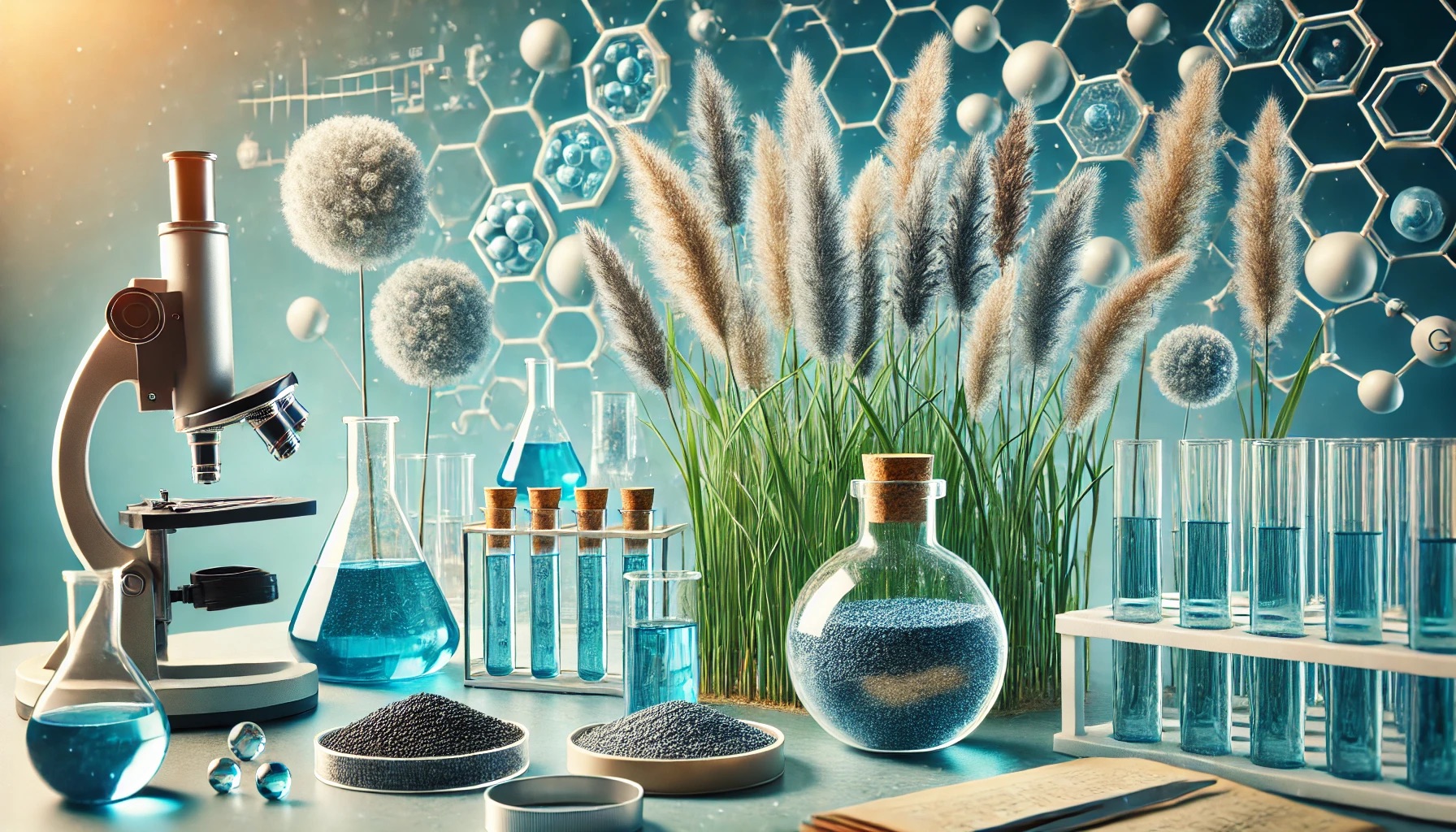
A recent study introduced an innovative approach for removing methylene blue (MB) dye from water using mesoporous magnetic biochar (MBC) derived from common reed (Phragmites australis). This biochar not only offers a sustainable solution but also proves highly efficient in adsorbing pollutants from aqueous media.
The preparation process involved transforming common reed biomassBiomass is a complex biological organic or non-organic solid product derived from living or recently living organism and available naturally. Various types of wastes such as animal manure, waste paper, sludge and many industrial wastes are also treated as biomass because like natural biomass these More into biochar through calcination. This biochar was then modified with iron oxide to impart magnetic properties, facilitating easier separation after adsorption. The resultant MBC demonstrated significant characteristics, including a specific surface area of 94.2 m²/g and a pore volume of 0.252 cm³/g. Its magnetic nature, with a saturation magnetization of 0.786 emu/g, allowed for efficient recovery from solutions.
Experimental tests showed that the optimal conditions for MB removal were at a pHpH is a measure of how acidic or alkaline a substance is. A pH of 7 is neutral, while lower pH values indicate acidity and higher values indicate alkalinity. Biochars are normally alkaline and can influence soil pH, often increasing it, which can be beneficial More of 8.0, with a sorbent dosage of 1.0 g/L, and a contact time of 30 minutes. Under these conditions, the maximum adsorption capacity reached 353.4 mg/g. The adsorption data fitted well with the Langmuir isotherm model, indicating monolayer adsorption on a homogeneous surface.
Thermodynamic studies revealed that the adsorption process was spontaneous and endothermic, driven primarily by van der Waals forces and hydrogen bonding. Additionally, the MBC could be regenerated and reused up to four times with minimal loss in efficiency, demonstrating its potential for sustainable wastewater treatment applications.
This study highlights the practical potential of converting invasive plant species like common reed into valuable adsorbents for environmental remediation, presenting a cost-effective and environmentally friendly method for treating dye-contaminated water.


![Eucalyptus Wood Waste-Derived Biochar Achieves a Ninety-Eight Percent Removal Efficiency for Benzo[ghi]perylene in Vehicle-Wash Wastewater](https://biochartoday.com/wp-content/uploads/2026/10/SCIENCE-BLOGS-2026-2026-10-19T160523.703.jpg)

Leave a Reply