
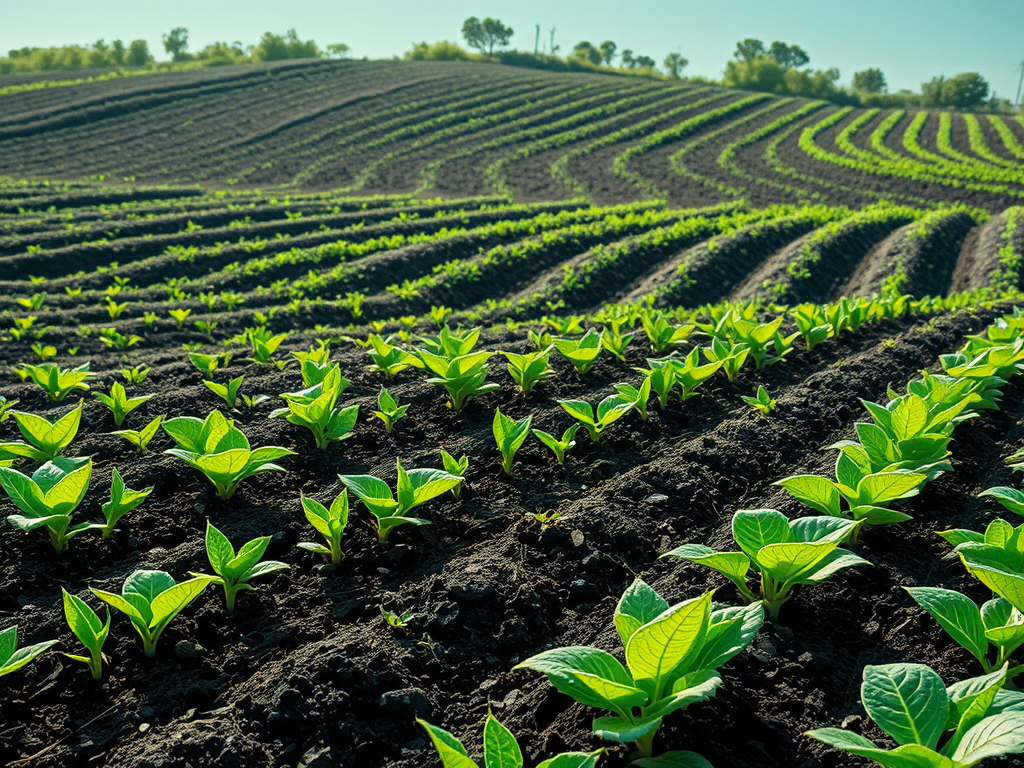
Muhammad Ayaz and colleagues’ recent study published in BiocharBiochar is a carbon-rich material created from biomass decomposition in low-oxygen conditions. It has important applications in environmental remediation, soil improvement, agriculture, carbon sequestration, energy storage, and sustainable materials, promoting efficiency and reducing waste in various contexts while addressing climate change challenges. More, highlights the transformative potential of biochar in addressing critical environmental challenges like climate change. This review underscores biochar’s ability to enhance agricultural sustainability while contributing to ecological restoration and carbon sequestration.
Biochar, derived from biomassBiomass is a complex biological organic or non-organic solid product derived from living or recently living organism and available naturally. Various types of wastes such as animal manure, waste paper, sludge and many industrial wastes are also treated as biomass because like natural biomass these More through pyrolysisPyrolysis is a thermochemical process that converts waste biomass into bio-char, bio-oil, and pyro-gas. It offers significant advantages in waste valorization, turning low-value materials into economically valuable resources. Its versatility allows for tailored products based on operational conditions, presenting itself as a cost-effective and efficient More under oxygen-deprived conditions, offers a versatile approach to environmental management. The study reveals how biochar improves soil health by enhancing nutrient availability, water retention, and microbial activity. Moreover, it mitigates greenhouse gas emissions and sequesters carbon in stable forms, offering a net negative carbon footprint.
One of the paper’s focal points is the optimization of pyrolysis techniques, where the choice of feedstockFeedstock refers to the raw organic material used to produce biochar. This can include a wide range of materials, such as wood chips, agricultural residues, and animal manure. More and process conditions critically influence biochar’s properties and efficacy. Smaller biochar particles, for example, show enhanced greenhouse gas suppression and heavy metal immobilization. The authors also explore advanced applications, such as biochar in bioenergy production and wastewater treatment, highlighting its adaptability and environmental benefits.
Despite its many advantages, the study identifies gaps in research, particularly around health risks and long-term soil interactions, stressing the need for ongoing investigation. With biochar’s wide applicability in agriculture, energy, and ecosystem restoration, it holds promise as a cornerstone for sustainable development and climate resilience.
SOURCE: Ayaz, M., Muntaha, S. T., Baltrėnaitė-Gedienė, E., & Kriaučiūnienė, Z. (2025). Biochar and carbon-negative technologies: Exploring opportunities for climate change mitigation. Biochar, 7(17). https://doi.org/10.1007/s42773-024-00421-3




Leave a Reply