
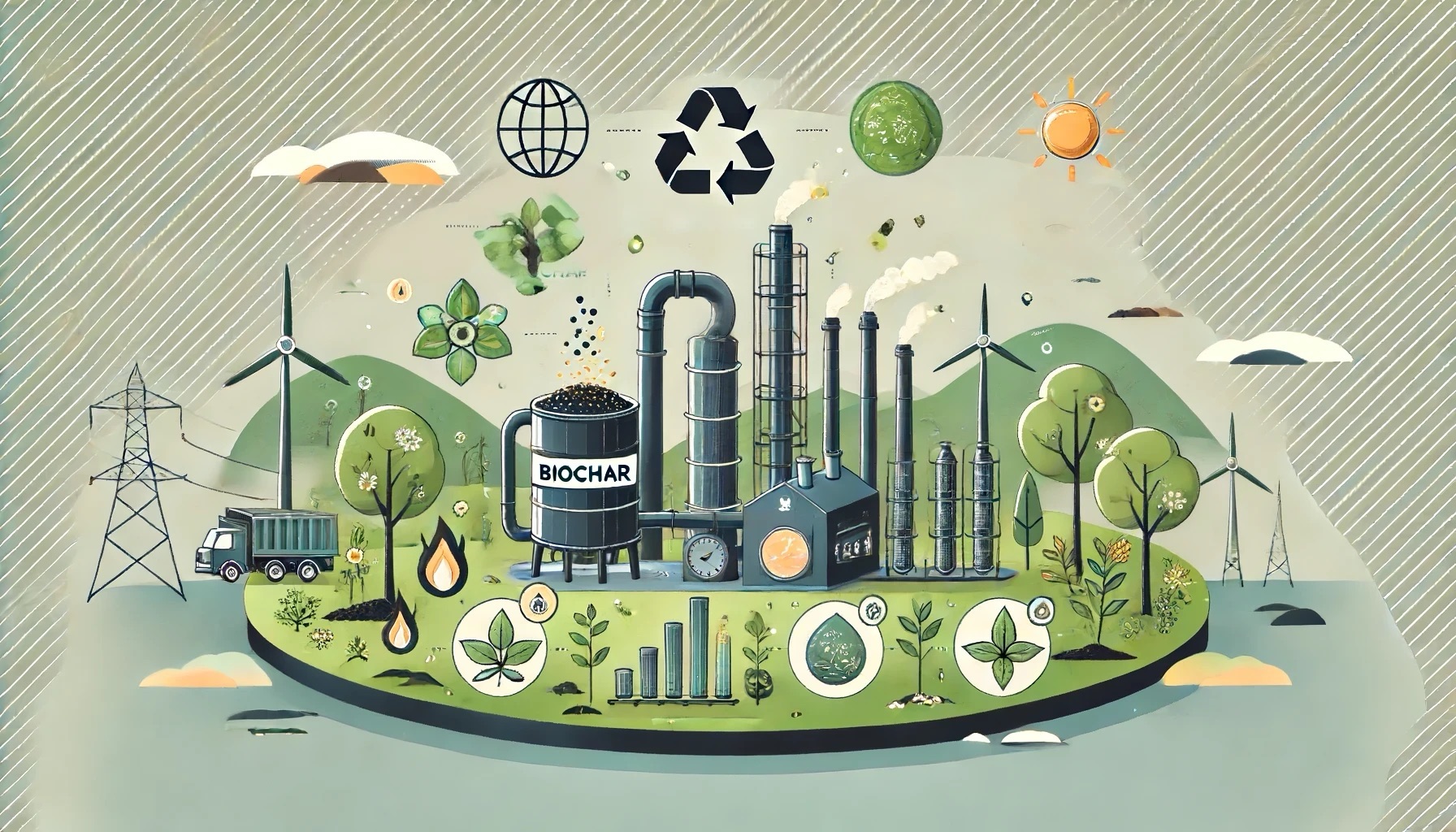
Nisa & Mada (2024) BiomassBiomass is a complex biological organic or non-organic solid product derived from living or recently living organism and available naturally. Various types of wastes such as animal manure, waste paper, sludge and many industrial wastes are also treated as biomass because like natural biomass these More to-biochar processing technology for serve as reduce CO2 emissions review. AIP Conference Proceedings. https://doi.org/10.1063/5.0208921
The rapid industrialization of our world has led to an alarming increase in carbon dioxide (CO2) levels, primarily due to fossil fuel pollution. CO2 emissions from fossil fuels contribute roughly 30% of the total, with land use changes and forestry adding 32%, and other industries making up 38%. This surge in emissions poses significant risks to public health and the environment. To address this, technologies like Direct Air Capture (DAC) and Carbon Capture Utilization and Storage (CCUS) have been developed, though they remain expensive.
A promising solution to reduce the costs and enhance the effectiveness of these technologies is biocharBiochar is a carbon-rich material created from biomass decomposition in low-oxygen conditions. It has important applications in environmental remediation, soil improvement, agriculture, carbon sequestration, energy storage, and sustainable materials, promoting efficiency and reducing waste in various contexts while addressing climate change challenges. More. Produced through the pyrolysisPyrolysis is a thermochemical process that converts waste biomass into bio-char, bio-oil, and pyro-gas. It offers significant advantages in waste valorization, turning low-value materials into economically valuable resources. Its versatility allows for tailored products based on operational conditions, presenting itself as a cost-effective and efficient More of biomass pollutants, biochar can capture CO2 emissions and reduce industrial pollution. Notably, biochar has energy potential comparable to fossil coal, positioning it as a viable alternative energy source.
Beyond capturing CO2, biochar offers multiple environmental benefits. It aids in climate change mitigation, environmental remediation, soil improvement, energy production, waste management, and even serves as a construction material. The versatile applications and benefits of biochar make it a powerful tool in the fight against climate change.
A recent article from Nisa and Mada delves into the production and environmental applications of biochar, emphasizing its potential to significantly reduce CO2 emissions and organic pollutants. As we explore the prospects and opportunities of biochar, it becomes clear that this innovative material could play a crucial role in creating a more sustainable and cleaner future.



Leave a Reply